Can You Wear Glasses in a US Passport Photo? 2026 State Department & Medical Rules
No—since Nov 1, 2016, the US State Dept bans all glasses in 2x2 passport & visa photos. Learn the strict medical doctor's note exception and contact lens rules.

Table of Contents
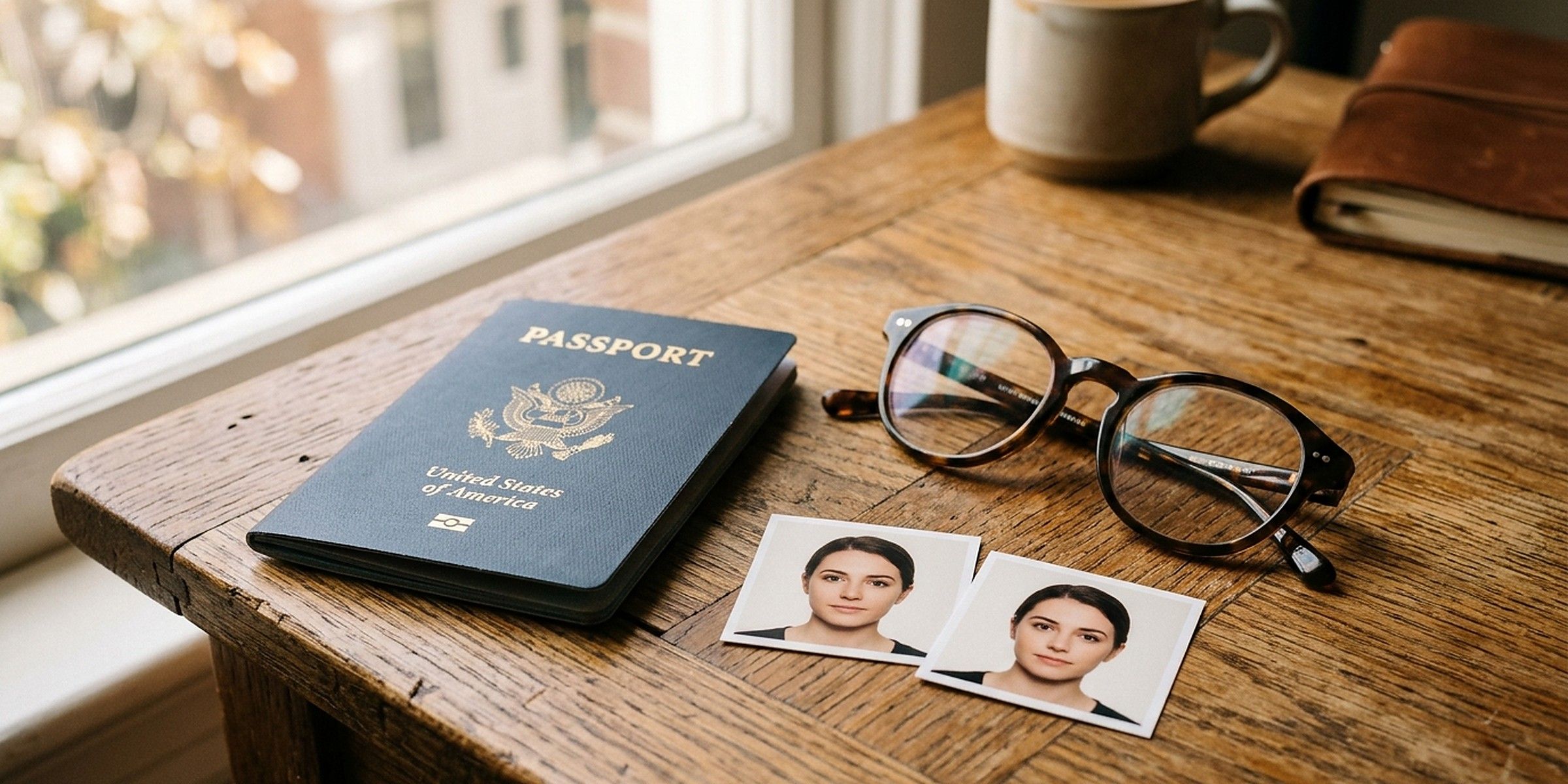
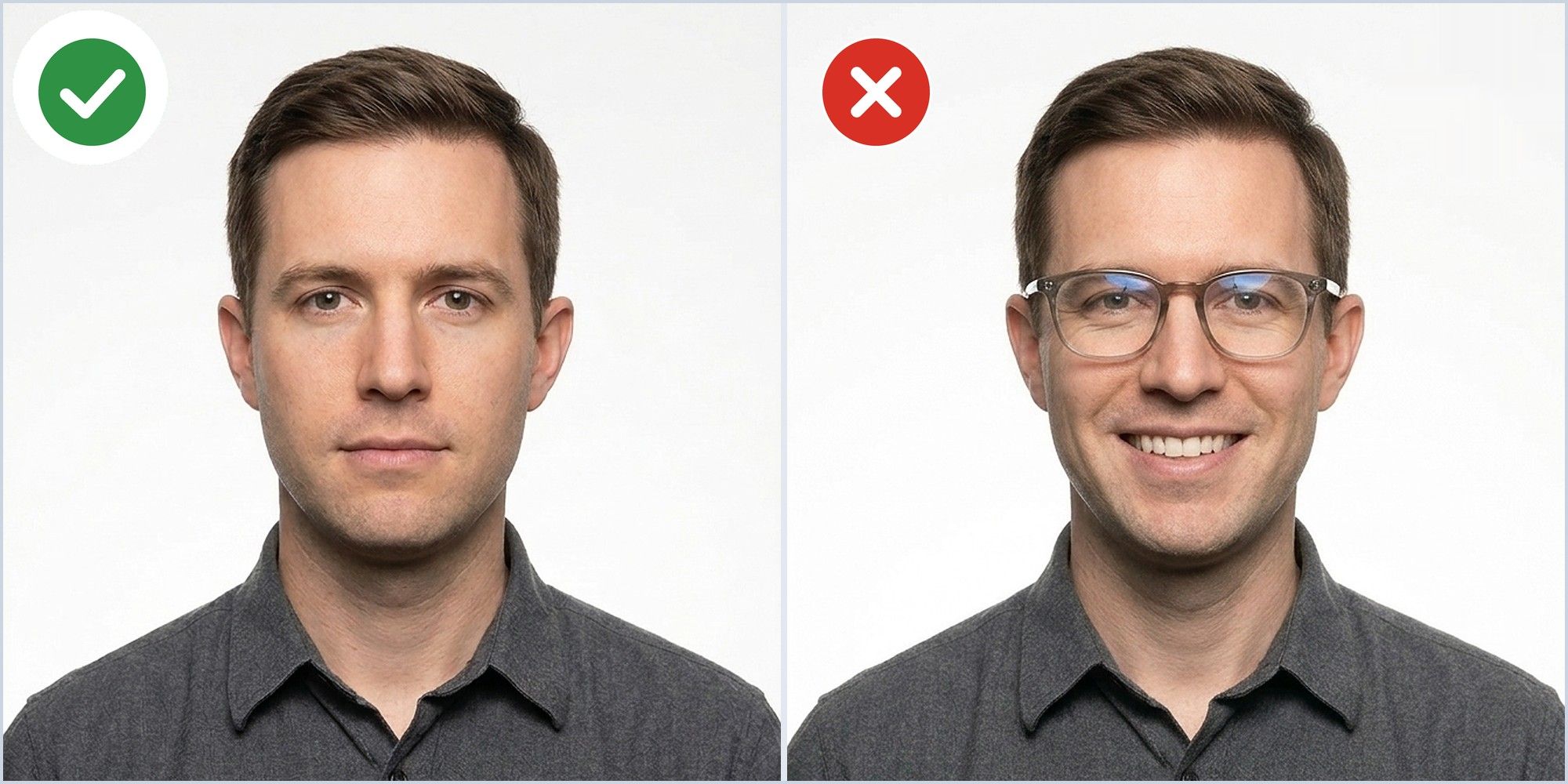
No, you cannot wear glasses in a U.S. passport photo in 2026. Since November 1, 2016, the U.S. Department of State has enforced a mandatory federal ban on all eyeglasses—including everyday prescription glasses, reading glasses, clear fashion frames, and blue-light blockers—after lens glare and frame shadows delayed more than 200,000 passport applications per year. The only legal exception requires a signed statement from a licensed physician following ocular surgery, while clear prescription contact lenses remain 100% allowed. When you take a US passport photo or US visa photo at home with Snap4ID, our AI engine scans 478 biometric points to confirm your eyes are wide open, glare-free, and positioned inside the mandatory 1⅛ to 1⅜ inch eye-level zone—backed by a 100% acceptance guarantee.
- Blanket Ban on All Eyeglasses (Since Nov 1, 2016): Prescription glasses, non-glare lenses, blue-light glasses, clear frames, and indoor Transitions lenses are strictly prohibited in all U.S. passport and visa photos.
- High Prescription Is Not a Medical Exception: Having severe nearsightedness or wearing glasses all day does not qualify for an exemption; a signed doctor's note is accepted only when removing protective eyewear after ocular surgery risks physical eye damage.
- Clear Contacts Allowed, Colored Contacts Banned: You may wear clear corrective contact lenses during your photo sitting, but colored contacts, scleral lenses, and pupil-enlarging "circle" lenses are forbidden.
- Avoid Squinting & Nose-Pad Marks: Wait 5 minutes after taking off heavy frames so red nose-bridge indents fade, focus calmly on the camera lens 4–5 feet away without squinting, and let Snap4ID verify 478 biometric points.
If you have worn prescription eyeglasses every day since childhood, taking a government identification photograph without them can feel unnatural—and many applicants worry that border officers won't recognize them at the airport if their passport photo doesn't show their frames. Below is the complete technical and legal explanation of why the State Department banned eyeglasses, how the signed surgeon's statement works, and how to take a tack-sharp 2×2 inch photo when you can barely see the camera lens.
1. Why the U.S. State Department Banned Glasses in Passport Photos (The 200,000-Rejection Rule)
The U.S. Department of State banned eyeglasses in passport and visa photos on November 1, 2016 because eyeglasses were the #1 cause of rejected passport photos nationwide—triggering over 200,000 application holds each year due to specular lens glare, high-index optical refraction, and frame rim shadows across the eye sockets.
| Eyewear or Vision Aid Type | Allowed in 2026 US Passport Photo? | Official State Department Rule & Biometric Reason |
|---|---|---|
| Everyday Prescription Eyeglasses | ✘ Prohibited | Banned since Nov 1, 2016; high-index lenses refract eye size and frames obscure orbital landmarks. |
| Anti-Reflective (AR) & Blue-Light Glasses | ✘ Prohibited | AR and blue-light coatings reflect green, blue, or violet light directly over the pupil and iris. |
| Photochromic / Transitions Lenses (Indoors) | ✘ Prohibited | Retain a 5%–10% baseline UV tint indoors that alters sclera contrast and darkens the eye sockets. |
| Lensless Frames / Clear Fashion Glasses | ✘ Prohibited | Even frames without glass cast shadows across the bridge of the nose and hide eyebrow contours. |
| Sunglasses (On Face or Pushed on Head) | ✘ Prohibited | Tinted lenses and frames perched atop the hair violate head-covering and eye-visibility rules. |
| Post-Surgical Medical Protective Glasses | ✔ Allowed Only With Signed Doctor's Note | Permitted only if removing them risks ocular harm; requires a signed physician's statement and zero glare. |
| Clear Prescription Contact Lenses | ✔ 100% Allowed | Invisible on camera and preserve natural iris pigmentation, pupil diameter, and interpupillary distance. |
| Colored, Tinted, or Circle Contact Lenses | ✘ Prohibited | Artificially alter iris color or limbal ring diameter, causing airport e-Gate facial comparison failures. |
How Lens Glare, High-Index Refraction & Frame Shadows Blind Biometric Scanners
To understand why the U.S. Department of State Official Passport Photo Requirements (Eyeglasses Policy) enforce a zero-tolerance rule on eyewear, it helps to know how automated biometric recognition actually reads a face. Whether your photo is scanned by the National Passport Processing Center or matched live at a U.S. Customs and Border Protection (CBP) airport e-Gate, the algorithm anchors its entire coordinate grid on the exact centers of your pupils, the inner and outer corners (canthi) of both eyes, and the distance between your pupils (interpupillary distance). Eyeglasses corrupt those measurements in three ways:
- High-Index Optical Refraction ("Cut-In" Distortion): If you are nearsighted (myopic), your concave minus lenses bend incoming light inward, making your eyes appear significantly smaller on camera and creating a visible optical jump where the side of your temple shifts inward behind the lens. Conversely, convex plus lenses for farsightedness magnify the eyes and distort true orbital proportions.
- Anti-Reflective (AR) & Blue-Light Coating Glare: Many people assume "non-glare" glasses won't reflect flash. In reality, anti-reflective and blue-light-blocking coatings work by reflecting specific wavelengths of blue, green, or violet light away from the retina—which bounces straight back into the camera lens as a glowing colored patch over your iris.
- Frame Rim & Nose-Pad Shadows: Even thin wire rims or transparent acetate frames sit at the exact elevation of the upper eyelid crease or eyebrow, casting dark shadows down the sides of the nasal bridge.
Are Clear Frames, Blue-Light Glasses, or Indoor Transitions Lenses Allowed?
No. Even if your frames are crystal-clear transparent plastic, or even if you pop the prescription lenses out of your frames entirely, wearing any eyeglass frame on your face or pushed up on top of your head will cause an automatic rejection. Similarly, photochromic lenses (such as Transitions) retain a residual tint indoors under studio LEDs and smartphone flashes, making the whites of your eyes (sclera) appear gray or amber.
2. The Only Legal Exception: How the Medical Doctor's Statement Works
The only legal exception allowing eyeglasses in a U.S. passport photo is documented medical necessity—such as recent ocular surgery where removing protective glasses could damage your vision—supported by a signed statement from a licensed physician or surgeon.
What Qualifies as a Medical Exception? (Ocular Surgery vs. High Prescription)
Passport adjudication officers apply a strict medical standard under federal guidelines. Wearing glasses because you have a high prescription (such as -8.00 or -12.00 diopters), severe astigmatism, or amblyopia does not qualify for a medical exemption—because taking your glasses off for five seconds while standing still in a room poses zero medical risk to the health of your eyes.
Qualifying medical reasons are limited to conditions where removing the eyewear for even a brief moment could cause physical injury or acute ocular harm, such as:
- Recent Ocular or Corneal Surgery: Post-operative recovery from corneal transplants, retinal detachment repair, glaucoma filtration procedures, or ocular trauma requiring continuous protective shields.
- Severe Photophobia or Neurological Ocular Disorders: Rare documented conditions where exposure to ambient indoor lighting without specialized medical filter lenses triggers acute medical symptoms, as certified in writing by an ophthalmologist or neurologist.
4 Strict Photo Rules Your Medical Glasses Must Still Pass
Even when you attach a signed statement from your doctor or ocular surgeon on official medical letterhead, the U.S. Department of State Visa and Passport Photo Standards require your photograph to satisfy four technical criteria:
- Frames Must Not Cover the Eyes: The top, bottom, and side rims of the medical frames cannot cut across your pupils, irises, or tear ducts.
- Zero Glare or Specular Reflection on Lenses: There cannot be any camera flash, window reflection, or ring-light glare obscuring your eyes through the lenses.
- Zero Frame Shadows Across the Eye Sockets: Lighting must be diffused from the front so the frames do not cast dark bands across your eyelids or upper cheeks.
- Clear Lenses Required Unless Medically Prescribed: Dark or tinted post-surgical lenses are permitted only if your physician's letter explicitly states that dark lenses are medically required to protect your eyes.
Counter-Intuitive Trap: Why Medical Eyeglass Exceptions Must Apply by Mail or In Person (Not MyTravelGov)
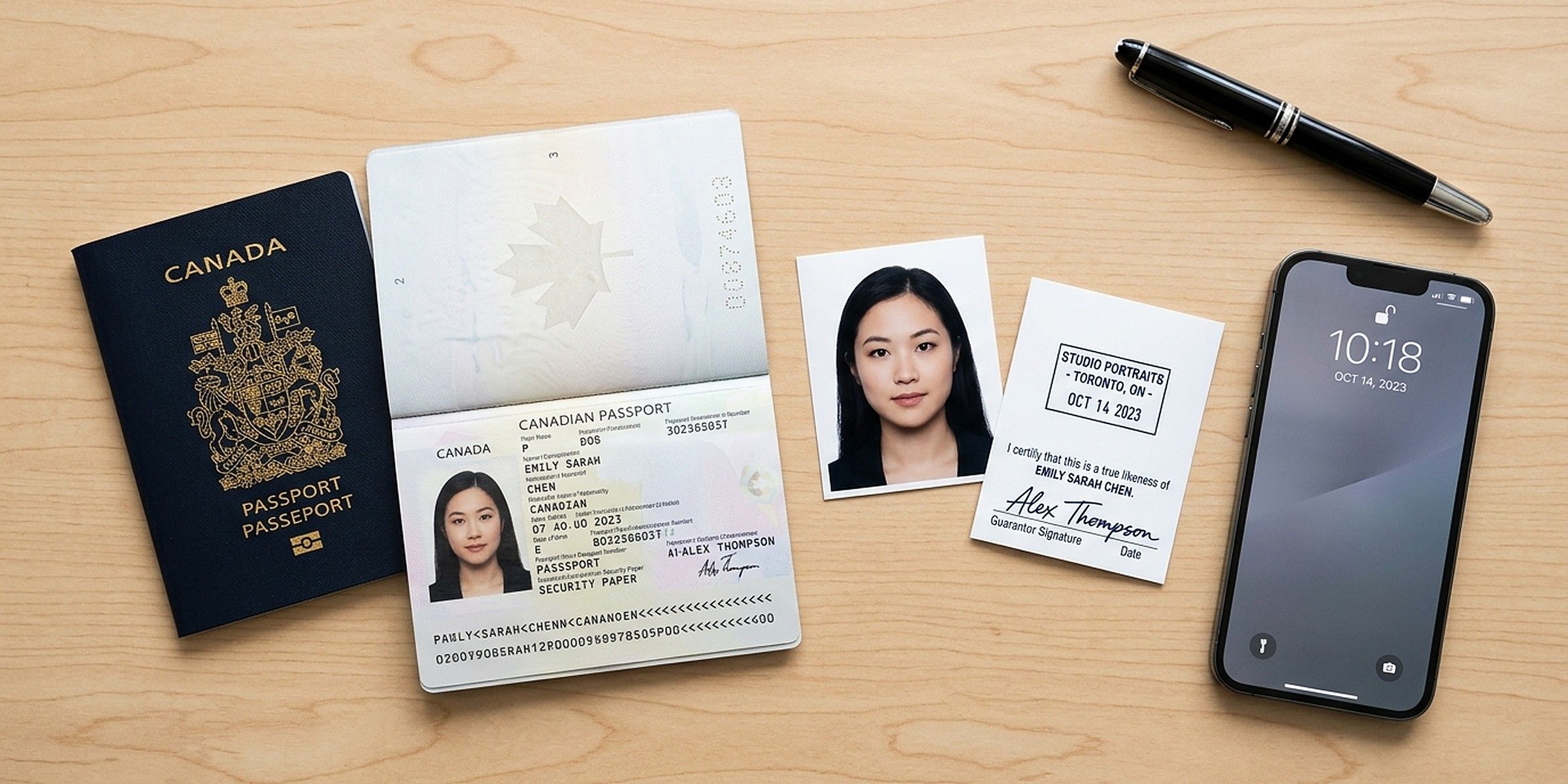
MyTravelGov Online Portal Trap: If you require a medical exception to wear glasses in your passport photo, you cannot renew your passport online through the MyTravelGov portal! The online renewal portal uses an automated AI pre-screener that immediately blocks any uploaded JPEG containing eyeglass frames, and the web form has no upload slot for a physician's letter. You must submit a paper application (Form DS-82 by mail or Form DS-11 in person) with your signed doctor's statement stapled or clipped to the packet.
✔ DO: Compliant Eyewear & Vision Steps
- Remove all eyeglasses 5 minutes early: Let red nose-pad marks fade from the bridge of your nose before taking the picture.
- Wear clear prescription contact lenses: Soft or RGP clear contacts let you see the camera clearly without altering your eye biometrics.
- Keep your eyes naturally wide open: Look straight at the camera lens at eye level without squinting or raising your eyebrows.
- Include a signed surgeon's letter if medically exempt: Mail your signed doctor's statement with paper Form DS-82 or DS-11 if recovering from eye surgery.
✘ DON'T: Instant Eyewear Rejections
- Don't wear everyday prescription frames: Even thin wire rims or "non-glare" AR lenses trigger an automatic State Department hold.
- Don't push glasses or sunglasses onto your head: Frames resting on your forehead or hair count as prohibited headwear/accessories.
- Don't wear colored or circle contact lenses: Cosmetic lenses that change iris color or enlarge the pupil are strictly banned.
- Don't squint while trying to focus without glasses: Squinting narrows your eye opening and causes automated biometric rejection.
3. Can You Wear Contact Lenses in a US Passport Photo? (Clear vs. Colored Contacts)
Yes, clear prescription contact lenses are 100% permitted in U.S. passport and visa photos, whereas colored contact lenses, cosmetic tints, scleral costume lenses, and pupil-enlarging "circle" lenses are strictly prohibited.
Clear Corrective Contacts vs. Colored and Circle Lenses
If you normally alternate between eyeglasses and clear contact lenses, wearing your clear contacts for your passport photo sitting is the easiest way to see the camera clearly and maintain a relaxed, natural gaze. Clear daily, biweekly, or rigid gas-permeable (RGP) lenses sit directly on the cornea without creating specular glare, frame shadows, or optical temple refraction.
By contrast, you must remove any colored contact lenses (even "natural enhancement" tints) or limbal-ring "circle" lenses before taking your picture. Biometric scanners record the contrast ratio between the white sclera, the outer limbal ring of the iris, and the dark pupil. Wearing cosmetic lenses that change hazel eyes to blue or artificially enlarge the iris diameter violates federal appearance rules—just like the rules covered in our broader guides to what to wear for a US passport photo and US passport photo DOs and DON'Ts.
4. How to Take a Sharp 2×2 Passport Photo Without Glasses (And Avoid the Squinting Trap)
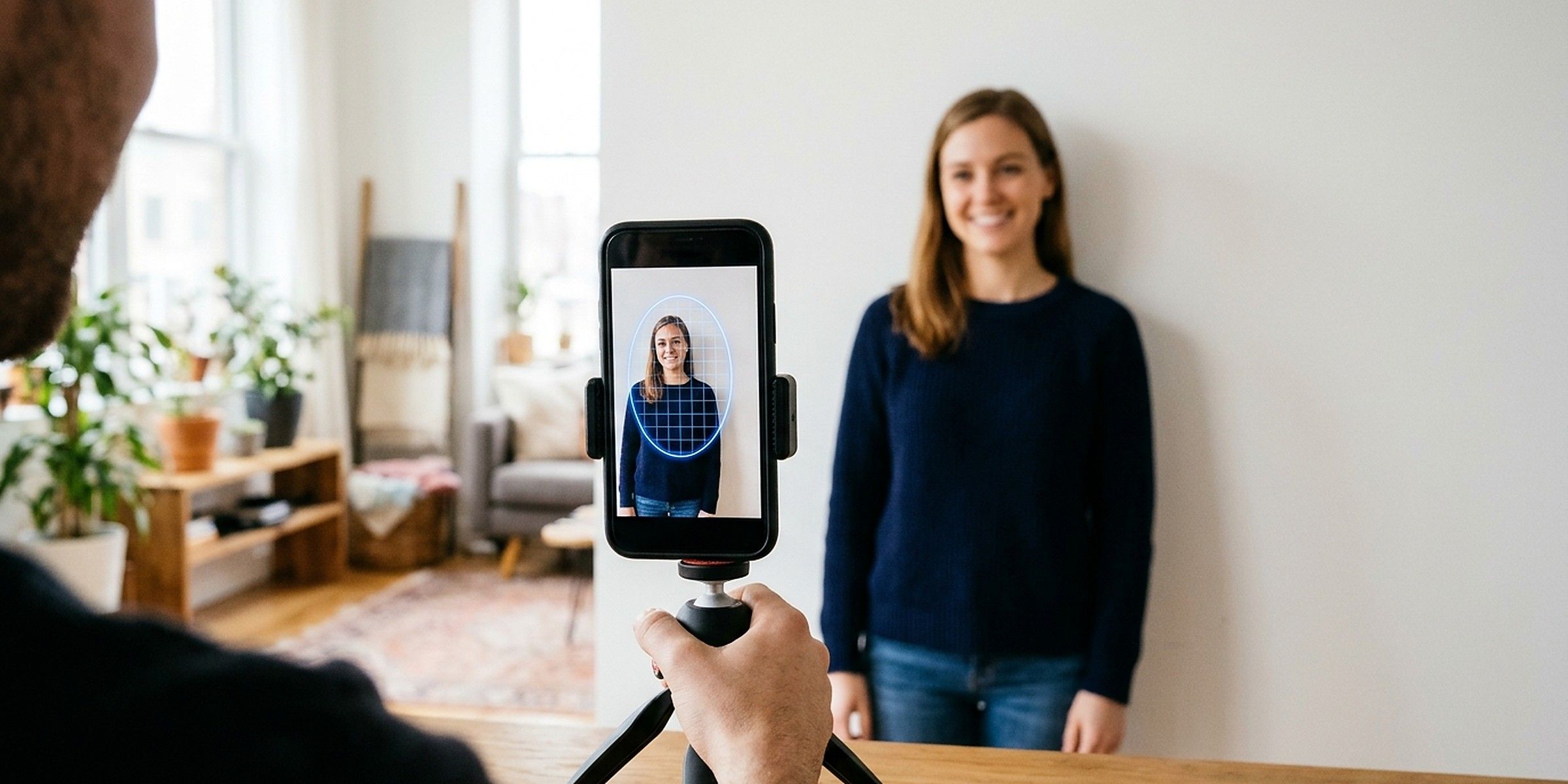
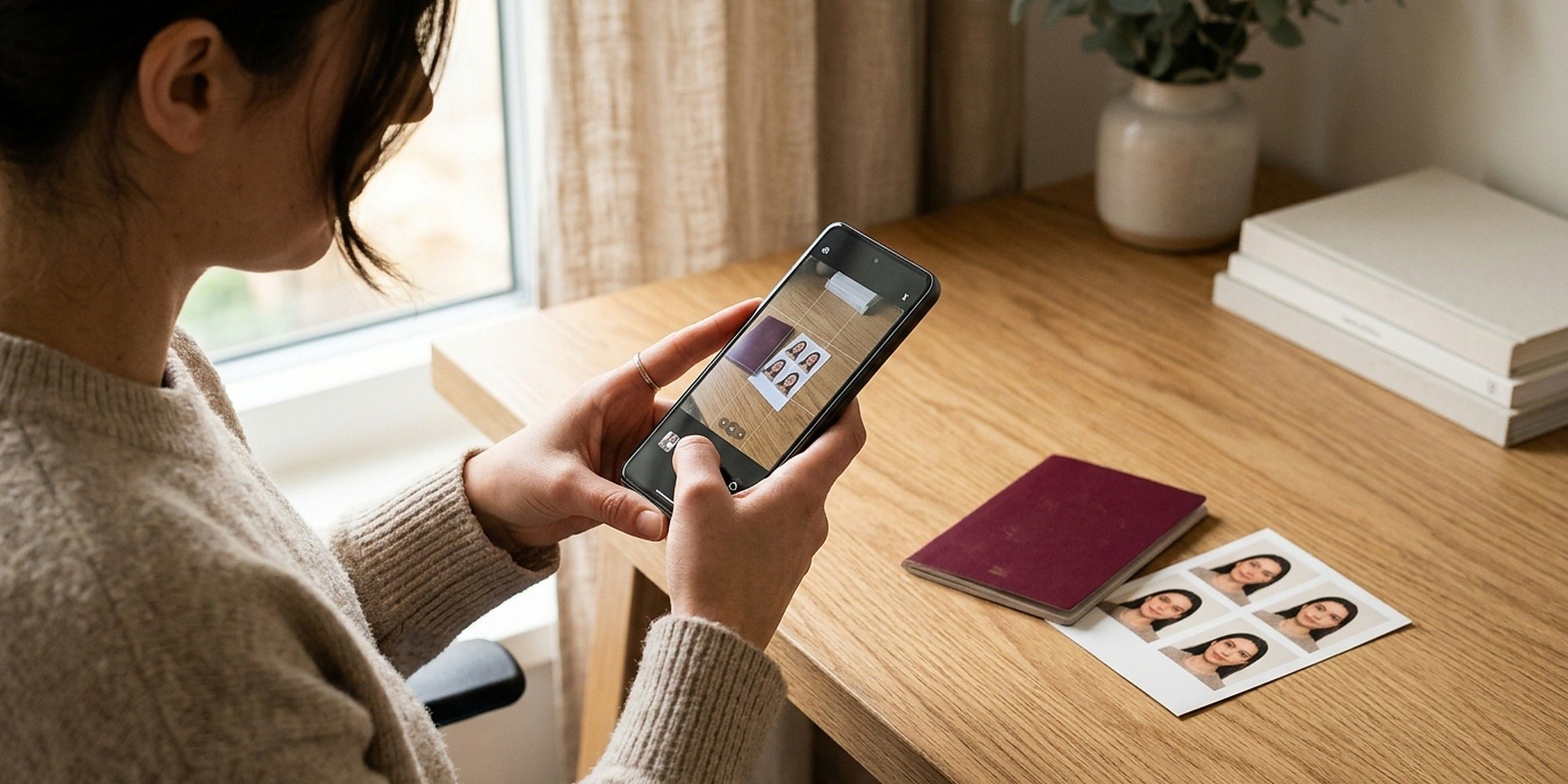
To take a compliant U.S. passport photo without your glasses, remove your frames 5 minutes beforehand to let nose-pad dents fade, have a friend hold the smartphone 4–5 feet away at eye level, look toward the lens without squinting, and let Snap4ID verify all 478 biometric points.
3 Steps to Prevent Squinting, Off-Center Gaze & Red Nose-Pad Marks
When heavily nearsighted or farsighted applicants take off their glasses at a pharmacy counter, their natural reflex is to squint their eyelids to bring the photographer into focus—which immediately triggers a "closed or partially obscured eyes" rejection. Follow these three simple techniques at home:
- Wait 5 Minutes for Red Nose-Pad Indents to Disappear: Heavy prescription frames leave deep red or purple pressure marks on the sides of the nasal bridge that can look like retouching artifacts or shadows under bright light. Take your glasses off a few minutes early and gently blot the bridge of your nose.
- Use a Visual Target Right Behind the Camera Lens: Ask a family member to hold the smartphone
4 to 5 feet(1.2 to 1.5 meters) away at your exact eye height. You do not need to see the phone screen in sharp focus—simply relax your forehead and eyelids and look straight at the middle of the phone's back camera module. - Let Snap4ID Verify Your Eye Level & Eyelid Opening: When you upload your photo to our US passport photo generator, Snap4ID's AI maps 478 biometric points, confirming that both irises and tear ducts are 100% visible, replacing your home wall with pure
#FFFFFFwhite, and backing your photo with a 100% acceptance guarantee (full money-back guarantee if rejected).
Official 2×2 Inch Eye Height (1⅛"–1⅜") and Head Size (1"–1⅜") Specifications
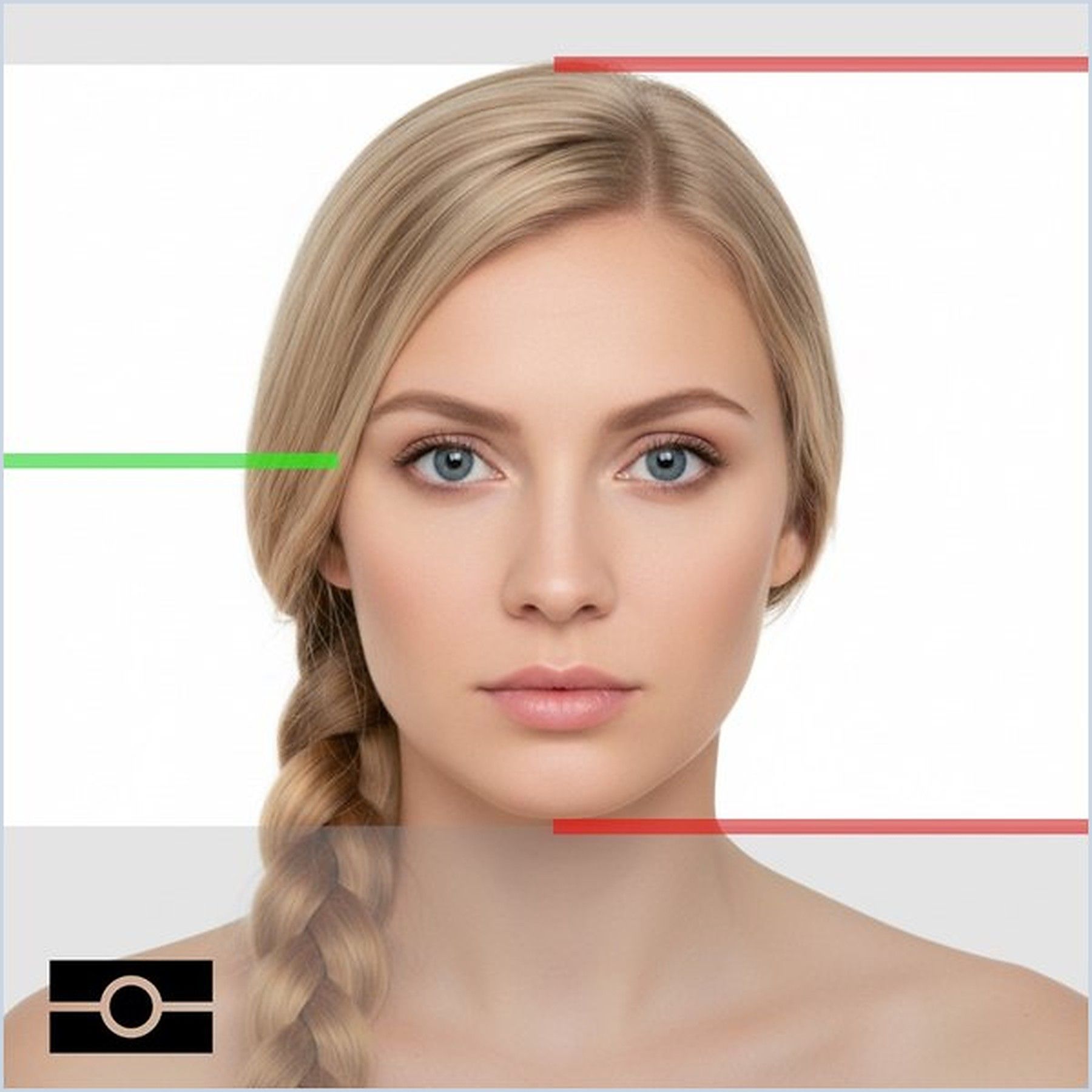
Once your eyes are clear and unobstructed, your portrait must also meet exact geometric placement inside the 2×2 inch (51×51 mm / 1200×1200 px at 600 DPI) square:
- Eye Height From Bottom Border: Your eyes must sit between 1⅛ inches and 1⅜ inches (28.5 mm to 35 mm, or 56.25% to 68.75%) measured up from the bottom edge of the photograph, and both pupils must lie on a level horizontal line.
- Total Head Height (Chin to Crown): Your head must measure between 1 inch and 1⅜ inches (25 mm to 35 mm, or 50% to 69%) from the bottom of the chin to the top of the skull crown.
5. What If My Current Passport Has Glasses—Or I Wear Glasses at Airport Security?
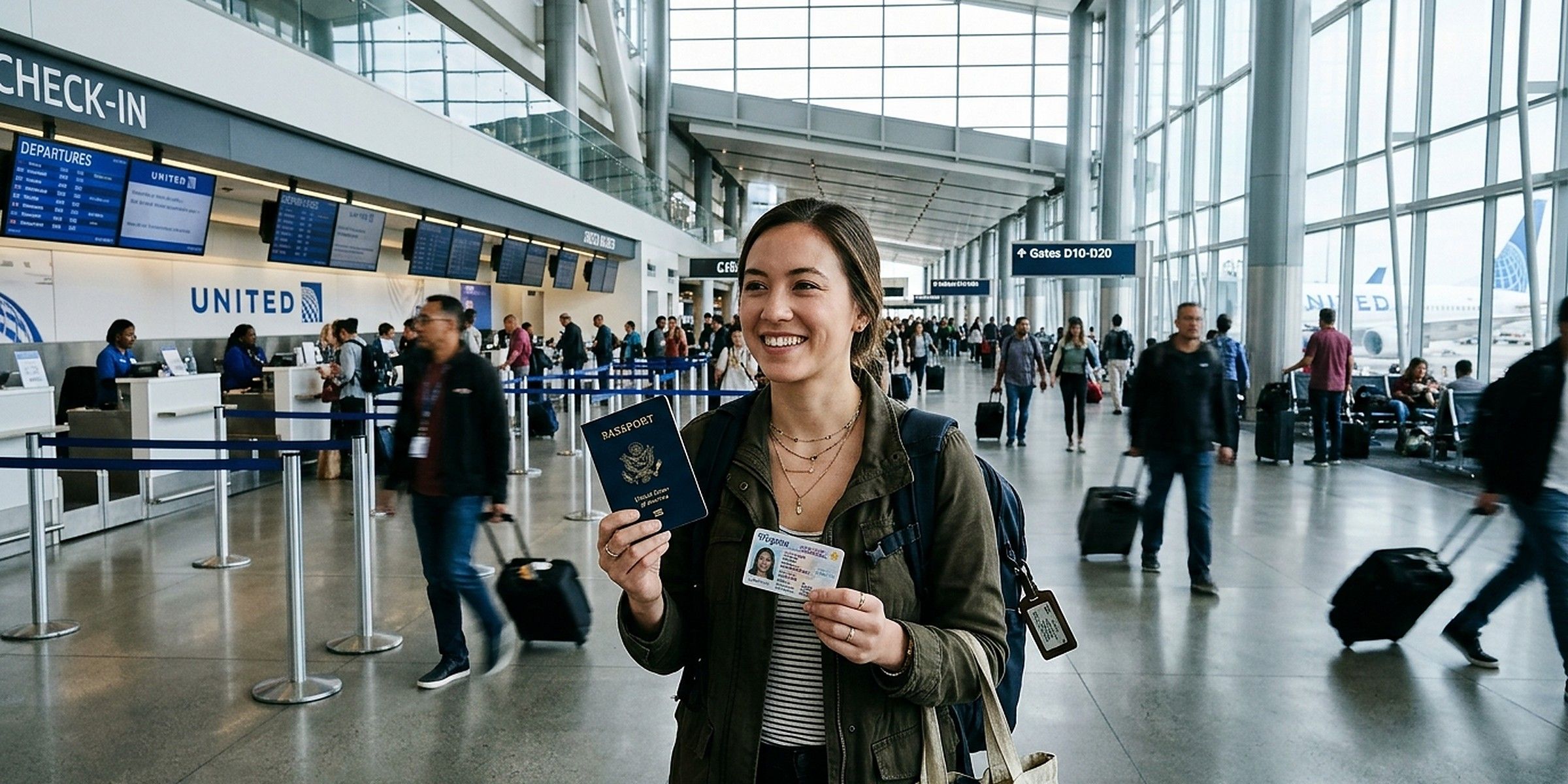
If your current unexpired U.S. passport was issued before November 1, 2016 with glasses, it remains 100% valid until its printed expiration date—and wearing prescription glasses at airport security when your passport photo has no glasses causes zero issues at TSA checkpoints or CBP e-Gates.
When you walk up to a TSA PreCheck Credential Authentication Technology (CAT-2) camera or a U.S. Customs and Border Protection Global Entry / Simplified Arrival biometric kiosk, the officer or screen prompt will simply ask you to slide your glasses off for two seconds while the live camera compares your permanent orbital and nasal bone structure against the chip in your passport or REAL ID driver's license. Once you renew your passport—whether by mail or via our guide to MyTravelGov online passport renewal photo upload rules—your new photo must be taken without glasses.
6. Frequently Asked Questions (US Passport Photo Glasses Rules)
Can I wear my prescription glasses in a US passport photo if I wear them every day?
No, since November 1, 2016, the U.S. Department of State strictly bans all prescription eyeglasses in U.S. passport book, passport card, and visa photos—even if you wear them every waking hour. You must remove your frames for the photograph unless you qualify for a post-surgical medical exception.
Can I wear glasses with non-glare or anti-reflective lenses in a passport photo?
No, eyeglasses with anti-reflective (AR) coatings, blue-light filters, or clear non-prescription frames are still prohibited. Anti-reflective coatings reflect green, blue, or violet light directly into camera sensors, and frame rims cast micro-shadows across the orbital sockets that blind federal facial recognition scanners.
What must a doctor's note say for a passport photo medical glasses exception?
To qualify for a medical eyewear exception, you must submit a signed statement on official letterhead from a licensed medical doctor or ocular surgeon confirming you cannot remove your glasses due to recent ocular surgery or medical necessity where removal risks physical harm to your eyes.
Can I wear clear contact lenses in my US passport photo?
Yes, clear prescription contact lenses (both soft lenses and rigid gas-permeable lenses) are 100% permitted in U.S. passport and visa photos because they do not alter your iris pigmentation, pupil size, or orbital geometry. However, colored contacts and pupil-enlarging circle lenses are strictly prohibited.
Will TSA or customs stop me if I wear glasses at the airport but not in my passport photo?
No, wearing prescription glasses at airport security or international border control while your passport photo shows you without glasses causes zero delays. TSA officers and CBP facial comparison e-Gates simply ask travelers to slide their glasses off for two seconds during the live camera scan.
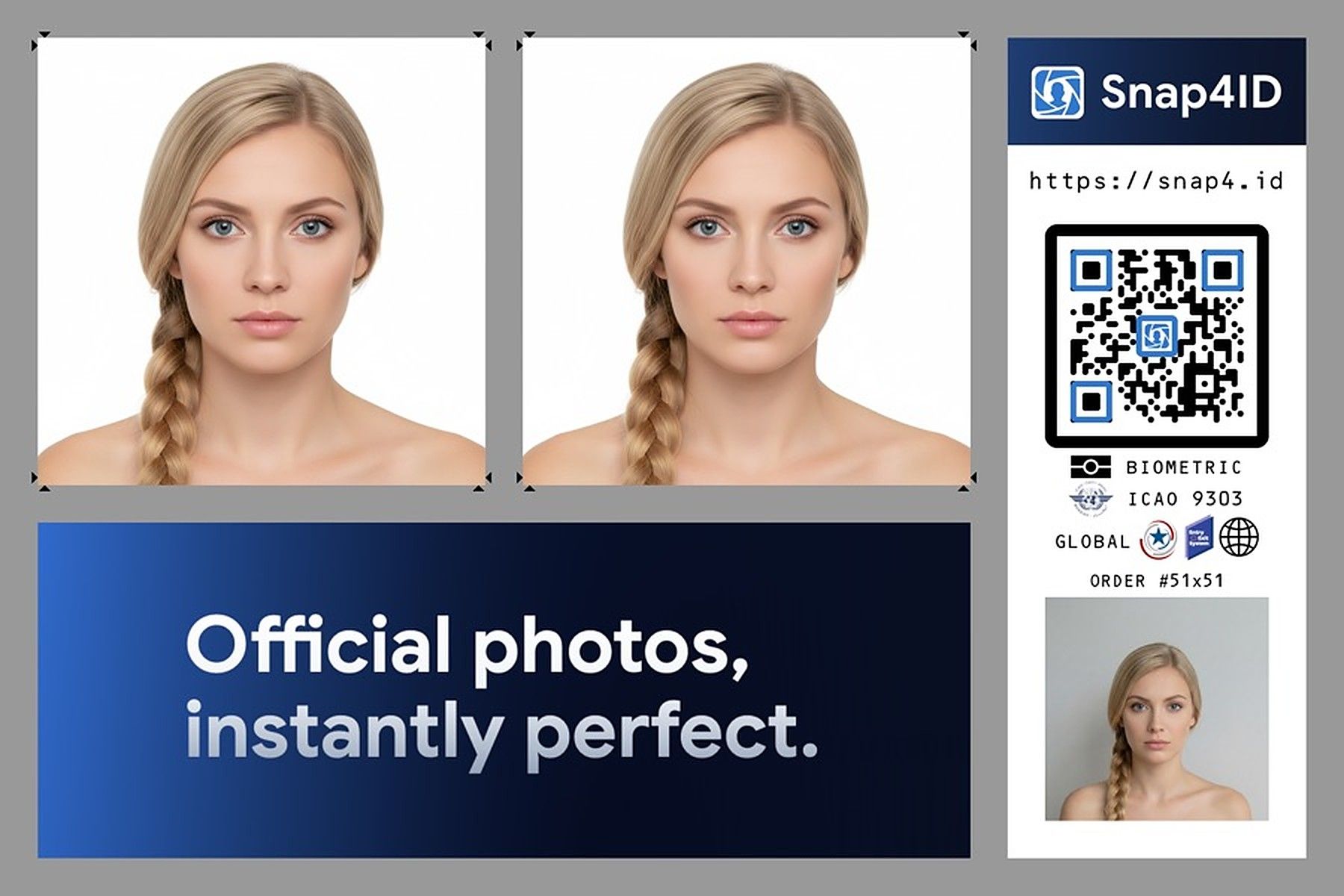
No squinting at pharmacy counters. Snap4ID checks 478 biometric points, verifies your 1⅛"–1⅜" eye level, sets a pure white (#FFFFFF) background, and gives you a digital file plus a $0.39 4×6" print sheet—backed by our 100% acceptance guarantee. Create Your 2×2 US Passport Photo Now →