What to Wear for a US Passport Photo: Clothing, Glasses, Hair, and Beard Rules (2026)
Official 2026 US passport photo dress code: best dark shirt colors, why white tops & uniforms fail, the strict no-glasses rule, plus hair, hijab & beard rules.
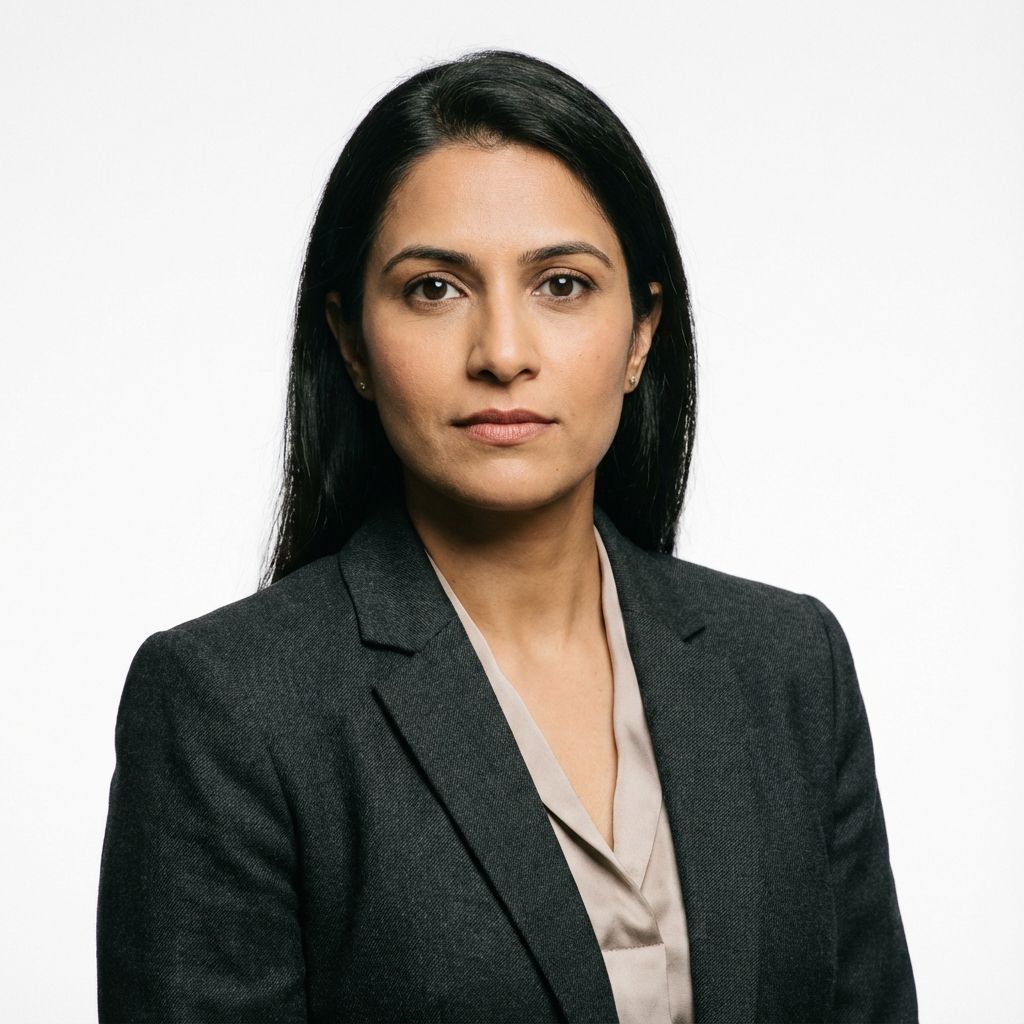
Table of Contents
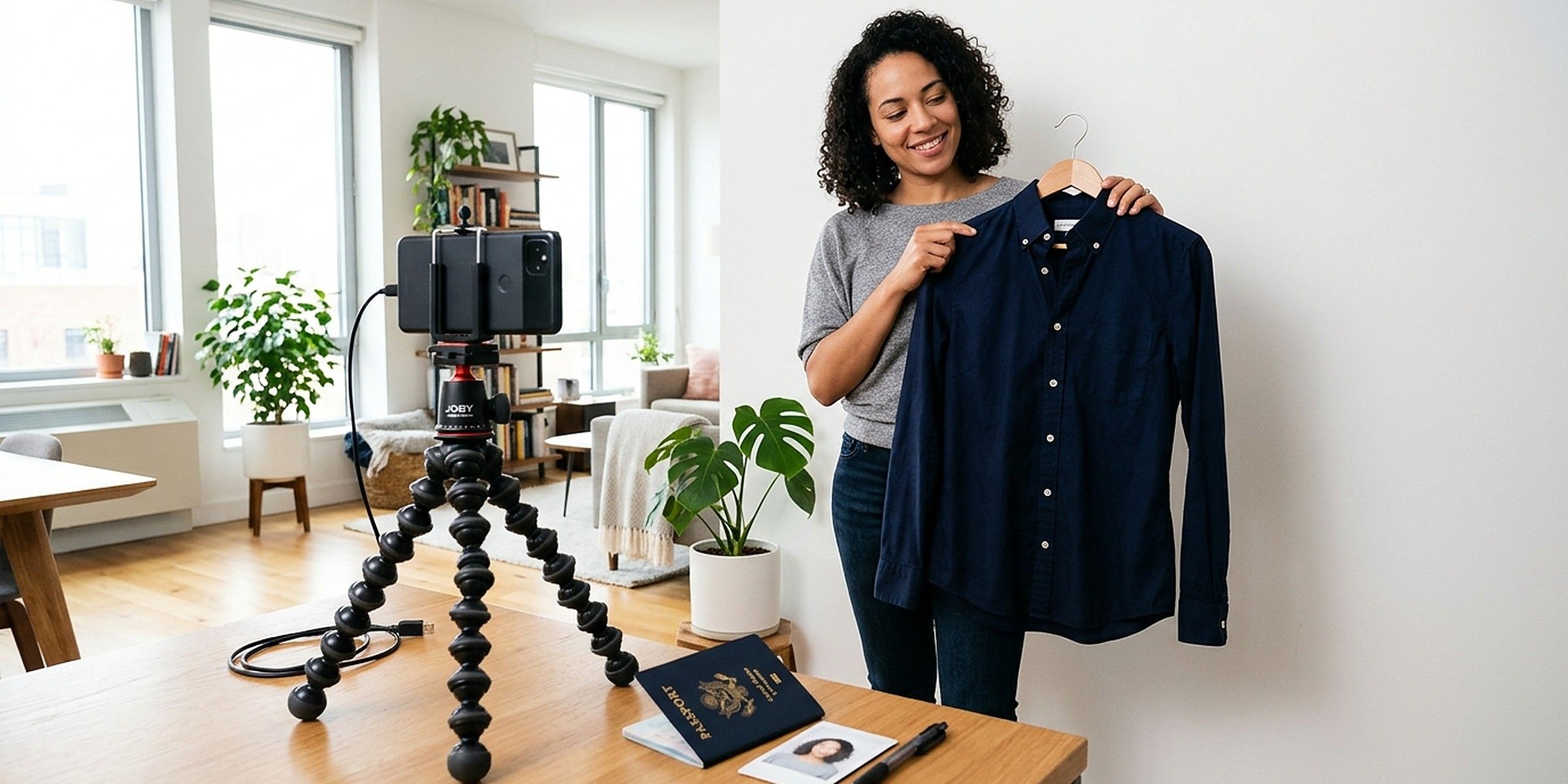
For a compliant 2026 U.S. passport photo, the U.S. Department of State requires normal everyday street attire—ideally a solid, medium-to-dark crew-neck shirt, polo, button-down, or blazer that contrasts sharply against the mandatory pure white (#FFFFFF) background. You must remove all eyeglasses (banned since November 2016), avoid military or work uniforms and camouflage, and keep your hair and bangs clear of your eyebrows. Whether you are preparing a US passport photo or a US visa photo at home, Snap4ID's AI engine checks 478 biometric points, replaces your background with pure white while preserving clean shoulder contrast, and backs your photo with a 100% acceptance guarantee.
- Best Shirt Colors & Necklines: Wear solid dark or jewel-tone tops (navy blue, charcoal gray, black, burgundy, or forest green) with a visible crew or collared neckline; avoid white shirts ("floating head" effect) and strapless/low-cut tank tops ("bare shoulder" rejection).
- Strict Uniform & Camouflage Ban: Military dress or combat uniforms, camouflage patterns, police/firefighter uniforms, pilot epaulettes, and medical scrubs with insignia are strictly prohibited (only daily religious attire is exempt).
- Zero Eyeglasses Allowed: All prescription glasses, reading glasses, and blue-light frames must be removed unless you submit a signed doctor's statement for recent ocular surgery; clear contacts are allowed, but colored/circle lenses are banned.
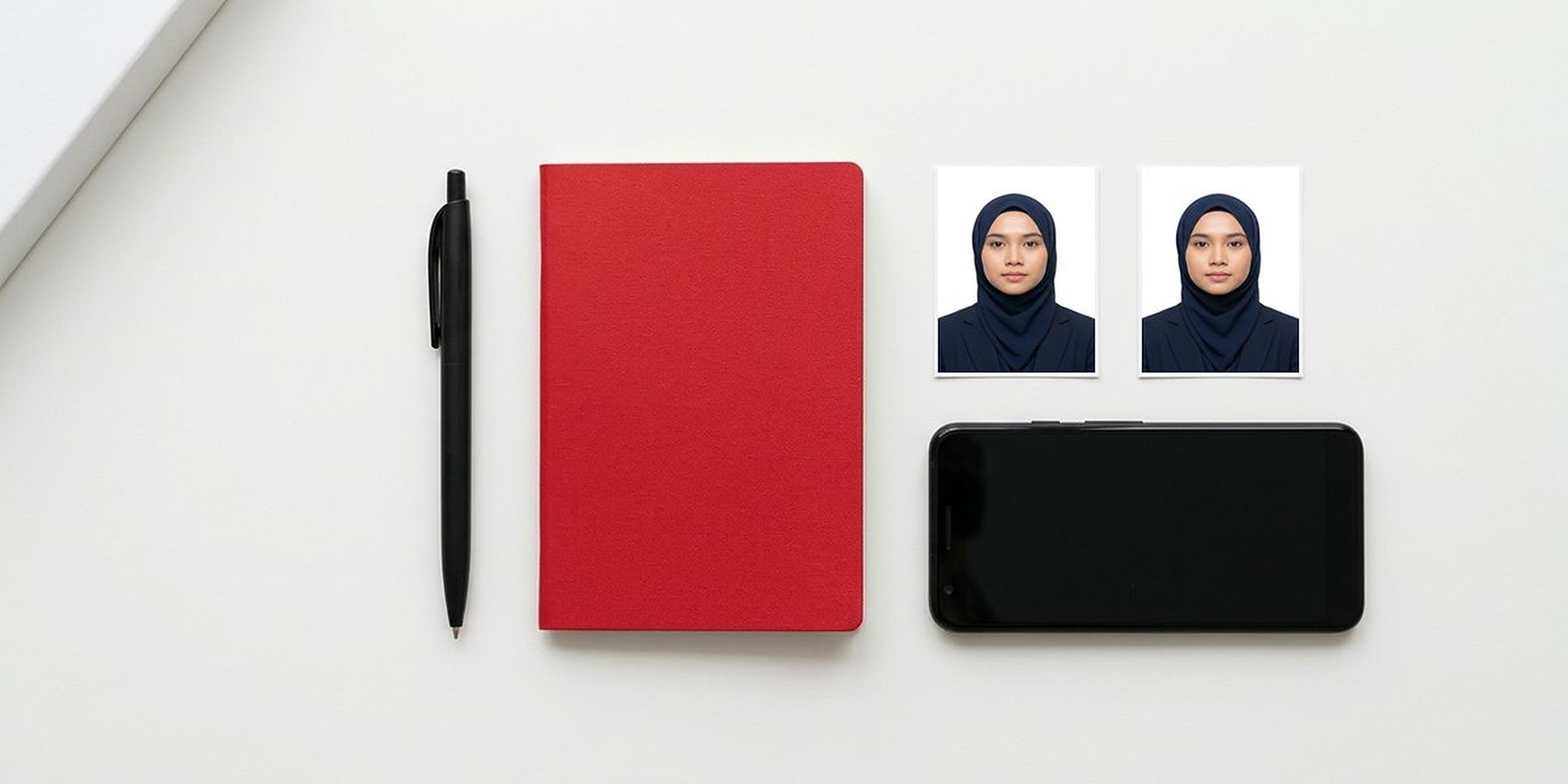
- Hair, Hijabs & Beards: Hair may be worn down as long as eyebrows and cheekbones are 100% visible; religious headwear is permitted with a signed statement if the full facial oval is clear; beards and everyday earrings/nose studs are completely allowed.
Because a U.S. passport book is valid for 10 years for adults (and 5 years for children under 16), your photograph not only determines how fast the National Passport Processing Center approves your application—it is also the biometric reference image scanned by U.S. Customs and Border Protection (CBP) e-Gates around the world for the next decade. Below is the complete 2026 attire, eyewear, hairstyle, headwear, and facial hair rulebook based on official State Department guidelines.
1. Best Shirt Colors & Necklines for a US Passport Photo (And What Gets Rejected)
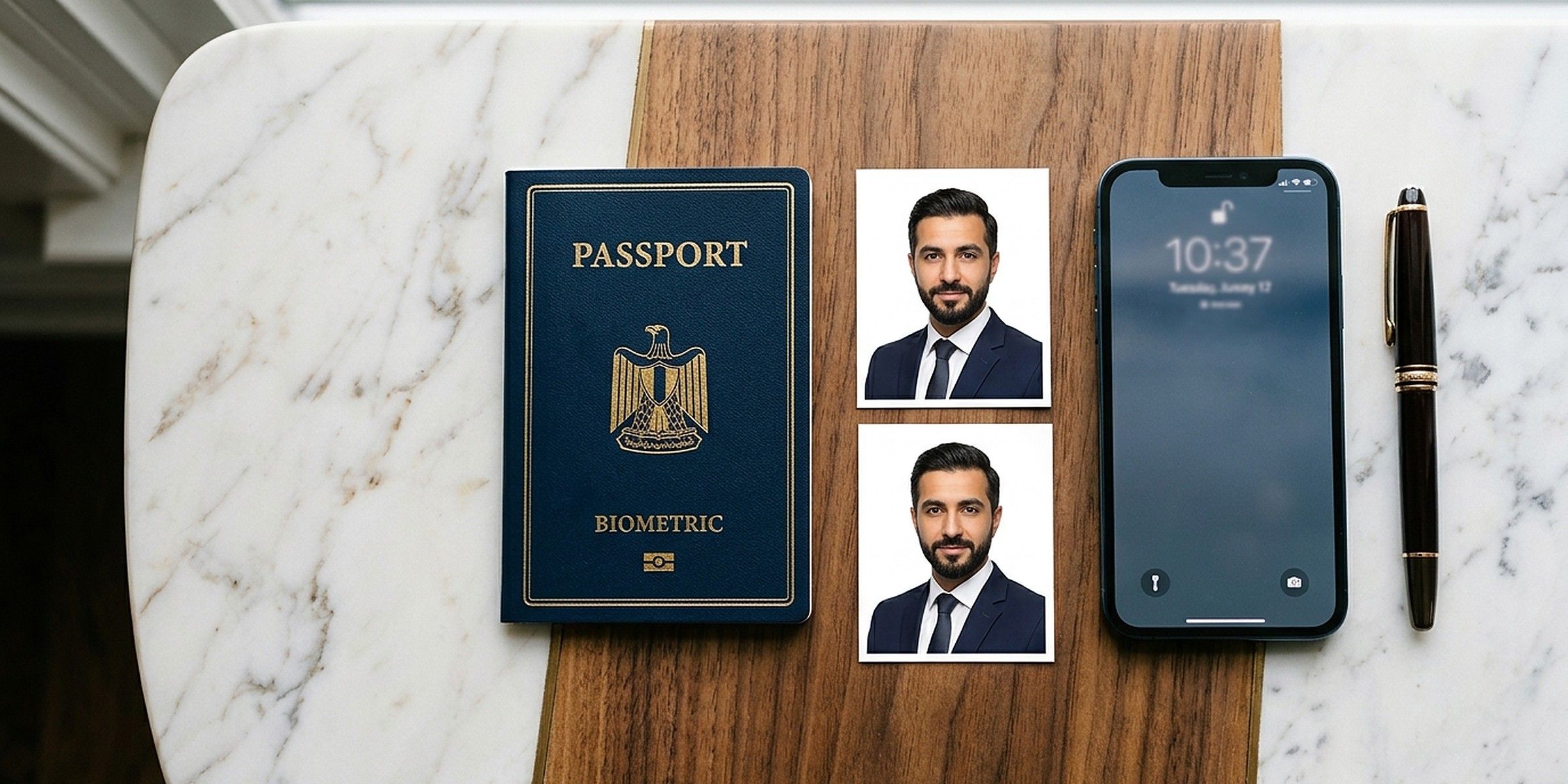
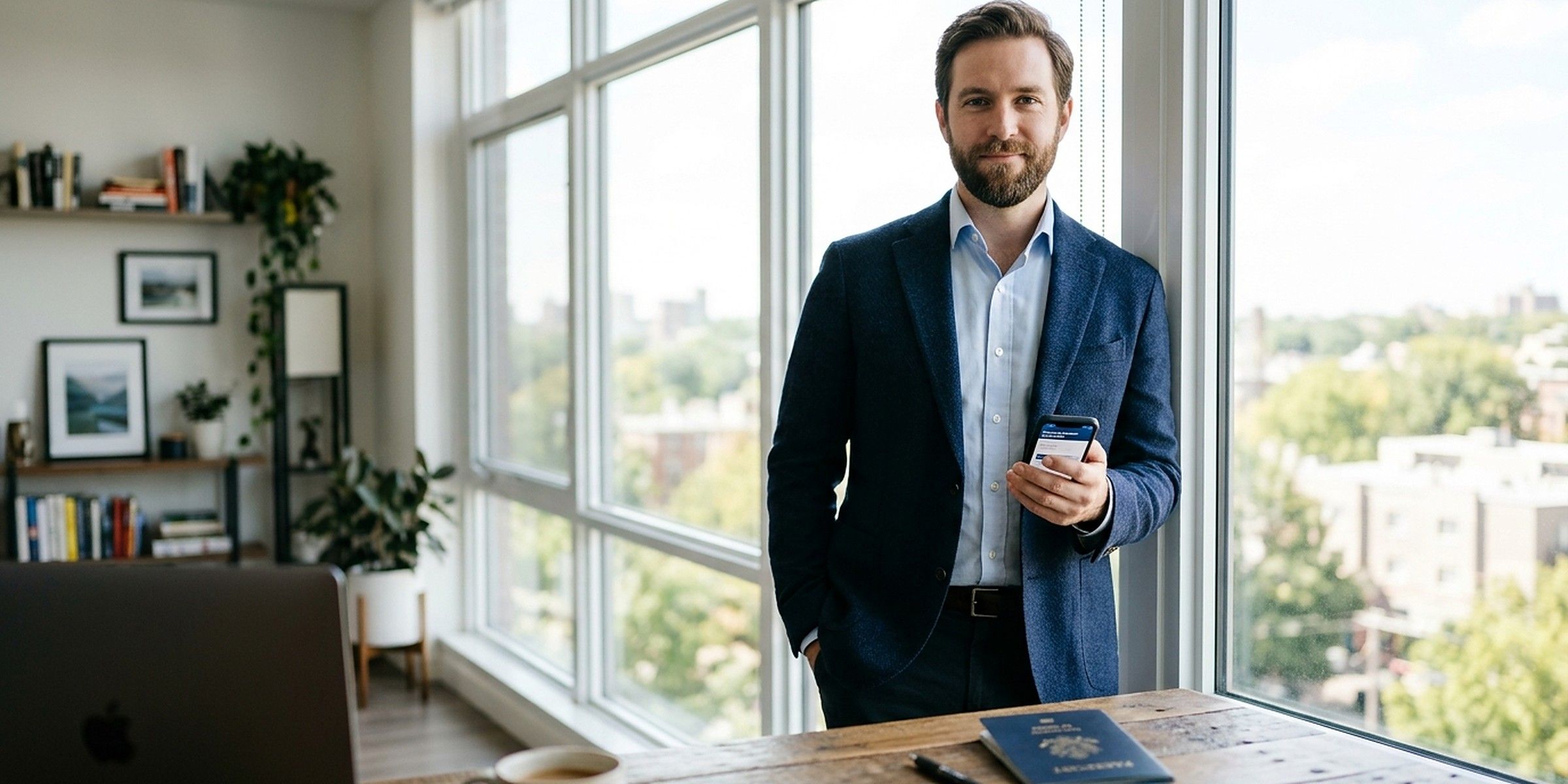
The best clothing for a U.S. passport photo is a solid, medium-to-dark top—such as navy blue, charcoal gray, black, emerald green, or burgundy—with a crew neck, collar, or blazer lapel that sits visibly above the collarbone and contrasts cleanly against the pure white (#FFFFFF) background.
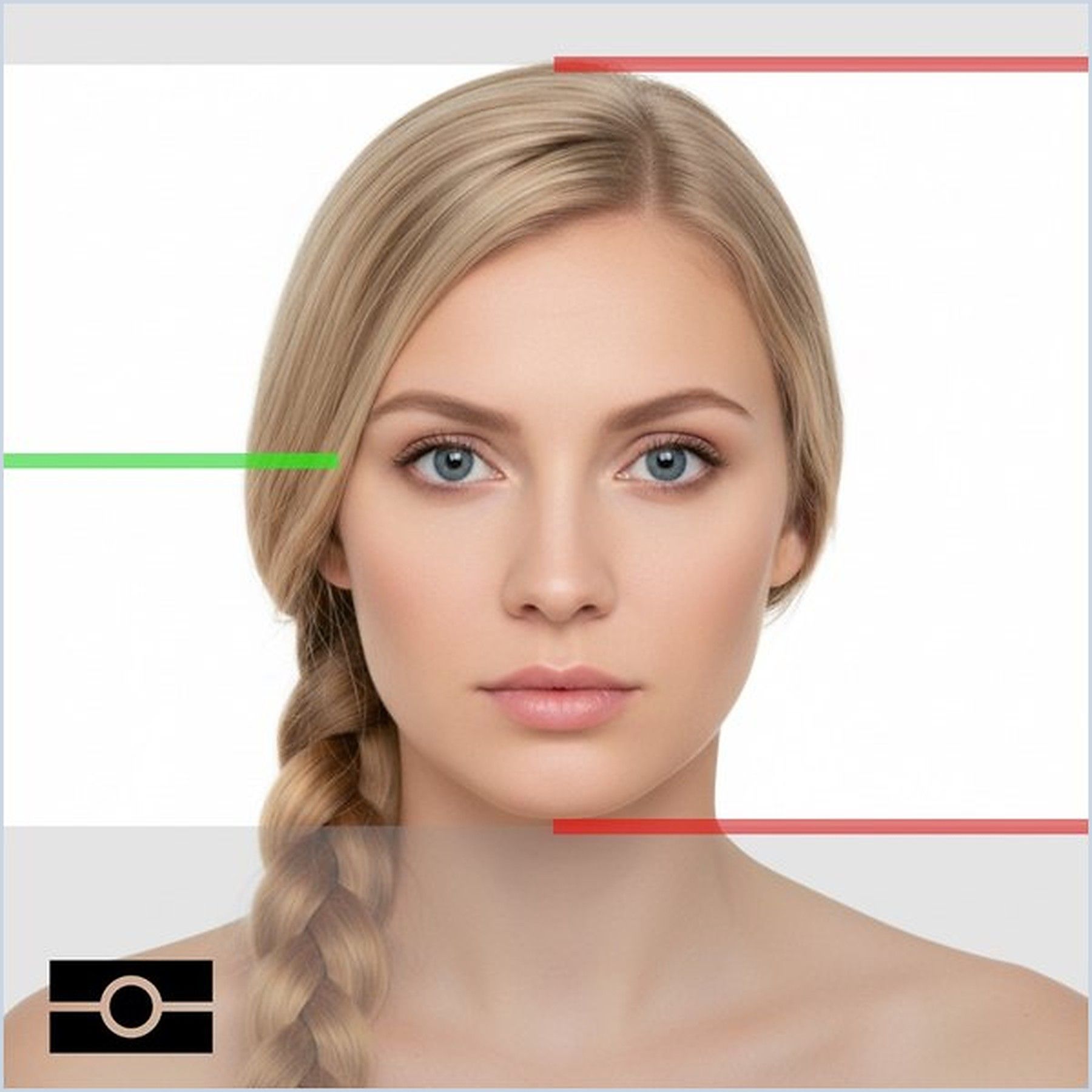
To understand why shirt color and neckline height matter so much, look at the geometry of a standard 2×2 inch (51×51 mm / 1200×1200 px at 600 DPI) U.S. passport frame. With your head occupying 50% to 69% (1 to 1⅜ inches) of the vertical height and your eyes positioned 1⅛ to 1⅜ inches from the bottom border, only the bottom 15% to 22% of the square captures your neck, collarbones, and upper shoulders.
| Appearance Category | Allowed (✔ DO Wear) | Prohibited (✘ DON'T Wear) | Official 2026 State Dept Rule |
|---|---|---|---|
| Shirt Colors | Solid navy blue, charcoal, black, burgundy, royal blue, forest green, deep plum | Pure white, ivory, cream, pale beige, neon reflectors, camouflage prints | Shoulders must contrast clearly against the plain white (#FFFFFF) background. |
| Necklines & Cuts | Crew necks, collared button-downs, polos, blouses, turtlenecks, blazers | Spaghetti-strap tank tops, tube tops, off-the-shoulder tops, deep V-necks, bulky hoods | Fabric must remain visible inside the bottom of the 2×2" crop so shoulders do not look bare. |
| Uniforms & Workwear | Everyday civilian business casual or smart casual tops | Military uniforms (dress or camo), police/pilot uniforms, epaulettes, branded scrubs | All uniforms and uniform-like clothing are banned under 7 FAM 1300 Appendix M. |
| Eyeglasses & Contacts | No glasses; clear prescription contact lenses | Everyday prescription glasses, blue-light lenses, reading glasses, colored/circle contacts | Blanket ban on eyeglasses since Nov 2016 unless accompanied by a signed surgeon's note. |
| Hats & Headwear | Daily religious headwear (hijab, turban, kippah) or medical wraps with signed statement | Baseball caps, beanies, fashion hats, bandanas, wide headbands, sunglasses on head | Full facial oval from bottom of chin to top of forehead and both eyebrows must be visible. |
| Hair & Bangs | Hair down or neatly tied back; bangs swept clear of eyebrows; low buns | Bangs covering eyebrows or eyes; hair hiding cheekbones; towering top-knots cropped at top | Eyebrows and outer facial edges must be unobstructed; hair does not have to be behind ears. |
| Beards & Facial Hair | Natural beards, mustaches, and goatees worn in daily life | Costume or prosthetic facial hair that obscures lip line | 100% allowed; no need to renew passport when growing or shaving a beard. |
| Jewelry & Devices | Small earrings, permanent nose studs, natural matte everyday makeup | AirPods, Bluetooth headsets, oversized reflective hoops, heavy SPF/highlighter glare | Zero electronic devices allowed; jewelry must not cast glare or hide facial contours. |
Can You Wear a White Shirt in a US Passport Photo? (The "Floating Head" Trap)
While the U.S. Department of State Passport Photo Requirements (Travel.State.Gov) do not contain a literal statute outlawing white fabric, their official guidance explicitly warns applicants not to wear white clothing. When you wear a pure white, ivory, cream, or very pale pastel shirt against a mandatory #FFFFFF pure white backdrop, bright lighting washes out the seam between your collar and the wall.
This creates the notorious "floating head" effect, where your neck appears detached in midair and automated edge-detection software at the National Passport Processing Center cannot verify your shoulder alignment. If you are already wearing a white T-shirt or blouse, simply slip a dark cardigan, sweater, or tailored jacket over your shoulders for the 30 seconds it takes to snap your photo.
Why Tank Tops, Tube Tops, and Wide Necklines Trigger Rejections
Counter-Intuitive Summer Top Trap: Never wear a strapless tube top, off-the-shoulder blouse, wide boat-neck sweater, or thin spaghetti-strap tank top for a U.S. passport photo! Because the 2×2 inch crop cuts off just below the collarbones, low necklines fall completely below the bottom edge of the photo—making you appear bare-chested/naked in the final square and causing an immediate administrative rejection.
Similarly, avoid wearing heavy winter parkas, puffed-up fleece zip-ups, or thick infinity scarves that bunch up over your chin and jawline, as well as hoodies whose hood bunches up behind your ears like a pillow. A simple crew-neck T-shirt, polo shirt, collared button-down, or V-neck that sits high on the collarbone guarantees that fabric is clearly visible at the bottom of the 2×2 inch frame.
The Strict Ban on Military Uniforms, Scrubs, Epaulettes, and Camouflage
Under federal regulations codified in 7 FAM 1300 Appendix M (State Department Biometric Photograph Standards), applicants are strictly prohibited from wearing uniforms, clothing that looks like a uniform, or camouflage attire in a regular (tourist) U.S. passport photo. This prohibition is designed to prevent civilian passport holders from appearing to travel on official government or military orders. Prohibited items include:
- U.S. Armed Forces Attire: Active-duty dress uniforms, Operational Camouflage Pattern (OCP) fatigues, flight suits, and garments with military rank insignia or medals.
- Civilian & Commercial Uniforms: Police, sheriff, or security badges and shirts; airline pilot or flight attendant shirts with shoulder epaulettes; firefighter turnouts; Scouting uniforms; and hospital scrubs embroidered with medical logos.
- Civilian Camouflage Prints: Hunting jackets, woodland/desert camo T-shirts, or camo-patterned collars—even if purchased at a civilian clothing store.
2. Can You Wear Glasses or Contact Lenses in a US Passport Photo?
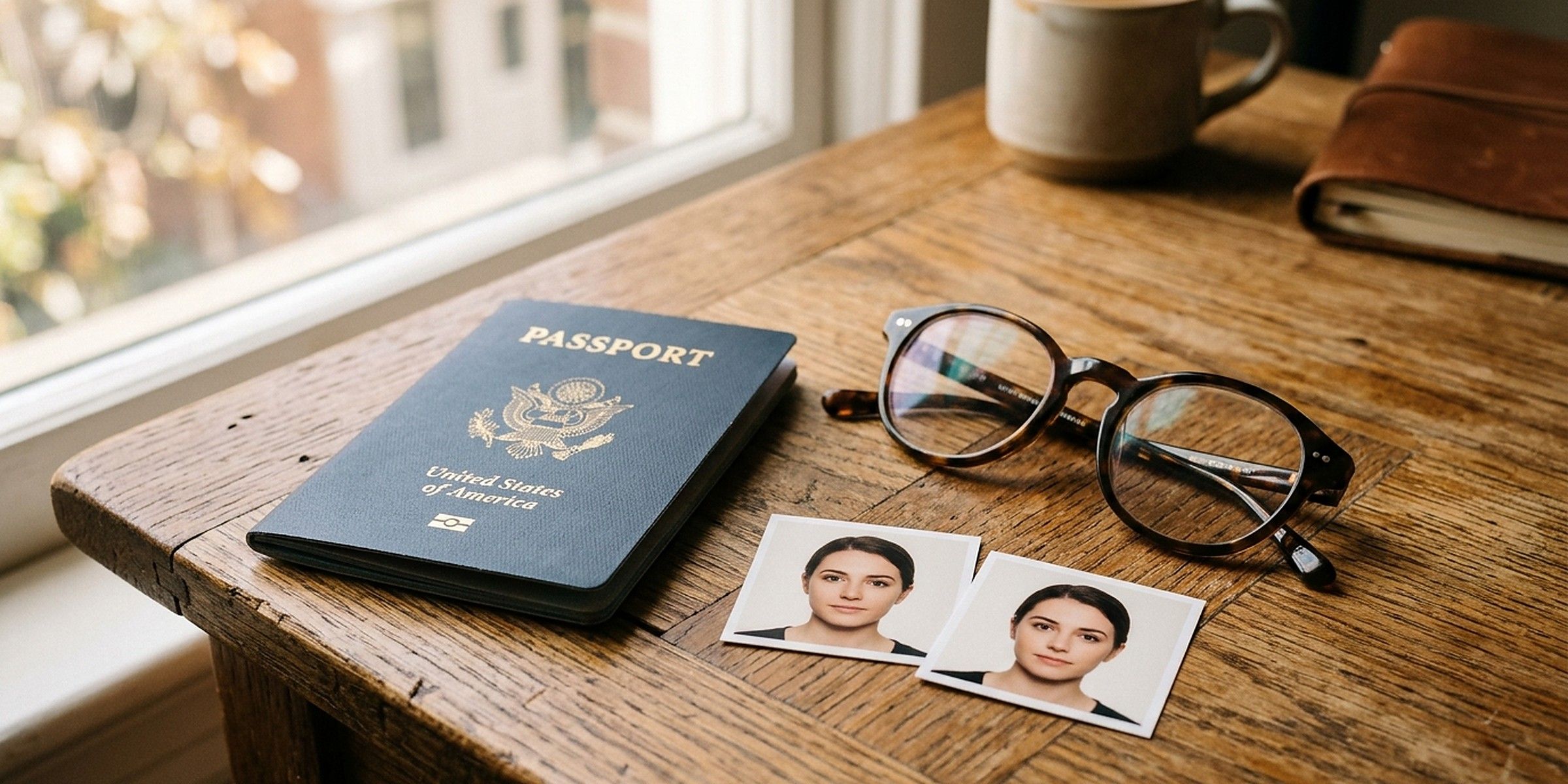
No, you cannot wear eyeglasses of any kind in a U.S. passport photo. Since November 1, 2016, the U.S. Department of State has enforced a mandatory ban on all prescription glasses, reading glasses, blue-light frames, and tinted lenses—while clear prescription contact lenses remain 100% permitted.
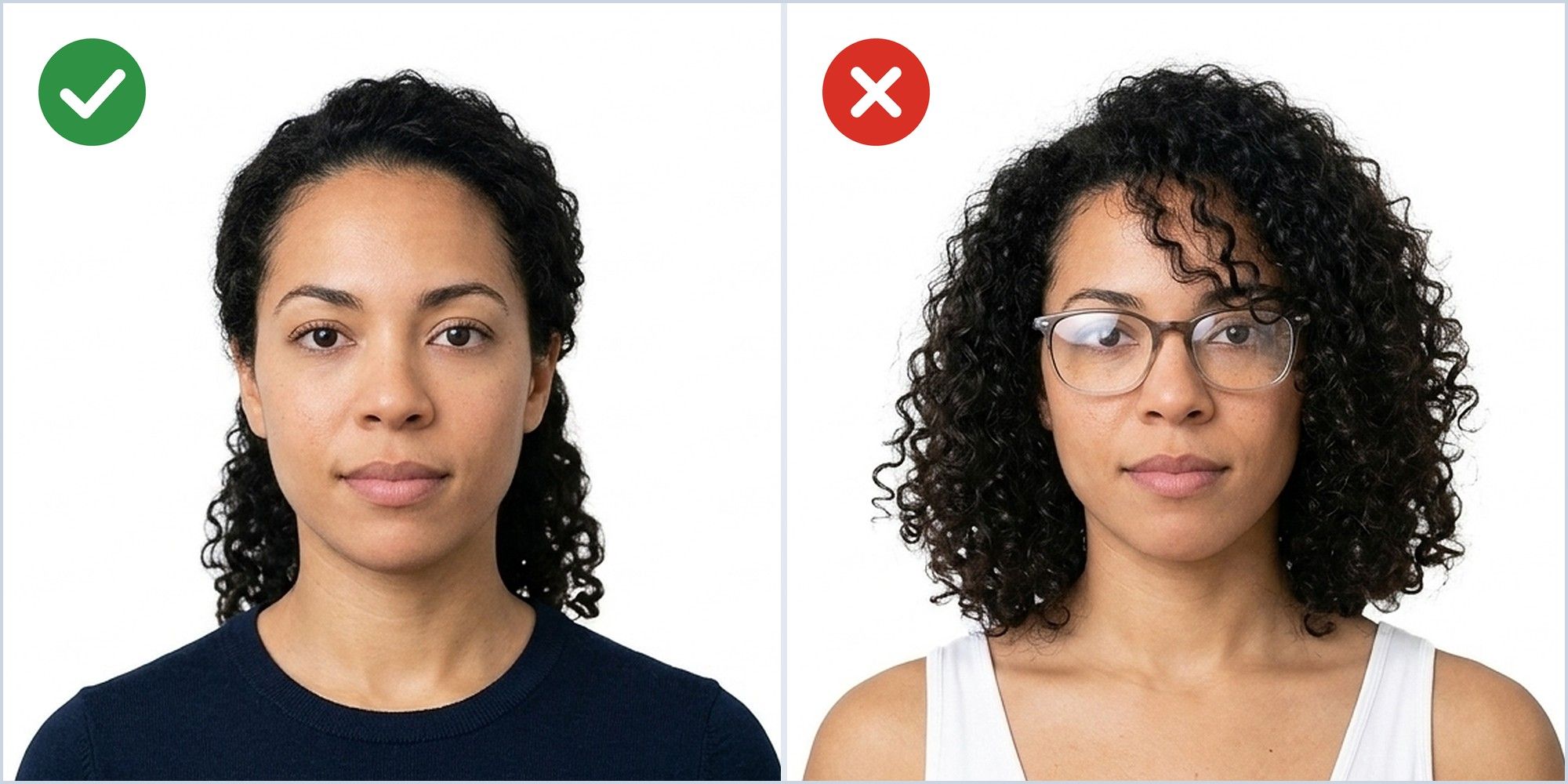
✔ DO: Compliant Attire & Facial Framing
- Wear a dark, solid crew-neck or collared shirt: Navy, black, charcoal, or burgundy creates crisp shoulder contrast against
#FFFFFFwhite. - Take off all eyeglasses before shooting: Remove everyday prescription frames and blue-light glasses so your tear ducts and iris edges are 100% unobstructed.
- Keep both eyebrows and cheekbones visible: Sweep bangs above your brow line and keep hair from falling across the front of your cheeks.
- Leave natural beards and everyday studs as-is: Normal facial hair and small non-reflective earrings or nose studs are fully accepted.
✘ DON'T: Instant Dress Code Rejections
- Don't wear white shirts or strapless tops: White tops blend into the background, and low tube/tank tops make you look bare-shouldered inside a
2×2"crop. - Don't wear military uniforms or camo patterns: Any uniform, pilot epaulette shirt, or camouflage print triggers an immediate federal hold letter.
- Don't wear glasses on your face or head: Even non-glare prescription lenses or sunglasses pushed up onto your hair cause automatic rejection.
- Don't leave AirPods or colored contacts in: Wireless earbuds, headphones, and iris-altering colored contact lenses are strictly banned.
How the Signed Doctor's Statement Works for Medical Eyewear
Before the State Department banned glasses in late 2016, eyeglasses were the #1 cause of rejected U.S. passport applications nationwide—accounting for more than 200,000 delayed passports per year because lens edges refracted the outer corners of the eyes and anti-reflective coatings produced green or purple micro-glare that blinded automated airport e-Gates. Today, the only exception to the no-glasses rule applies if you cannot remove your glasses for documented medical reasons, such as recent ocular surgery where removing protective eyewear could damage your eyes.
To qualify for this rare exemption, you must include a physical signed statement from a licensed medical doctor or health practitioner with your passport application explaining the medical necessity. Even with a surgeon's letter, the frames must not cover your eyes or eyebrows, the lenses cannot be tinted or photochromic (Transitions), and there must be zero flash reflection or frame shadows across your eye sockets.
Clear Prescription Contacts vs. Colored or Circle Contact Lenses
If you wear clear prescription contact lenses to correct nearsightedness, farsightedness, or astigmatism, you can leave them in during your passport photo sitting—they are completely invisible to biometric scanners and do not alter your eye geometry. However, colored contact lenses, scleral costume lenses, and pupil-enlarging "circle" lenses are strictly prohibited. Because biometric software records your natural iris pigmentation and pupil-to-sclera contrast ratio, wearing cosmetic lenses that change blue eyes to brown or artificially dilate the limbal ring will trigger a rejection (and can cause verification failures at Global Entry and CBP facial comparison kiosks). These exact eyewear rules also apply when preparing a REAL ID photo or consular visa photograph.
3. Hats, Religious Headwear (Hijab/Turban/Kippah) & Hairstyle Rules
Hats, beanies, and fashion headbands are prohibited in U.S. passport photos, while religious headwear (such as a hijab, turban, or kippah) and medical head coverings are permitted with a signed statement provided the full facial oval from the bottom of the chin to the top of the forehead remains 100% visible.
Religious & Medical Head Coverings: Forehead Visibility & Signed Statements
If you wear a hijab, turban, dastar, kippah/yarmulke, tichel, or religious habit daily in public as part of your religious observance, you have the federal right to wear it in your U.S. passport photo. When submitting your application, include a simple signed statement affirming that the head covering is worn daily in public for religious reasons (or a signed doctor's statement if worn due to chemotherapy, alopecia, or cranial surgery). To prevent automated biometric rejection when wearing a religious head covering, follow three framing rules:
- Expose the Full Facial Oval (Chin to Forehead): Pull the front edge of the scarf or turban slightly back so your entire forehead, both eyebrows, both outer cheekbones, and the bottom of your chin are completely visible.
- Eliminate Fabric Shadows Across the Eyes: Ensure the top fold of the headscarf does not overhang the brow ridge and cast a dark shadow across your eye sockets.
- Choose a Dark or Contrasting Scarf Color: Just like shirts, avoid wearing a pure white hijab or white turban against a pure white (
#FFFFFF) background so the outer contour of your head does not vanish into the backdrop.
Should You Wear Your Hair Up or Down? (Bangs, Ears, and High Top-Knot Rules)
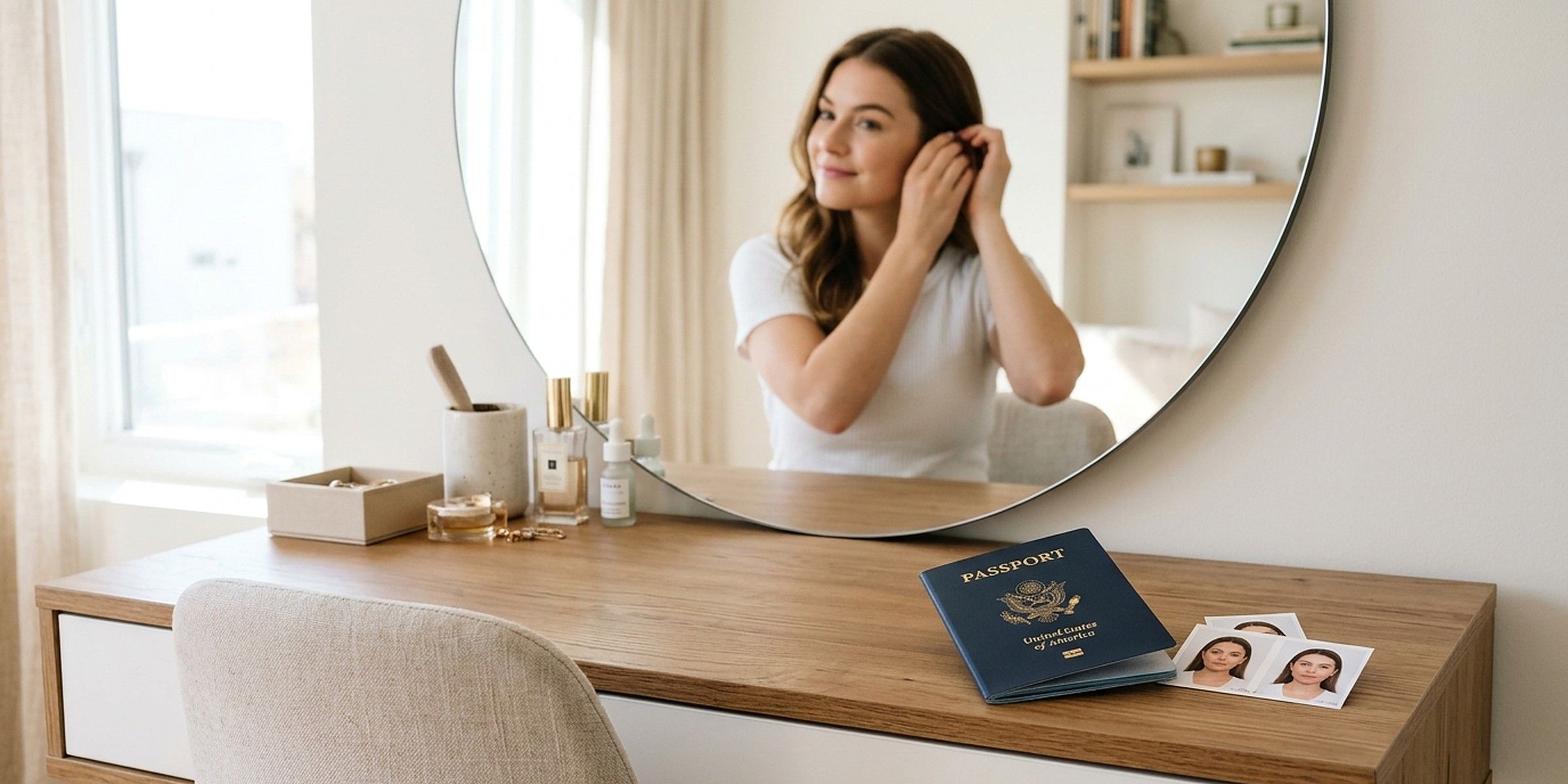
One of the most common questions applicants ask is whether they must tie their hair back or expose both ears. In the United States, you can wear your hair either up or down, and your ears do not strictly have to be visible, as long as your hairstyle obeys three biometric boundaries:
- Bangs Must Not Cover Eyebrows or Eyes: If you have curtain bangs or a heavy front fringe that falls over your eyebrows, sweep or pin them lightly to the side so both full eyebrows are clearly visible.
- Side Locks Cannot Narrow Your Cheekbones: If you wear long hair down over your shoulders, make sure the front strands do not hang over your cheeks or jawline. Tucking the front strands behind your ears is the easiest way to guarantee an unobstructed facial width.
- Avoid Towering Top-Knots That Touch the Top Border: Because the mandatory
1 to 1⅜ inch(25–35 mm) head height is measured from the bottom of the chin to the natural crown of the skull, wearing a tall bun or top-knot piled three inches above your head often causes the bun to get sliced off by the top border of the2×2 inchsquare—or tricks retail kiosks into shrinking your face too small. If you tie your hair up, use a low ponytail or low bun at the nape of your neck.
4. Beards, Mustaches, Facial Piercings, Jewelry, and Makeup Rules
Beards, mustaches, everyday earrings, small nose studs, and natural matte makeup are 100% allowed in U.S. passport photos, and you do not need to apply for a new passport if you later grow or shave facial hair—provided your core facial bone landmarks remain clear and free of glare.
Do You Have to Shave Your Beard—Or Get a New Passport If You Grow One?
No, you never need to shave a beard or mustache for a U.S. passport photo, and you do not need to renew your passport if you shave off a long beard or grow one after your passport is issued. Modern facial-recognition systems used by the U.S. State Department and CBP measure permanent craniofacial geometry—such as interpupillary distance, nasal bridge ratios, and orbital socket depth—which remain unchanged regardless of facial hair or hair dye. According to official State Department policy, you only need to apply for a new passport for appearance changes if you have undergone significant facial surgery or trauma, added or removed numerous/large facial tattoos or piercings, or completed a gender transition. For visual examples of pose and expression rules, check our guide to the DOs and DON'Ts on a US passport photo.
Earrings, Nose Piercings, Matte Makeup, and the Strict No-AirPods Rule
Everyday jewelry and cosmetics are permitted as long as they do not interfere with biometric landmark detection:
- Earrings, Nose Studs & Permanent Piercings: Small stud earrings, modest hoops, septum rings, and nostril studs are completely allowed as long as they do not hide the crease of the nose or cast bright white specular glare under camera lighting.
- Natural Matte Makeup (Avoid SPF Flashback): Everyday foundation, concealer, mascara, eyeliner, and neutral lipstick are welcome. Avoid heavy metallic highlighter on the bridge of the nose or cheekbones, which looks like wet sweat or flash glare on digital sensors, and avoid heavy contour that alters your natural bone structure.
- Remove AirPods, Earbuds & Necklaces with Reflective Plates: Wireless Bluetooth earbuds, hearing-aid-style audio headphones, and Bluetooth headsets are strictly forbidden and trigger instant rejection if left in one or both ears.
5. How Snap4ID Verifies Your Attire, Background Contrast & 2×2 Framing
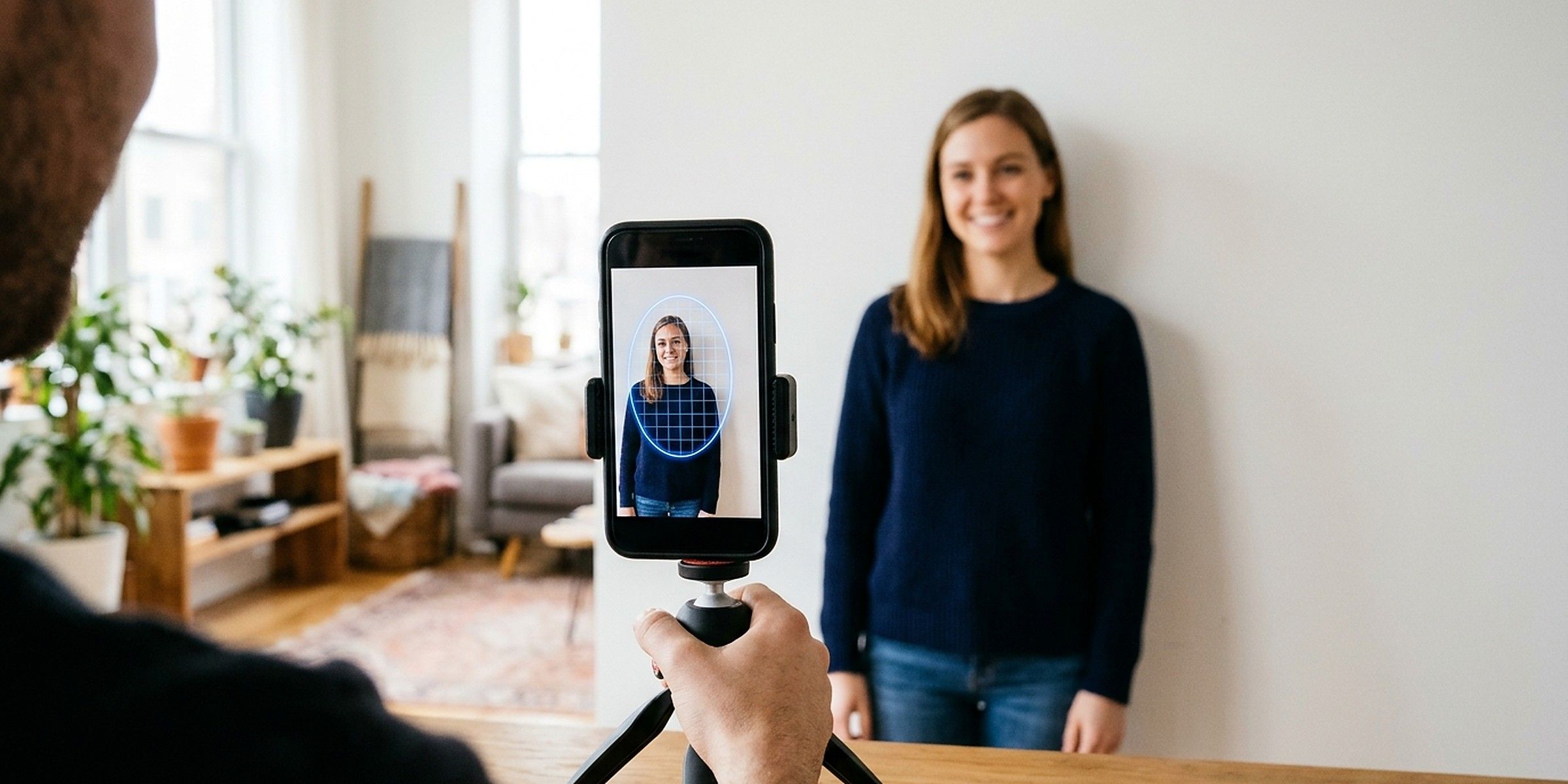
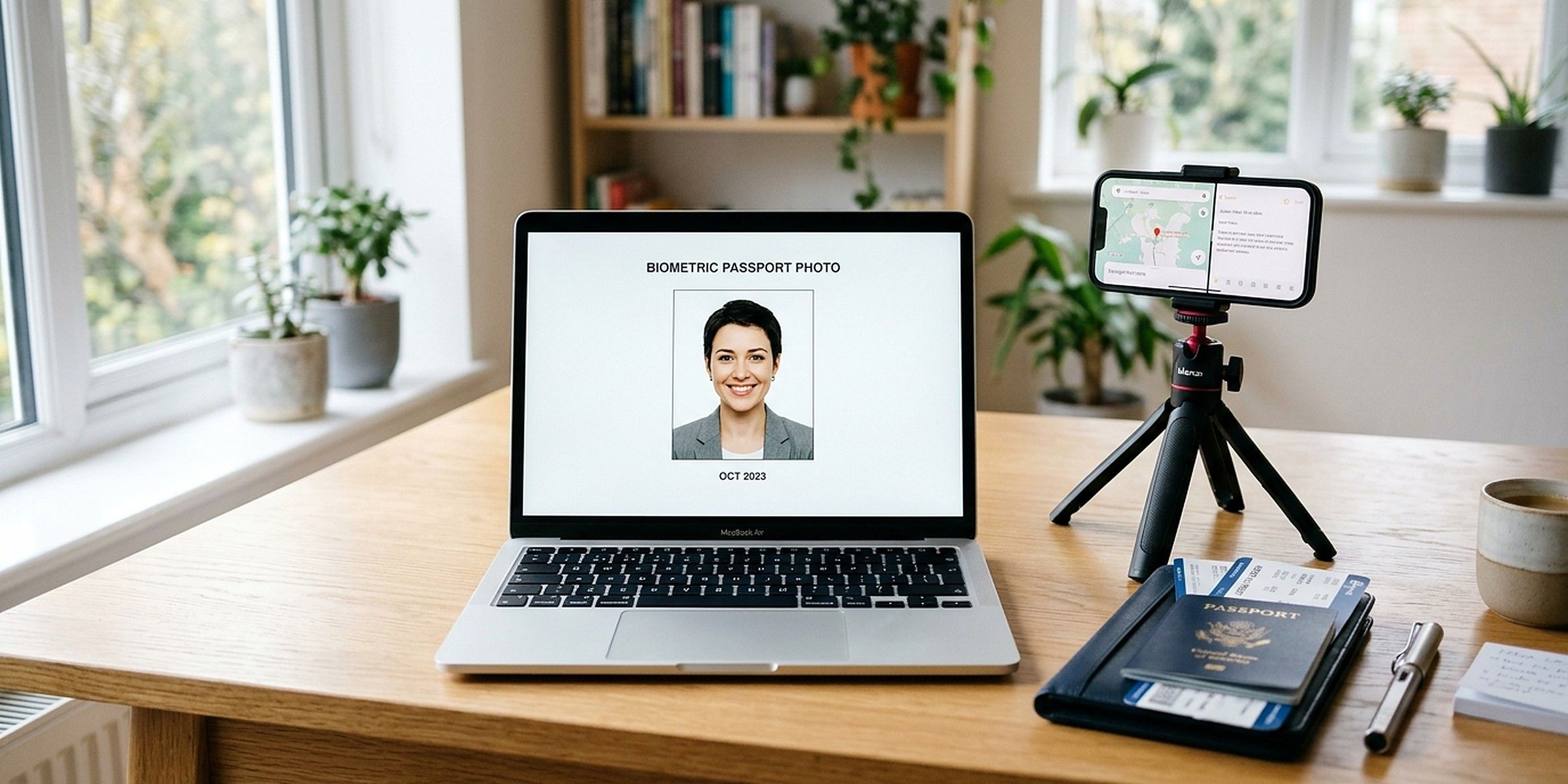
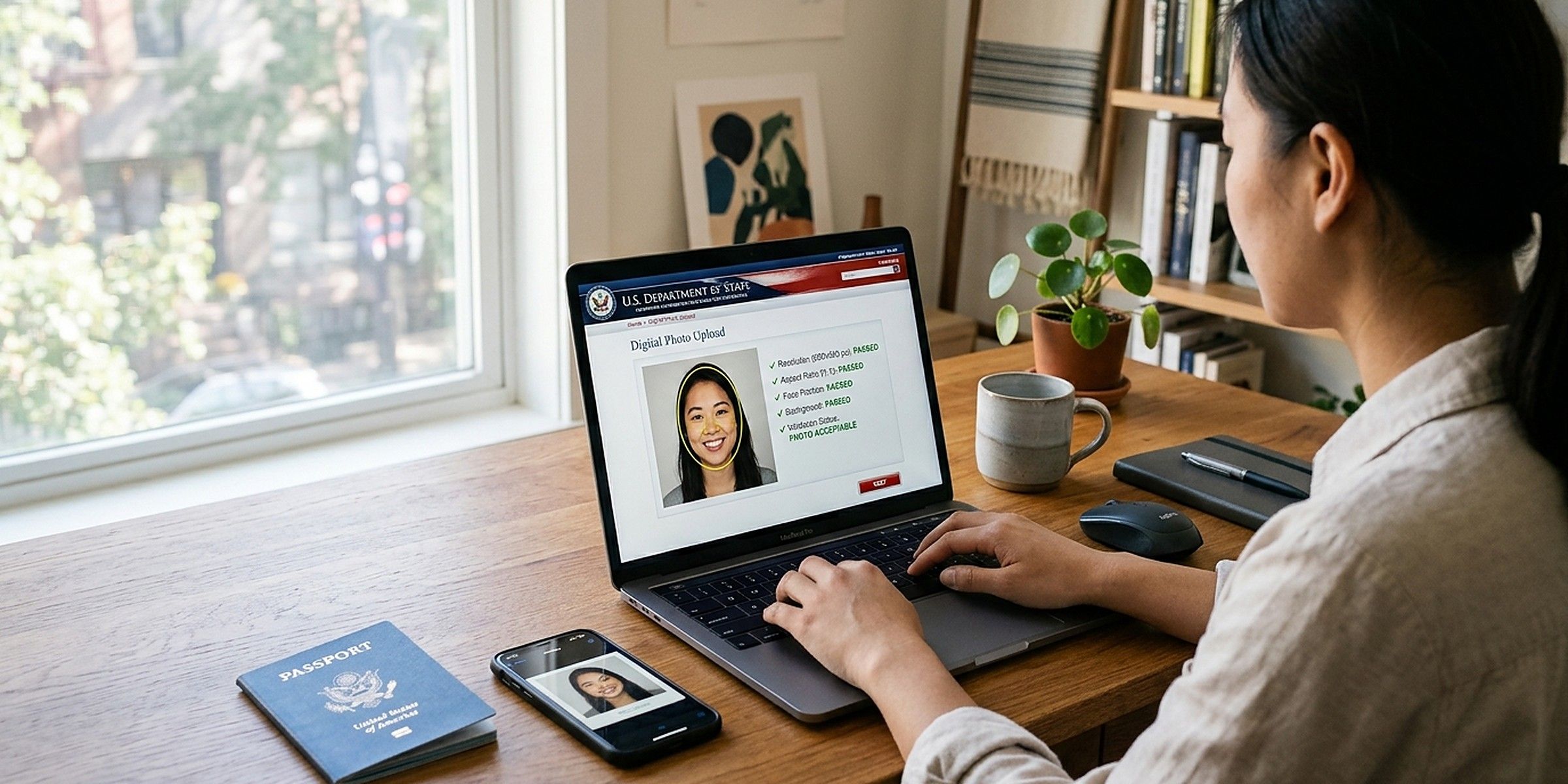
When you take a photo at home using a smartphone, Snap4ID's AI engine scans 478 biometric points on your face, verifies eyebrow and eye clearance, replaces any wall with a pure white (#FFFFFF) background while maintaining crisp collar contrast, and provides both a 1200×1200 px digital file and a 4×6 inch print sheet backed by a 100% acceptance guarantee.
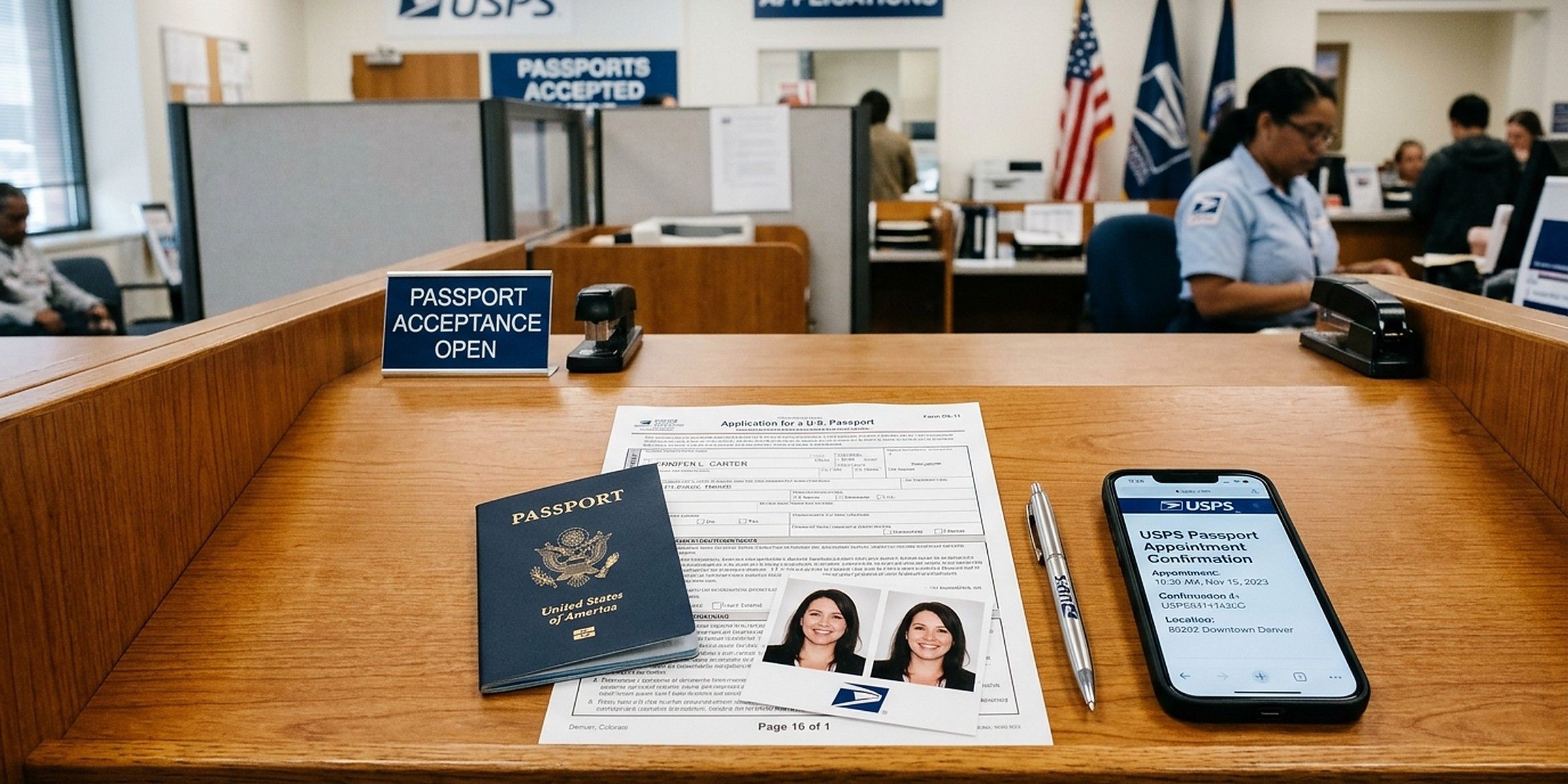
Whether you are uploading a digital JPEG to the federal portal (see our complete breakdown of MyTravelGov online passport renewal photo upload rules) or printing physical 2×2 inch squares for a Form DS-11 or DS-82 mail-in packet, you can take your picture in your own bedroom right after picking out the right dark shirt. Follow our step-by-step tutorial on how to take a passport photo from a smartphone selfie, upload your image to our US passport photo tool, and receive your verified digital image plus a calibrated 4×6 inch print sheet you can print at Walgreens or CVS for $0.39.
6. Frequently Asked Questions (US Passport Photo Dress Code)
What is the best color shirt to wear for a US passport photo?
The best shirt colors for a U.S. passport photo are solid, medium-to-dark shades such as navy blue, charcoal gray, black, burgundy, forest green, or cobalt blue. These rich colors create sharp visual contrast against the mandatory pure white (#FFFFFF) background so automated State Department scanners clearly detect your shoulders and neckline.
Will my US passport photo be rejected if I wear a white shirt?
Wearing a pure white, cream, or very pale pastel shirt frequently triggers rejections because the fabric blends into the required white (#FFFFFF) background under studio lighting, creating a "floating head" effect. To guarantee acceptance, wear a dark crew-neck shirt, polo, button-down, or blazer over any light top.
Do my ears have to show in a US passport photo?
No, the U.S. Department of State does not strictly require both ears to be fully exposed in a passport photo, and you may wear your hair down over your shoulders. However, your hair must not cover your eyebrows, eyes, or the outer cheekbones of your facial oval, so tucking hair behind your ears remains the safest best practice.
Can I wear earrings or a nose stud in my US passport photo?
Yes, you can wear everyday earrings, small nose studs, and permanent facial piercings in a U.S. passport photo provided they do not obscure your facial contours or cast bright flash reflections. However, oversized statement hoops, reflective metal chokers, and wireless earbuds like AirPods must be removed before taking the picture.
Can I wear glasses in my passport photo if I wear them every day?
No, since November 1, 2016, the U.S. Department of State has banned all eyeglasses—including everyday prescription frames and non-tinted blue-light glasses—in passport and visa photos. The only exception is for documented post-surgical medical necessity accompanied by a signed statement from a licensed physician.
Do I need a new passport photo if I shave my beard or dye my hair?
No, growing or shaving a beard, changing your hairstyle, or dyeing your hair does not invalidate your current U.S. passport or require a new passport photo. The State Department only requires a replacement passport if your core facial structure changes due to major facial surgery, severe trauma, extensive facial tattoos, or gender transition.
Put on a dark shirt, take off your glasses, and snap a quick photo in natural daylight. Snap4ID checks 478 biometric points, replaces your wall with pure white (#FFFFFF), and delivers a MyTravelGov-ready digital file plus a $0.39 4×6" print sheet—backed by our 100% acceptance guarantee. Create Your 2×2 US Passport Photo Now →