Hairstyles, Bangs and Religious Headwear in US Passport Photos: Hijab & Eyebrow Rules (2026)
Bangs cannot cover your eyebrows or eyes, and high buns can shrink your 1–1 3/8 inch head size. See 2026 US passport photo rules for hair, ears, hijabs & turbans.
Table of Contents
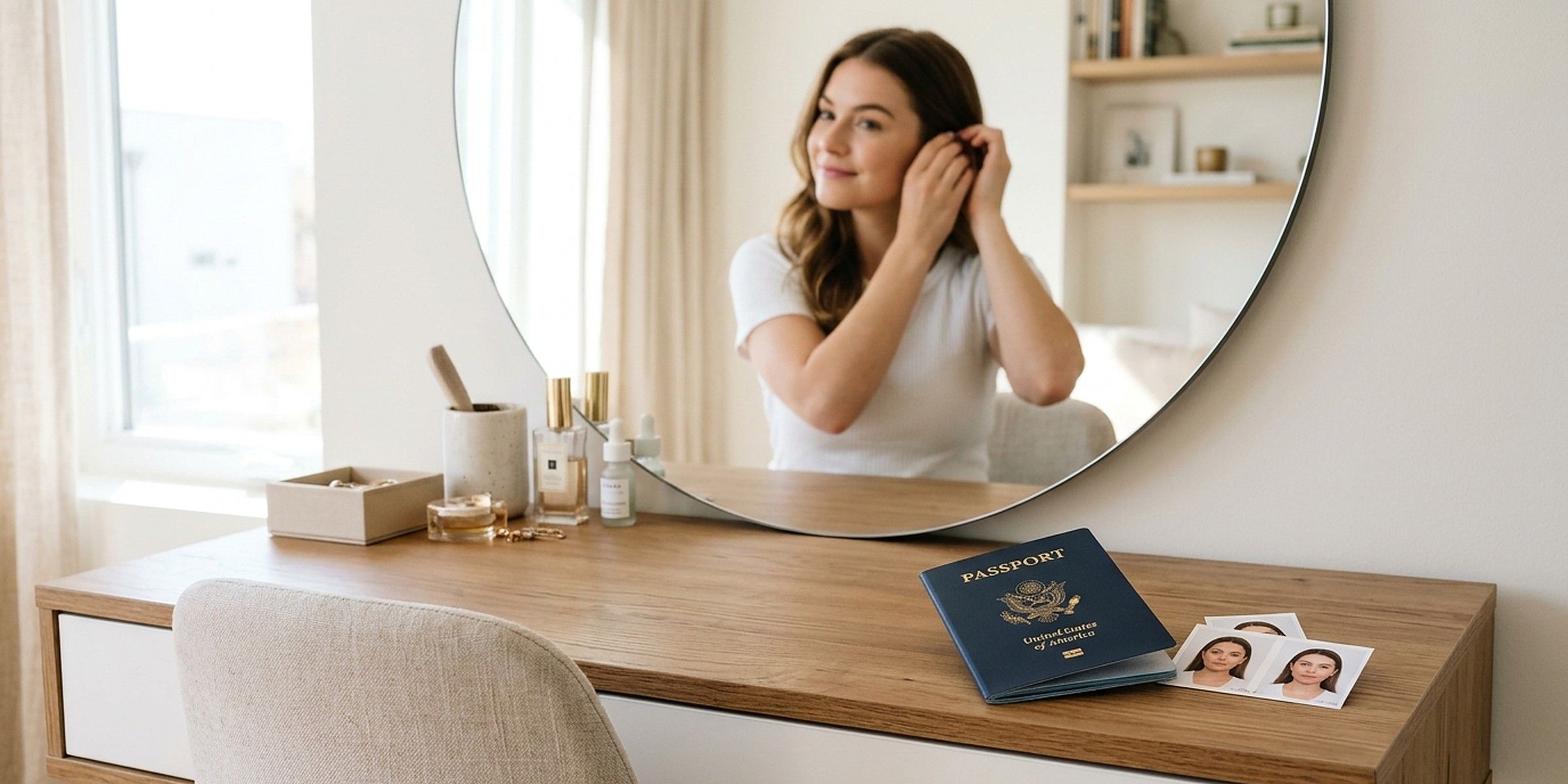
In a 2026 U.S. passport photo, your hair and bangs must never cover your eyebrows, eyes, or outer cheekbones, towering high buns can trick automated croppers into shrinking your face below the mandatory 1 to 1⅜ inch (25–35 mm) head height, and religious headwear (such as a hijab, turban, or kippah) is 100% permitted with a signed statement provided your full facial oval from forehead to chin is visible. Contrary to popular myth, your ears do not have to be uncovered, and wide curly hair or afros may legally touch the outer edges of the 2×2 inch frame. When you create a US passport photo or US visa photo with Snap4ID, our AI maps 478 biometric points to scale your true skull crown-to-chin height and backs your portrait with a 100% acceptance guarantee.
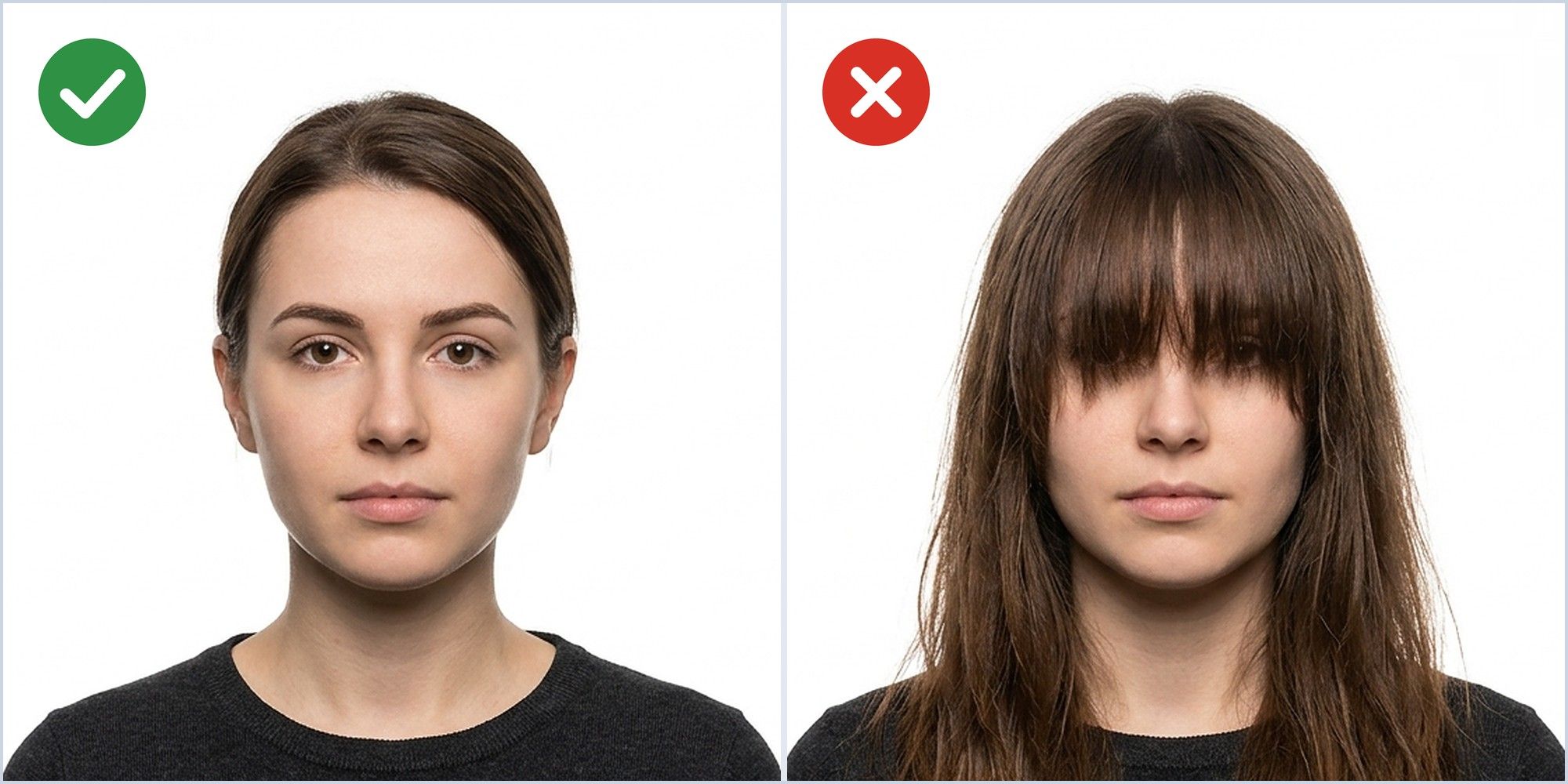
- Bangs & Eyebrows: Sweep or pin long curtain or blunt bangs aside so both eyebrows and eyes are 100% visible with zero fringe shadows across the eye sockets.
- Ears Do Not Have to Show: You can wear your hair down over your shoulders or covered by a religious headscarf as long as front hair strands do not narrow your cheeks or jawline.
- High Buns vs. Curly Hair / Afros: Avoid tall top-knots perched atop your head (which shrink your face in the crop); voluminous curls, afros, locs, and braids are allowed to extend to the
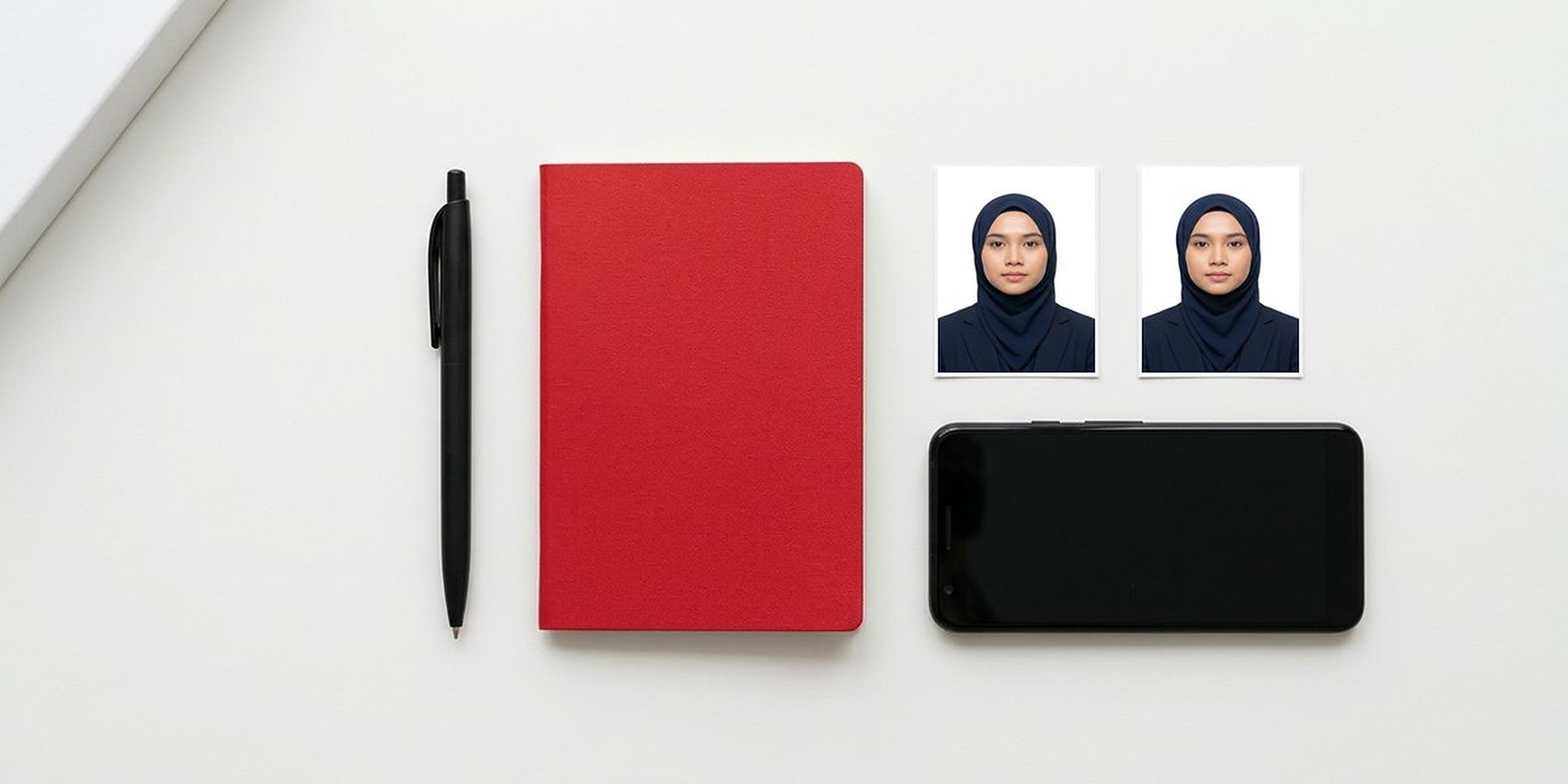
2×2"border as long as the skull crown-to-chin measures1 to 1⅜ inches. - Hijabs, Turbans & Medical Wraps: Daily religious or medical head coverings are allowed with a signed statement when the full facial oval (chin to top of forehead) is exposed and free of fabric shadows.
Whether you have curtain bangs, voluminous natural curls, locs, a high bun, or wear a hijab or Sikh turban daily in public, knowing how the U.S. Department of State's automated facial recognition scanners measure hair volume can save you weeks of application delays. Below is the complete 2026 guide to hairstyle framing, the 1 to 1⅜ inch skull-crown measurement rule, and how to submit a religious or medical headwear statement.
1. Bangs, Eyebrows & Ears: What Hairstyles Are Allowed in a US Passport Photo?
Any natural hairstyle—worn up, down, braided, or short—is allowed in a U.S. passport photo provided your entire facial oval from the top of your forehead to the bottom of your chin, including both eyebrows and outer cheekbones, remains 100% unobstructed.
| Hairstyle or Headwear Type | Permitted in 2026 US Passport Photo? | Official Biometric Rule & How to Style It |
|---|---|---|
| Hair Worn Down Over Shoulders | ✔ Allowed | Tuck front strands behind ears or shoulders so hair does not cover outer cheekbones or jawline. |
| Bangs / Front Fringe | ✔ Allowed Only Above Eyebrows | Bangs cannot hide eyebrows, touch eyelashes, or cast shadows over eyes; sweep or pin long bangs aside. |
| Low Ponytail or Low Bun | ✔ Ideal Style | Keeps cheekbones and eyebrows completely clear without adding extra height above the skull crown. |
| Towering High Bun / Top-Knot | ✘ High Rejection Risk | Retail croppers measure from the top of the bun instead of the skull, shrinking your face below 1 inch. |
| Voluminous Curls, Afros, Locs & Braids | ✔ Allowed | Outer hair volume may touch or be slightly cropped by the 2×2" edges as long as skull-to-chin is 1–1⅜". |
| Hijab, Turban (Dastar), Kippah, Tichel | ✔ Allowed With Signed Statement | Must be worn daily for religious reasons; full facial oval from forehead to chin must be exposed. |
| Medical Headscarf (Chemo / Alopecia) | ✔ Allowed With Doctor's Statement | Permitted with a signed physician's note; must expose full facial oval without casting eye shadows. |
| Hats, Beanies, Bandanas & Wide Headbands | ✘ Strictly Prohibited | All non-religious hats, fashion headbands, visors, bows, and sunglasses on the head are banned. |
Can Bangs Touch or Cover Your Eyebrows in a US Passport Photo?
Under the U.S. Department of State Official Passport Photo Requirements, your eyes and eyebrows are primary biometric landmarks used by automated facial comparison software. While light, wispy bangs that stop above the brow ridge are acceptable, heavy blunt bangs, side-swept fringe, or curtain bangs that cover your eyebrows, touch your upper eyelashes, or cast vertical shadows into your eye sockets will trigger an automatic rejection.
You do not need to cut your bangs before taking your passport photo. Simply part curtain bangs slightly wider, sweep blunt fringe to the side with a touch of styling cream, or secure them with a discreet, matte bobby pin that matches your hair color so both brow arches are completely visible.
Do Your Ears Have to Show in a US Passport Photo? (Myth vs. Official Rule)
One of the most persistent myths at retail photo counters is that both ears must be 100% exposed in a U.S. passport photo. In truth, the U.S. Department of State does NOT require your ears to be visible—otherwise, applicants wearing long hair down or a religious headscarf (hijab) could never be approved.
Why do passport clerks still tell people to tuck their hair behind their ears? Because when people leave long hair untucked in front of their ears, the hair often hangs forward over the outer edges of their eyes, temples, and cheekbones—artificially narrowing the visible width of the face. Tucking the front section of your hair behind your ears (while letting the rest of your hair drape naturally over your shoulders) is simply the easiest way to guarantee that your full cheekbone-to-cheekbone facial oval is unobstructed.
2. The High-Bun Crop Trap vs. Voluminous Curly Hair, Afros & Braids
Because the mandatory 1 to 1⅜ inch (25–35 mm) head height is measured from the bottom of the chin to the anatomical crown of the skull, towering high buns cause automated croppers to shrink your face too small—whereas wide natural curls, afros, and braids are officially permitted to touch or extend past the outer borders of the 2×2 inch square.
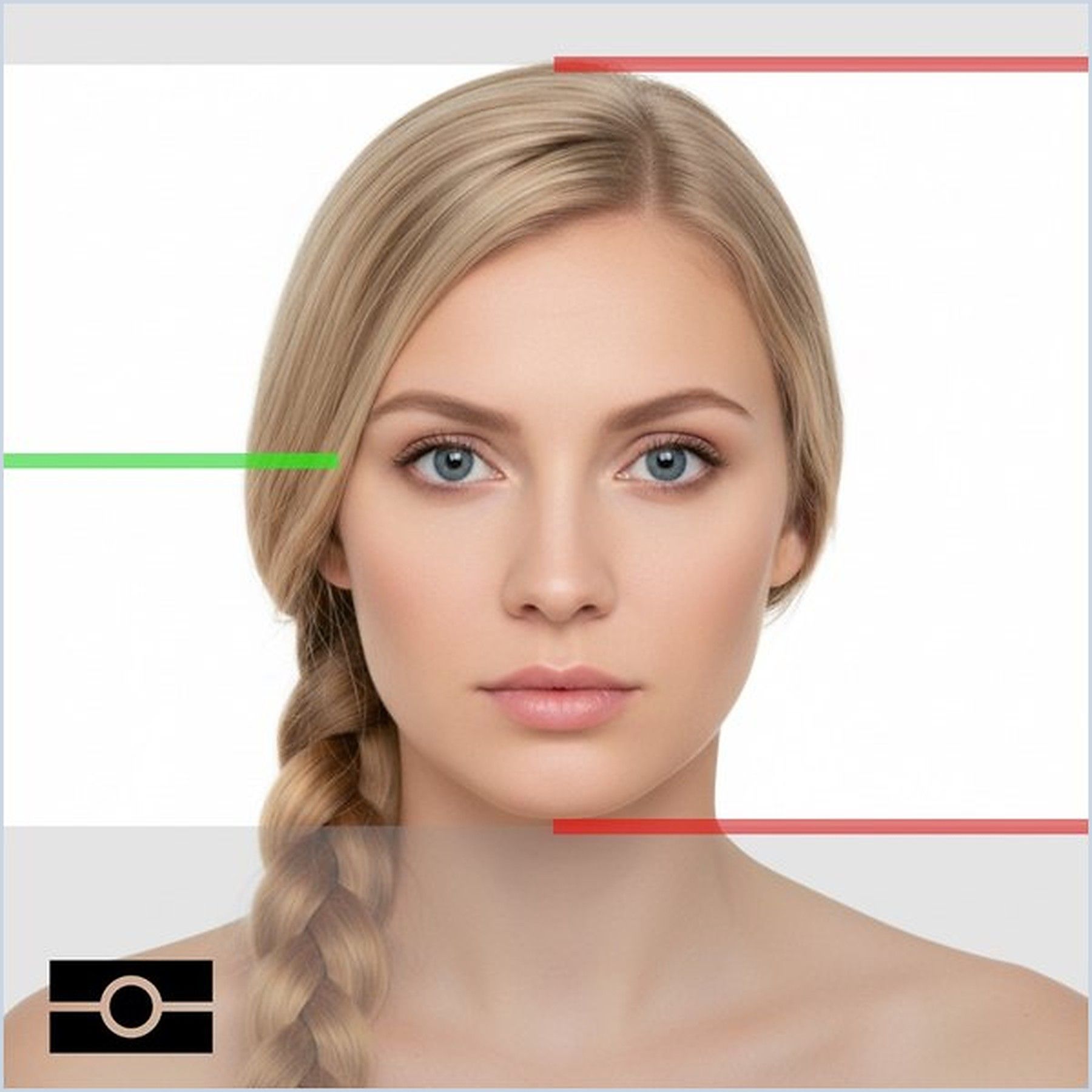
Why Towering High Buns and Top-Knots Cause MyTravelGov Cropping Rejections
The Towering Top-Knot Trap: Never wear a high bun, pineapple puff, or tall top-knot perched directly on top of your head for a U.S. passport photo! When a retail kiosk or basic online cropper detects the top of a 3-inch bun as the "top of your head," it zooms way out to keep the bun inside the 2×2 inch frame. That shrinks your actual skull and face below the 1-inch (25 mm) minimum and drops your eyes below the mandatory 1⅛ to 1⅜ inch window—causing an immediate rejection on MyTravelGov.
If you prefer to wear your hair tied up, simply position your bun or ponytail low at the nape of your neck or mid-back so the natural contour of your skull crown is clearly defined at the top of your head.
Afros, Voluminous Curls & Box Braids: Can Hair Touch the Edge of the 2×2 Frame?
Yes! According to the U.S. Department of State Official Photo Examples (Hair Volume & Framing), applicants with voluminous natural curls, afros, coils, or thick box braids should never zoom out just to fit the outer halo of their hair inside the 2×2 inch borders.
Federal guidelines explicitly state that it is 100% acceptable for the outer edges of wide or voluminous hair to touch or be gently cropped by the left, right, or top edges of the 2×2 inch photograph, provided that your actual head (from the bottom of your chin to the anatomical crown of your skull) measures 1 to 1⅜ inches (25–35 mm) and your full face is centered and clear.
3. Religious & Medical Headwear Rules: Hijab, Turban, Kippah & Signed Statements
While everyday hats, beanies, and fashion headbands are strictly banned, you may wear a religious head covering (such as a hijab, Sikh dastar/turban, Jewish kippah/yarmulke, or tichel) or a medical head wrap if you submit a signed statement and keep your entire facial oval from forehead to chin 100% visible.
Hijab, Dastar/Turban & Tichel Rules: Showing Hairline-to-Chin With Zero Shadows
To ensure that a U.S. passport or visa photo with religious headwear passes automated biometric screening on the first attempt, check three critical framing details before snapping the picture:
- Expose the Full Facial Oval (Forehead to Bottom of Chin): Position the front edge of your hijab, under-scarf, or turban near your natural hairline so your entire forehead, both full eyebrows, the outer edges of both cheekbones, and the bottom contour of your chin are completely visible. Do not wrap fabric across the front of your chin or over your cheeks.
- Eliminate Overhanging Fabric Shadows: Make sure the top fold of your headscarf or turban peak does not project forward like a visor and cast a dark shadow across your forehead or eye sockets. Stand facing a bright window so soft daylight illuminates your forehead evenly.
- Keep Facial Hair & Eyewear Compliant: If you wear a Sikh turban with a beard, remember that religious beards require no statement at all (see our guide to beards and facial hair in US passport photos), and all eyeglasses must still be removed.
How to Write the Required Religious Statement (Or Doctor's Note for Medical Headwear)
When applying with a religious head covering using paper Form DS-11 or Form DS-82, include a brief, signed letter on a separate sheet of paper stating: "I, [Your Full Legal Name], affirm that the head covering worn in my attached passport photograph is part of recognized, traditional religious attire that is customarily or required to be worn continuously in public." Sign and date the statement in ink.
If you wear a headscarf, wrap, or cap due to medical hair loss (such as chemotherapy treatment, radiation, alopecia, or cranial surgery), attach a signed statement from your licensed physician on medical letterhead verifying that the head covering is worn daily for medical purposes.
Color Tip: Why You Should Wear a Dark Hijab or Turban Against a #FFFFFF Background
Just as we recommend wearing dark shirts in our guide on what to wear for a US passport photo, avoid wearing a pure white, ivory, or cream hijab or turban for a U.S. passport sitting. Against the mandatory pure white (#FFFFFF) background, a white headscarf blends into the backdrop and erases the outer boundary of your head. Choosing a solid navy blue, black, burgundy, charcoal, emerald green, or deep plum headscarf creates crisp visual contrast.
✔ DO: Compliant Hair & Headwear Framing
- Sweep bangs clear of both eyebrows: Pin or part front fringe so your entire brow line and eyes are 100% visible.
- Tuck front hair behind your ears or shoulders: Keep side strands from falling forward across your cheekbones or jawline.
- Wear low buns or ponytails at the nape: Keep your natural skull crown visible so your head scales to
1 to 1⅜ inches. - Show the full facial oval in a dark hijab or turban: Expose forehead-to-chin with zero shadows and attach your signed statement.
✘ DON'T: Instant Hair & Headwear Rejections
- Don't let bangs touch your eyebrows or lashes: Obscured eyebrows or fringe shadows over the eyes trigger automatic rejection.
- Don't wear a towering high bun on top of your head: Tall top-knots trick kiosks into zooming out and shrinking your face below
1 inch. - Don't wear fashion headbands, bows, or hats: Wide headbands, bandanas, baseball caps, and sunglasses on the head are banned.
- Don't let a headscarf cover your chin or cast shadows: Pulling a hijab over the chin or low over the eyebrows fails full-face rules.
4. How Snap4ID's 478-Point Biometric Engine Crops Hair Volume & Headwear Perfectly
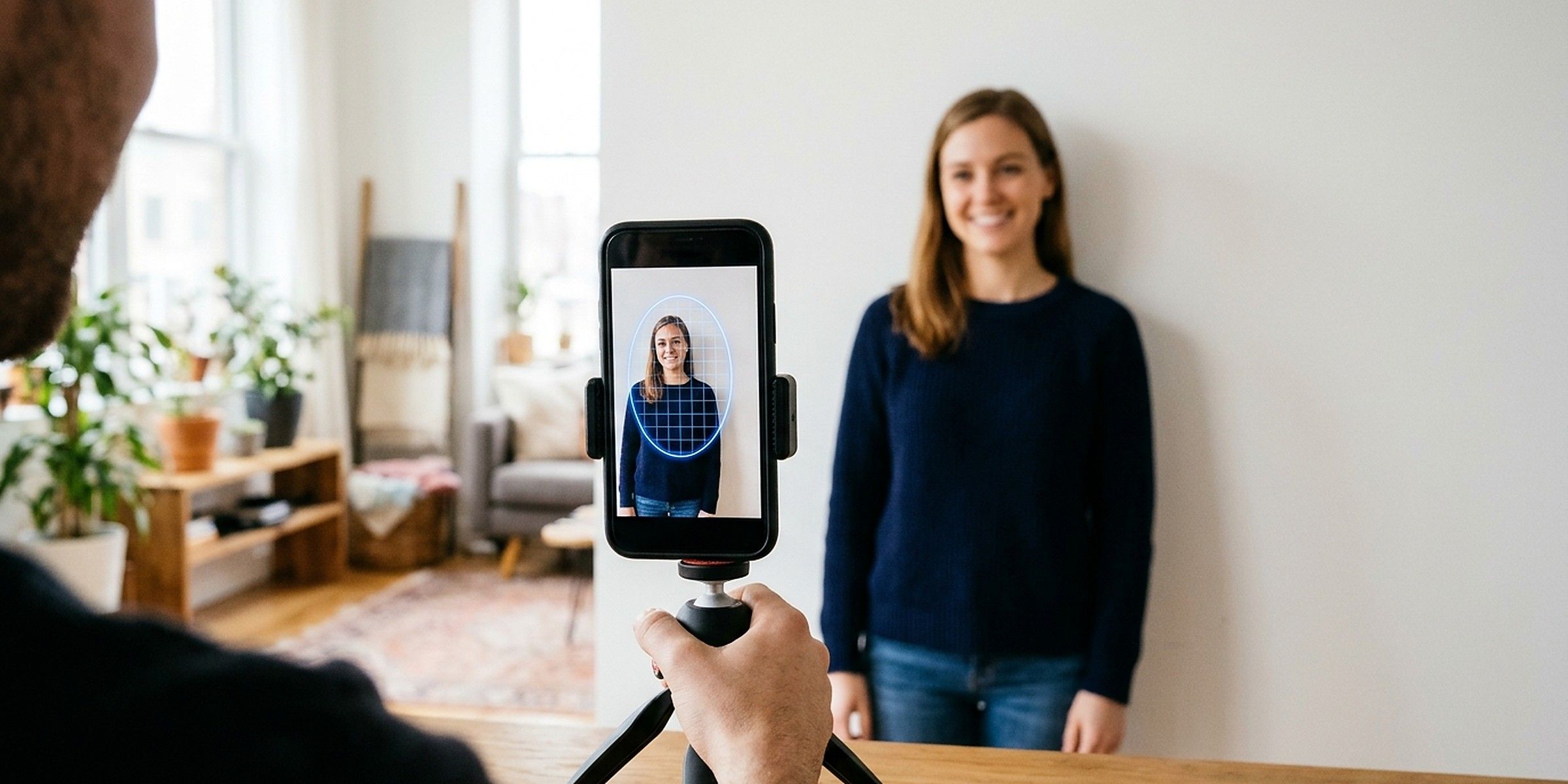
When you take your photo at home with Snap4ID, our AI engine maps 478 biometric points on your face to calculate your true anatomical skull crown-to-chin height (1 to 1⅜ inches)—ignoring tall hair volume while preserving every natural curl strand against a pure white (#FFFFFF) background under our 100% acceptance guarantee.
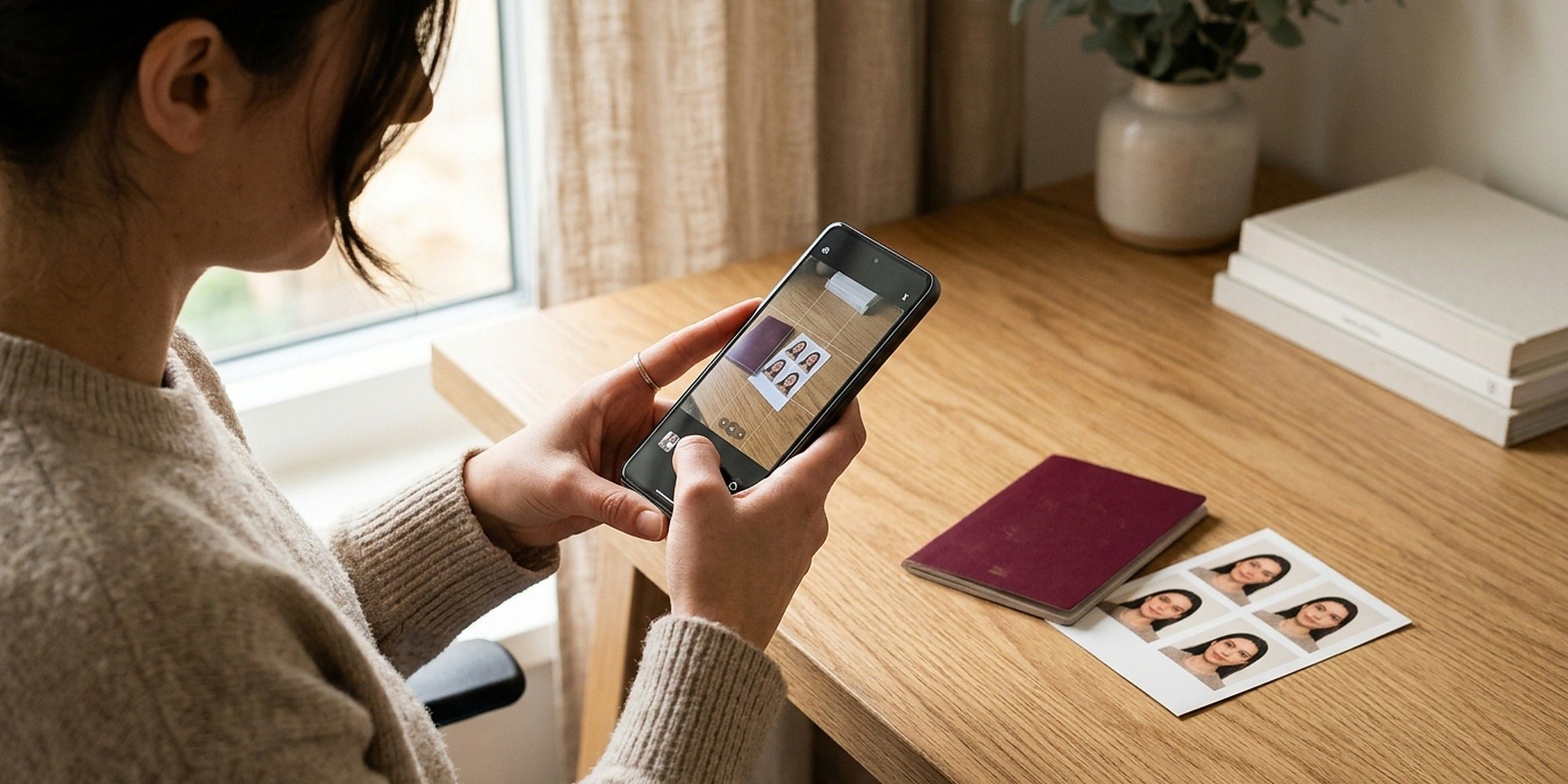
Many cheap background-removal apps slice off curly hair edges into an unnatural "plastic helmet" cutout, or zoom out when they see thick braids or a turban. Snap4ID uses alpha-matting hair segmentation paired with 478-point craniofacial landmarking to keep your eyes locked inside the 1⅛ to 1⅜ inch zone—delivering a ready-to-upload digital file for MyTravelGov online passport renewal, REAL ID renewals, and a calibrated 4×6 inch print sheet you can print at CVS or Walgreens for $0.39.
5. Frequently Asked Questions (Hairstyles, Bangs & Religious Headwear)
Can my bangs cover my eyebrows in a US passport photo?
No, your bangs or front fringe must not cover your eyebrows, touch your eyelashes, or cast shadows into your eye sockets in a U.S. passport photo. While light wispy bangs sitting above the brow bone are acceptable, long curtain or blunt bangs should be swept or pinned aside.
Do both ears have to be visible in a US passport photo?
No, the U.S. Department of State does not require your ears to be uncovered—you may wear your hair down over your ears or covered by a religious headscarf. However, your hair cannot fall forward over your cheeks or jawline, so tucking front strands behind your ears is recommended.
Can I wear a hijab, turban, or kippah in my US passport photo?
Yes, religious head coverings such as a hijab, Sikh dastar/turban, Jewish kippah, or tichel are permitted if worn daily in public for religious observance. You must submit a signed statement with your application and ensure your full facial oval from forehead to chin is 100% visible.
Do I need a new passport if I dye my hair or get a completely different haircut?
No, dyeing your hair blonde, brunette, red, or gray, cutting long hair short, or wearing wigs and extensions does not require a new U.S. passport or passport photo. Airport facial recognition scanners measure permanent craniofacial bone structure rather than hair color or length.
Are headbands, hair clips, or scrunchies allowed in a US passport photo?
Small, non-reflective bobby pins or discreet hair ties hidden behind your head to keep bangs off your face are permitted. However, wide fashion headbands, bandanas, decorative bows, tiaras, and sunglasses pushed up onto your hair are classified as prohibited head coverings and must be removed.
Whether you wear natural curls, bangs swept aside, or daily religious headwear, Snap4ID checks 478 biometric points, sets a pure white (#FFFFFF) background, and delivers a digital file plus a $0.39 4×6" print sheet—backed by our 100% acceptance guarantee. Create Your 2×2 US Passport Photo Now →