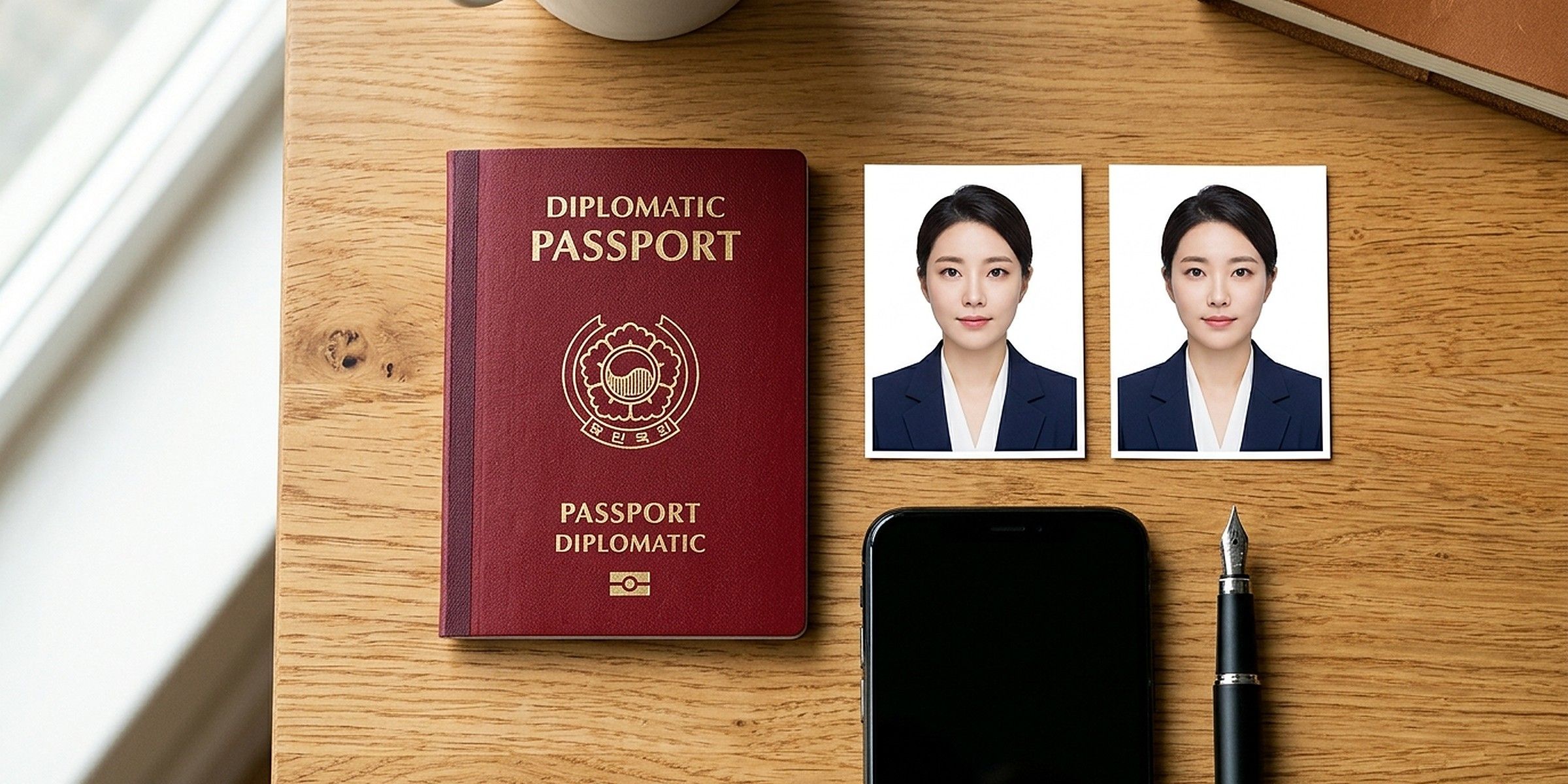
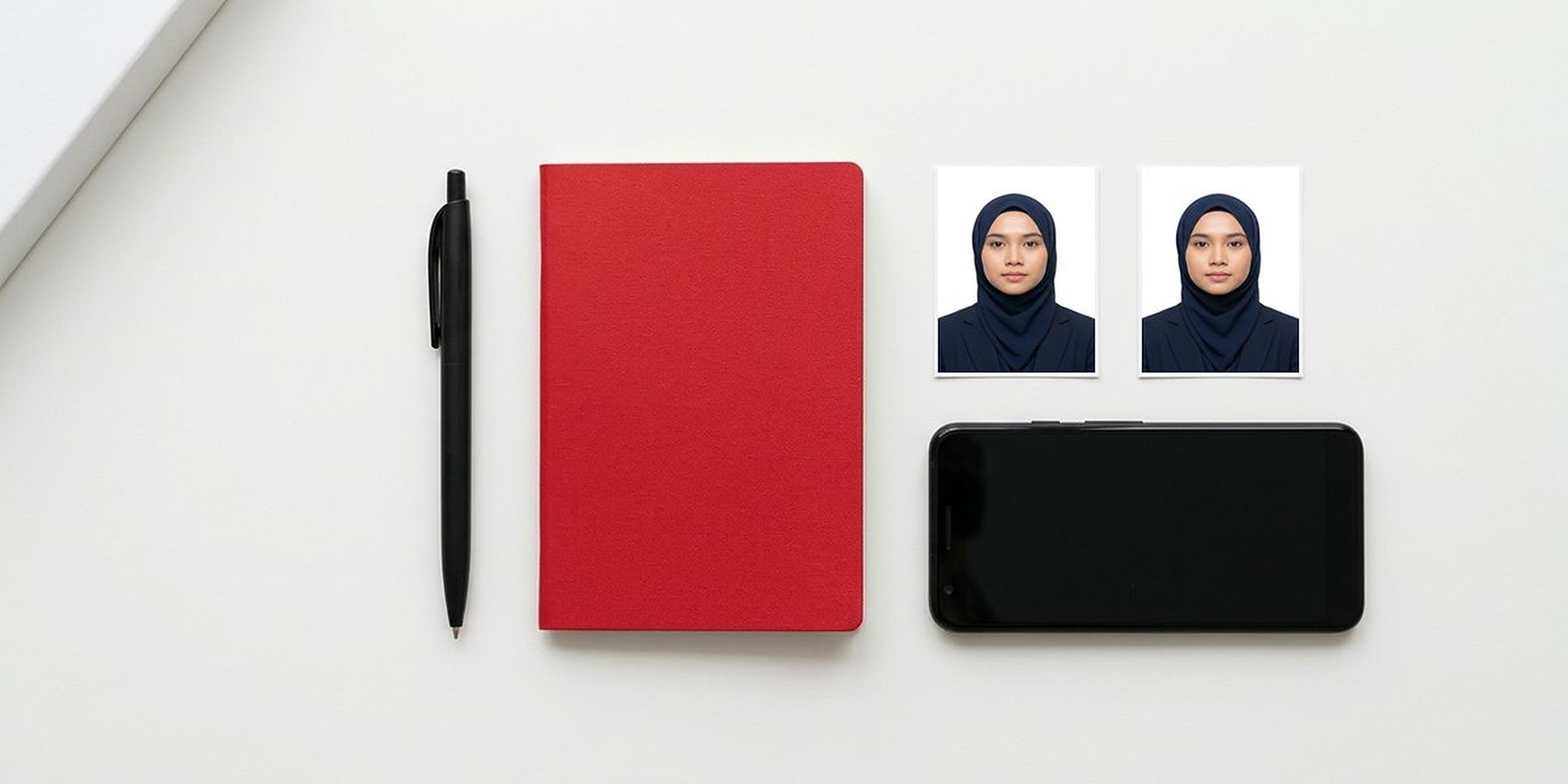
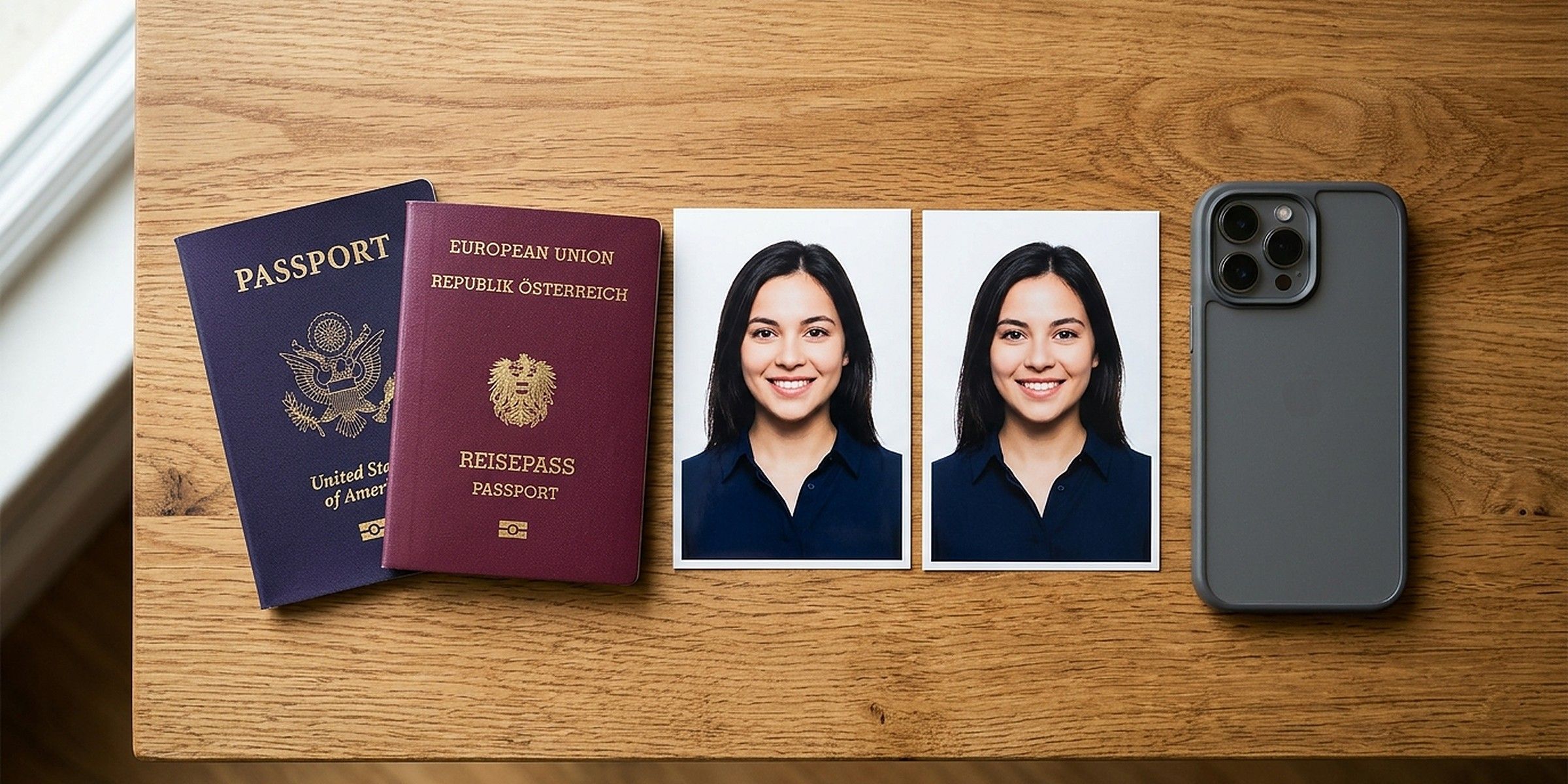
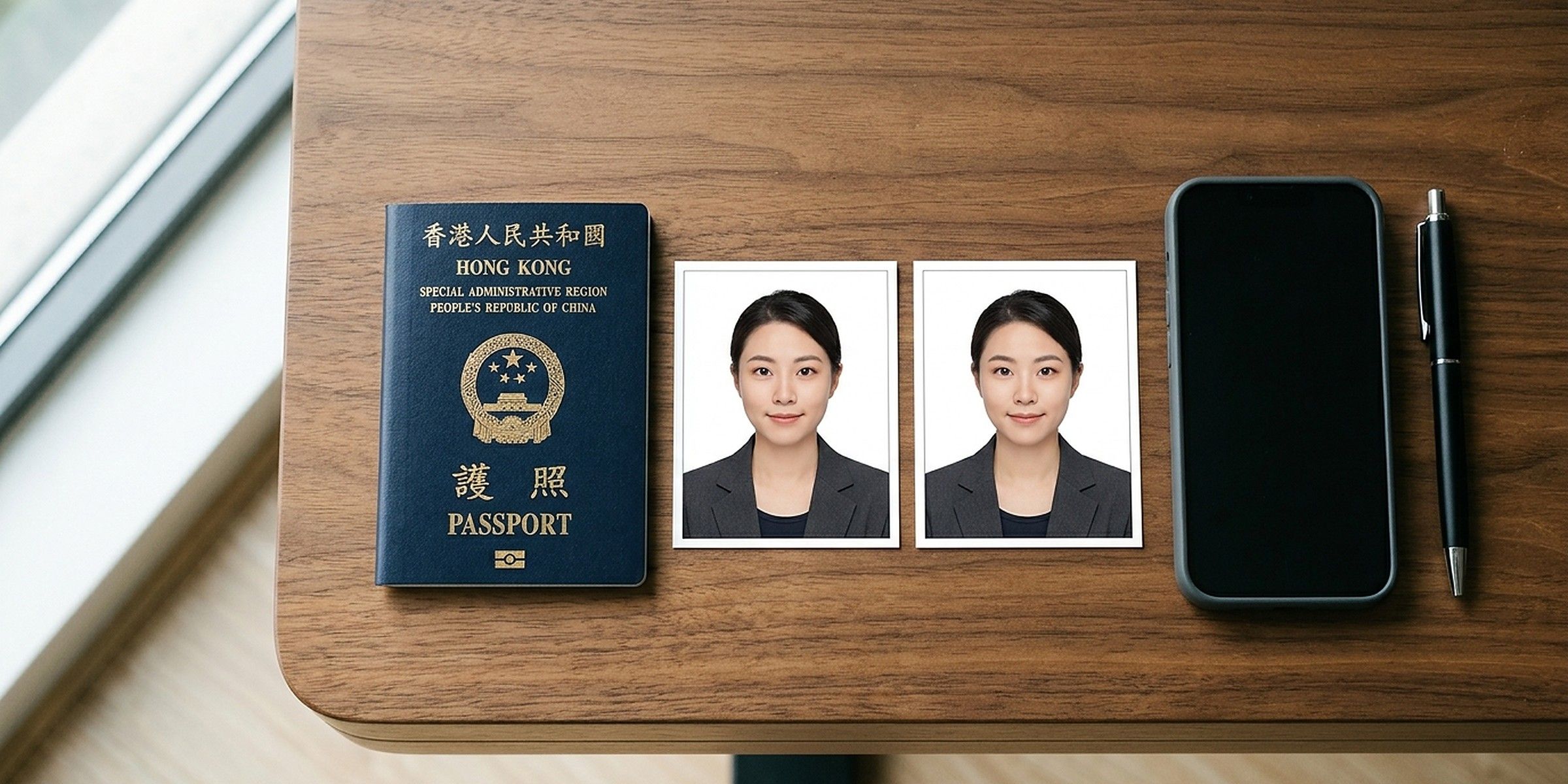
Japan, South Korea, Taiwan and Singapore Passport Photo Requirements 2026: 35x45 mm Biometric Guide
Official 2026 35x45 mm passport & visa photo rules for Japan, South Korea, Taiwan (BOCA) & Singapore (ICA 400x514 px): 32–36 mm head, ear/brow & upload specs.


Table of Contents
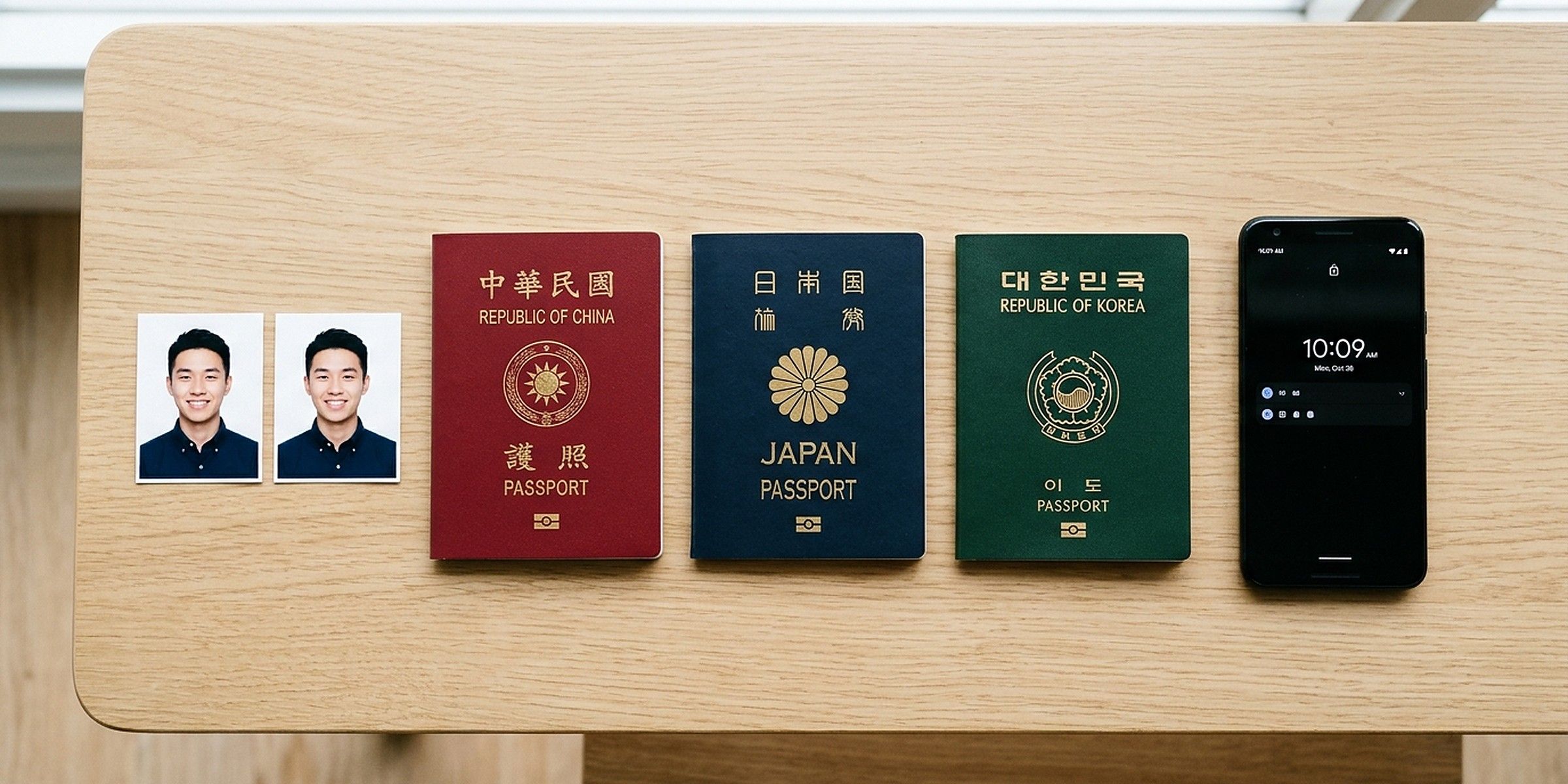
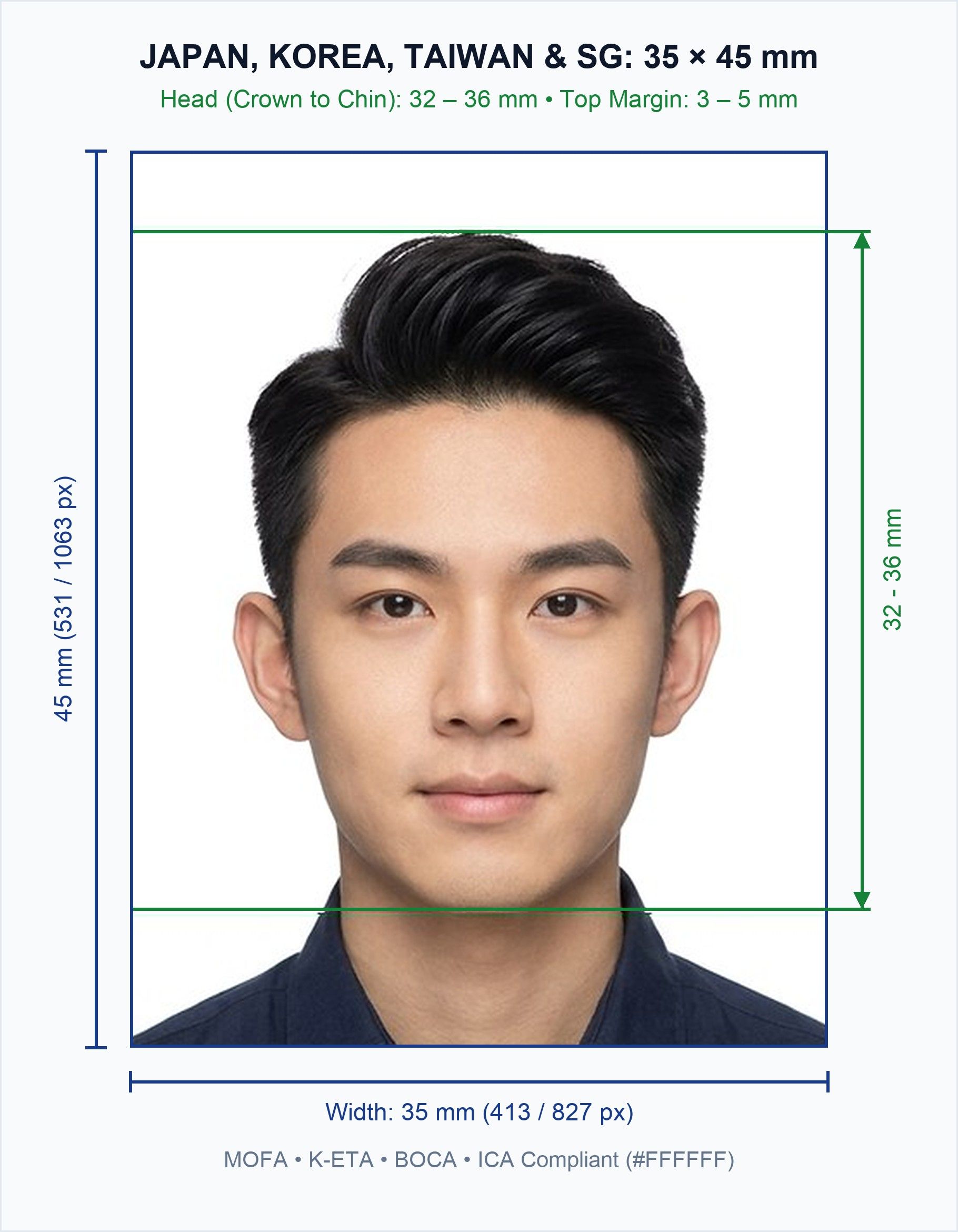
Official 2026 passport and visa regulations across Japan, South Korea, Taiwan (R.O.C.), and Singapore all standardize on the ICAO 35 mm wide by 45 mm high (3.5 × 4.5 cm / 1⅜ × 1¾ inch) vertical frame, a 32 mm to 36 mm (71.1%–80%) crown-to-chin head height, and a uniform pure white (#FFFFFF) background. Despite sharing the exact same physical 35 × 45 mm paper size, each government enforces distinct digital upload pixel profiles and facial landmark rules: Japan's MOFA and JAPAN eVISA portal use 413 × 531 px (300 DPI) and ban circle contact lenses; South Korea's MOFA and Korea Visa Portal require 827 × 1063 px (600 DPI) with the 32–36 mm head height measured excluding hair volume; Taiwan's BOCA mandates 827 × 1063 px with both ears visible and zero beauty retouching; and Singapore's ICA SAVE/APPLES portal requires an exact 400 × 514 px JPEG under 60 KB. Select your exact document profile—Japanese passport photo, Japanese visa photo, South Korean passport photo, South Korean visa photo, Taiwanese passport photo, or Singapore visa photo—to format a compliant file in 60 seconds.
- Shared 35 × 45 mm Physical Frame, Different Digital Pixels: All six documents measure
35 × 45 mm(7:9ratio) with a32–36 mmhead height on a pure white (#FFFFFF) background, but digital uploads require413 × 531 pxfor Japan,827 × 1063 px(600 DPI) for South Korea and Taiwan, and400 × 514 px(≤ 60 KB) for Singapore ICA visas. - South Korea Measures 32–36 mm Head Height Excluding Hair: Unlike Japan and Taiwan, South Korea's Ministry of Foreign Affairs measures the
3.2–3.6 cmvertical head size from the bottom of the chin to the top of the skull excluding puffy hair or top-knots, and requires both eyebrows to be 100% uncovered. - Strict Ban on Circle Lenses, Heavy Bangs & Beauty Filters: Japan MOFA, Korea MOFA, and Taiwan BOCA explicitly reject colored contact lenses, pupil-enlarging circle lenses, bangs touching the eyes or eyebrows, eyeglass glare, and smartphone beauty filters that erase moles or slim the jawline.
- Taiwan BOCA Both-Ears Mandate & Singapore ICA 60 KB Cap: Taiwan chip passports require both ears to show clearly, while Singapore's ICA APPLES/SAVE visa portal rejects any JPEG exceeding
60 KB(or150 KBon updated MyICA forms) or deviating from400 × 514 pixels.
1. East Asia 35x45 mm Passport & Visa Photo Comparison Table (2026)
Every passport and entry visa issued by Japan, South Korea, Taiwan, and Singapore uses the Family 1 ICAO 35 × 45 mm (7:9 aspect ratio) physical template with a 32–36 mm head height and a pure white (#FFFFFF) background, while enforcing agency-specific pixel dimensions from 400 × 514 px up to 827 × 1063 px.
Before uploading a digital file to an e-Visa portal or printing paper photos for an overseas consulate, verify the exact pixel resolution, DPI, head measurement boundary, and facial visibility rules for your target document in our 2026 master specification table:
| Document Type & Official Agency | Physical Size | Digital Pixels & DPI | Head Height & Landmark Rule | Portal & Consular Specifics |
|---|---|---|---|---|
Japanese Passport (jp-pass — MOFA Japan / MyNaPortal) | 35 × 45 mm (3.5 × 4.5 cm) | 413 × 531 px (300 DPI) | 32–36 mm (chin-to-crown), 4 ± 2 mm (2–6 mm) top margin | Strict ban on circle/colored lenses (karakon), bangs touching pupils/eyebrows, and high turtlenecks hiding the jaw. |
Japanese Visa & JAPAN eVISA (jp-visa — MOFA / Consulates) | 35 × 45 mm (3.5 × 4.5 cm) | 413 × 531 px (300 DPI) | 32–36 mm (chin-to-crown), 71%–80% of frame height | Required for online JAPAN eVISA uploads (never upload a photo of a printed photo); pure #FFFFFF backdrop. |
South Korean Passport (kr-pass — MOFA Korea / Gov24) | 35 × 45 mm (3.5 × 4.5 cm) | 827 × 1063 px (600 DPI) | 32–36 mm EXCLUDING HAIR (chin-to-crown-no-hair) | Both eyebrows must be visible; hair tucked behind ears to expose facial contour; no white clothing on white backdrop. |
South Korean Visa & K-ETA (kr-visa — visa.go.kr) | 35 × 45 mm (3.5 × 4.5 cm) | 827 × 1063 px (600 DPI) | 32–36 mm EXCLUDING HAIR (chin-to-crown-no-hair) | Calibrated for Korea Visa Portal (visa.go.kr) & K-ETA (where K-ETA caps file size at ≤ 100 KB). |
Taiwanese Passport (tw-pass — BOCA / TECO) | 35 × 45 mm (3.5 × 4.5 cm) | 827 × 1063 px (600 DPI) | 32–36 mm (chin-to-crown; 25–30 mm for infants) | Both ears and eyebrows must be visible; zero beauty filters or mole removal; glossy high-quality paper for TECO. |
Singapore Visa (sg-visa — ICA APPLES / SAVE) | 35 × 45 mm (3.5 × 4.5 cm) | 400 × 514 px (290 DPI) | 32–36 mm (chin-to-crown), centered vertically | Exact 400 × 514 px JPEG under 60 KB (or ≤ 150 KB on MyICA) for Entry Visas, Student's Passes & LTVP. |
How 35x45 mm Differs from Mainland China (33x48 mm) and Hong Kong (40x50 mm)
Travelers planning multi-country itineraries across Asia often assume that a single Asian passport or visa photo works everywhere in the region. In reality, East and Southeast Asia split into four incompatible geometric families:
- Japan, South Korea, Taiwan & Singapore (
35 × 45 mm/7:9ratio): Standard ICAO width-to-height ratio of0.778:1with a large32–36 mmhead height occupying71%–80%of the vertical frame. - Mainland China Passport & COVA Visa (
33 × 48 mm/11:16ratio): As detailed in our Chinese 33×48 mm passport and COVA visa photo guide, a Chinese visa photo is2 mmnarrower and3 mmtaller (354 × 472 pxdigital) with a smaller28–33 mmhead height. - Hong Kong SAR Passport (
40 × 50 mm/4:5ratio): A Hong Kong SAR passport photo is5 mmwider and5 mmtaller (945 × 1181 pxat600 DPI) than a Japanese or Taiwanese photo, so a35 × 45 mmprint leaves an unaccepted border gap in Hong Kong ImmD scanners. - Malaysia Passport & eVISA (
35 × 50 mm/7:10ratio): As explained in our Malaysian 35×50 mm passport photo guide, Malaysia adds5 mmof extra vertical height (35 × 50 mm) with a smaller25–30 mmhead zone.
2. Japanese Passport (jp-pass) and JAPAN eVISA (jp-visa) Photo Rules (413x531 px)
An official Japanese passport or visa photo must measure 35 mm wide by 45 mm high (413 × 531 pixels at 300 DPI) with a 32 mm to 36 mm (34 ± 2 mm) crown-to-chin head height, a 2 mm to 6 mm (4 ± 2 mm) top margin above the skull, and a plain, shadow-free pure white (#FFFFFF) background.
According to the Ministry of Foreign Affairs of Japan (MOFA) Official Photo Specification, Japan enforces some of the world's most detailed ocular and hairline rules because Japanese e-Passports and border bio-kiosks rely on iris-and-periocular landmark matching. When preparing a Japanese passport photo (including online renewals via Japan's MyNaPortal app or overseas Japanese Embassies and Consulates), watch out for three uniquely strict MOFA triggers:
- Absolute Ban on Circle Lenses & Colored Contacts (Karakon): MOFA Japan explicitly illustrates and forbids colored contact lenses and pupil-enlarging "circle lenses" (ディファイン / カラコン). Because circle lenses artificially widen the outer limbal ring of your iris, automated facial recognition gates at Narita, Haneda, Kansai, and Fukuoka airports will flag a biometric mismatch if you travel without those lenses.
- Bangs (Maegami) Must Never Touch the Eyes or Hide Eyebrows: Even a single strand of hair casting a shadow across the iris or covering the natural arch of your eyebrows can trigger rejection at a Prefectural Passport Center or Japanese Consulate. Sweep bangs to the side or pin them neatly above your eyebrows.
- No High Turtlenecks or Hoodies Covering the Jawline: Your full neck and the bottom tip of your chin must remain completely visible so examiners can verify the exact
32–36 mmchin-to-crown length and minimum5 mmbottom margin.
Avoiding Rejection on the JAPAN eVISA Portal and MyNaPortal
Foreign nationals residing in the United States, Canada, the United Kingdom, Singapore, Australia, and other eligible regions can apply online for a short-term tourism single-entry visa via the JAPAN eVISA system. While legacy paper visa applications at some U.S. Japanese Consulates historically tolerated 2 × 2 inch (51 × 51 mm) prints glued to a paper form, the digital JAPAN eVISA portal and ICAO biometric scanners standardize on the 35 × 45 mm (413 × 531 px at 300 DPI) vertical format.
Top JAPAN eVISA Rejection Trap — Never Photograph a Printed Photo: Thousands of JAPAN eVISA applications are returned as "Defective / Incomplete Application" because the applicant took a smartphone picture of an old printed Walgreens or CVS passport photo. Photographing glossy photo paper introduces moiré interference lines, perspective keystoning, and gray background gradients. Always upload a direct digital Japanese visa photo rendered natively at 413 × 531 pixels on a pure #FFFFFF background.
3. South Korean Passport (kr-pass) and Visa (kr-visa) Photo Rules (827x1063 px)
South Korea's Ministry of Foreign Affairs (MOFA) requires all passport and visa photos to measure 35 mm by 45 mm (827 × 1063 pixels at 600 DPI) on a pure white (#FFFFFF) background, with a 32 mm to 36 mm (3.2 to 3.6 cm) head length measured from the bottom of the chin to the top of the skull excluding hair volume.
That chin-to-crown-no-hair measurement rule is a critical distinction when creating a South Korean passport photo for South Korea's next-generation blue polycarbonate e-Passport (whether applying via Gov24 / 정부24 or at a Korean Consulate General in Los Angeles, New York, Toronto, or London):
- Why "Excluding Hair" Matters: If you have tall hair volume, a perm, or a top-knot and a generic photo app scales your hair tip to
35 mm, your actual skull and face will shrink below30 mm—causing immediate rejection by MOFA's biometric checker. Snap4ID's Korean preset specifically anchors the32–36 mmmeasurement to your anatomical cranial crown while preserving a clean3–5 mmtop margin. - Both Eyebrows & Facial Contour Must Be Exposed: Both eyebrows must be clearly visible above your eyes, and hair must be tucked behind your ears or shoulders so the full outline of your cheekbones and jaw is unobstructed.
- Zero White Clothing: Because South Korea switched from colored backdrops to a mandatory pure white (
#FFFFFF) background, wearing a white t-shirt, white dress shirt, or ivory blouse without a dark jacket is rejected because your shoulders disappear into the background.
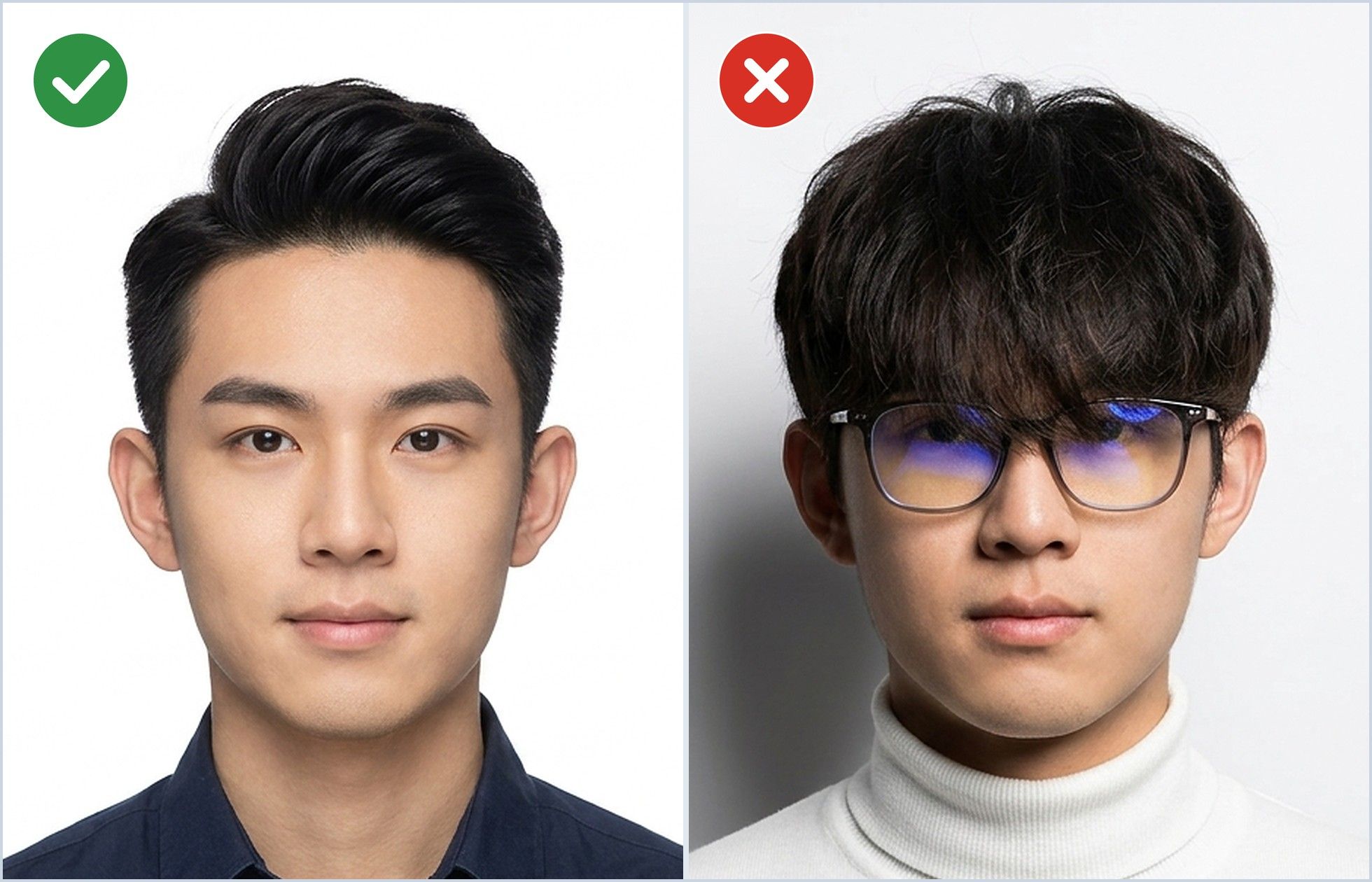
✔ DO: Compliant 35×45 mm Biometric Rules
- Expose both eyebrows and ears clearly: Tuck hair behind your ears and sweep bangs off your forehead so your eyebrows, eyes, and full facial contour are 100% visible for Japan MOFA, Korea MOFA, and Taiwan BOCA.
- Wear dark, collared attire against pure white (#FFFFFF): Choose a navy, black, or charcoal collared shirt or blazer to create sharp shoulder separation against the mandatory pure white backdrop.
- Remove eyeglasses and colored contact lenses: Present your natural eyes looking straight into the camera with a neutral, closed-mouth expression and even frontal lighting.
- Use the exact pixel preset for your target portal: Upload
413 × 531 pxfor Japan,827 × 1063 pxfor South Korea and Taiwan, or400 × 514 px(≤ 60 KB) for Singapore ICA.
✘ DON'T: Common East Asian Rejection Causes
- Don't let bangs cover your eyebrows or touch your pupils: Heavy fringes obscuring the eyebrows or casting shadows on the eyes are the #1 rejection cause in Tokyo, Seoul, and Taipei.
- Don't wear eyeglasses with blue screen or flash glare: Reflections on lenses or frames cutting across the eyes trigger automatic rejection across all four jurisdictions.
- Don't wear white shirts or high turtlenecks on a shadowed wall: White tops blend into the
#FFFFFFbackground, high collars hide the jawline, and off-white walls with drop shadows fail inspection. - Don't use circle lenses or AI beauty/face-slimming apps: Altering iris size, smoothing skin texture, or erasing natural moles invalidates your photo for airport e-Gates.
Uploading Photos to the Korea Visa Portal (visa.go.kr) and K-ETA
Foreign nationals applying for a South Korean study, work, or tourist visa on the Korea Visa Portal (visa.go.kr) or an electronic travel authorization on K-ETA (k-eta.go.kr) need a digital South Korean visa photo formatted to the 35 × 45 mm standard. While visa.go.kr and Korean Consulates accept the full high-definition 827 × 1063 px (600 DPI) JPEG, the K-ETA web uploader enforces a strict 100 KB maximum file size (and up to 700 × 700 px in its mobile crop box)—so starting with a cleanly lit, pure-white-background 35 × 45 mm file ensures instant acceptance on both platforms.
4. Taiwan Passport (BOCA 827x1063 px) & Singapore Visa (ICA 400x514 px) Rules
Taiwan's Bureau of Consular Affairs (BOCA) requires a 35 × 45 mm (827 × 1063 px at 600 DPI) chip passport photo with a 32–36 mm head height where both ears are visible and beauty retouching is strictly banned, whereas Singapore's Immigration & Checkpoints Authority (ICA) mandates an exact 400 × 514 pixel (290 DPI) JPEG under 60 KB for online visa uploads.
Taiwan BOCA / TECO Rules: Visible Ears and Zero Beauty Filter Retouching
Whether you are applying for a Republic of China (Taiwan) biometric chip passport in Taipei or renewing abroad through a Taipei Economic and Cultural Office (TECO) in New York, San Francisco, Los Angeles, Chicago, Houston, Seattle, Toronto, or London, the Taiwan Bureau of Consular Affairs (BOCA) Chip Passport Photo Standards enforce two signature requirements on every Taiwanese passport photo:
- Both Ears & Eyebrows Must Be Clearly Visible: Hair must be tucked neatly behind both ears so the complete left and right ear contours, forehead, and eyebrows are visible. (For infants under age 2 whose heads are smaller, BOCA permits a slightly reduced
25–30 mmcrown-to-chin head height, while adults and older children must strictly hit32–36 mm.) - Zero Beauty Filters or Mole/Birthmark Removal: BOCA explicitly warns that photos edited with smartphone "beauty mode" apps—which slim the chin, enlarge the eyes, or digitally erase permanent facial moles, scars, or birthmarks—will be rejected at the counter because they cause Taiwan's automated e-Gate (自動查驗通關系統) scanners at Taoyuan and Songshan airports to fail.
Singapore ICA Visa Upload: How to Hit Exact 400x514 Pixels Under 60 KB
If you are applying online for a Singapore Entry Visa, Student's Pass (STP), Long-Term Visit Pass (LTVP), or permanent residence via the Singapore Immigration & Checkpoints Authority (ICA) Photo Guidelines (APPLES / SAVE / MyICA portals), a standard 3 MB smartphone photo will fail immediately with a dimension or file-weight error.
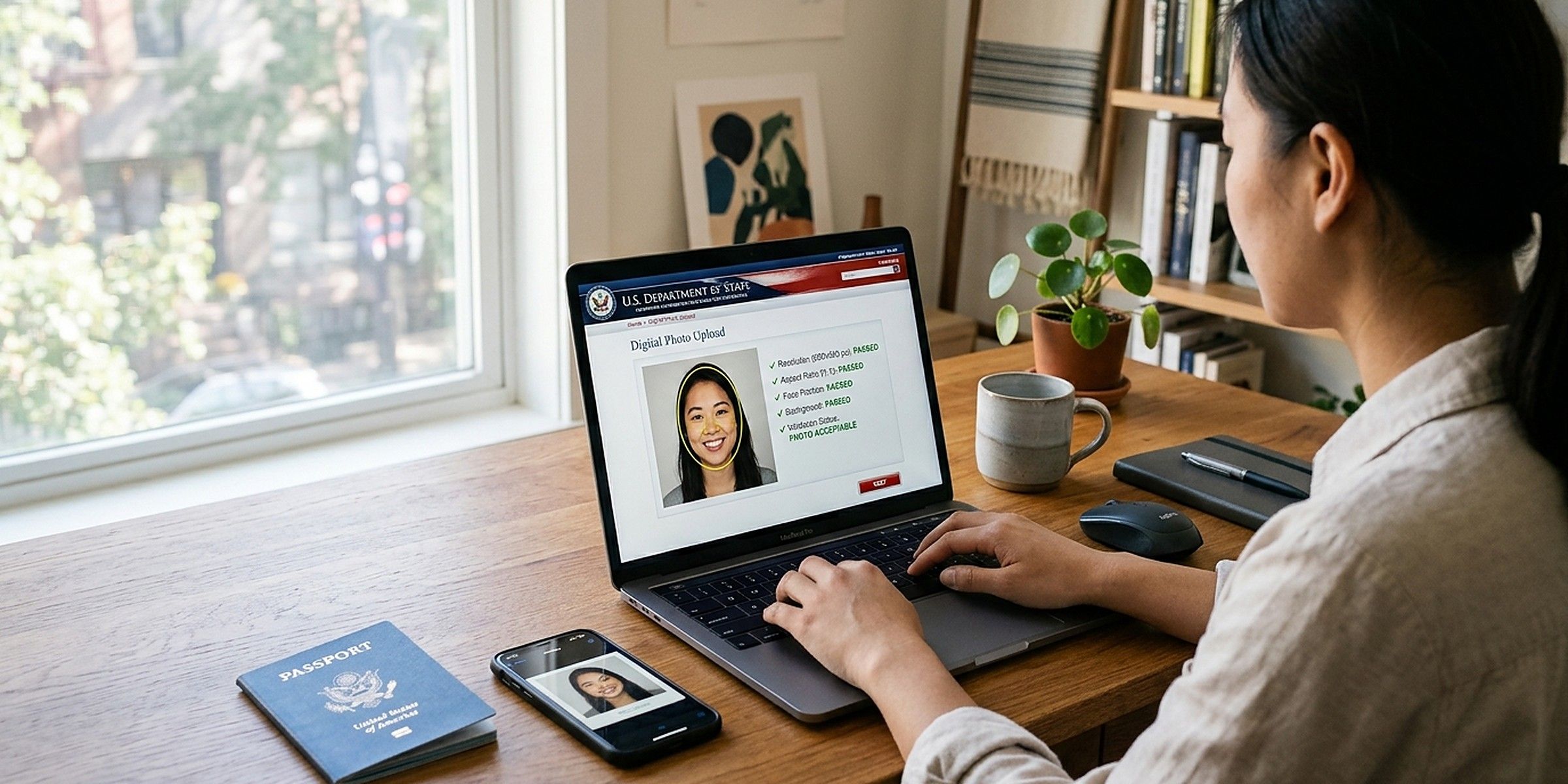
While the physical frame corresponds to 35 × 45 mm with a 32–36 mm head height, ICA's digital portal validates for an exact 400 pixels wide by 514 pixels high (290 DPI, 0.778:1 aspect ratio) JPEG file weighing 60 KB or less on legacy SAVE/APPLES forms (or up to 150 KB on updated MyICA uploads). Using our dedicated Singapore visa photo generator automatically crops your portrait to 400 × 514 px and optimizes the JPEG compression below the 60 KB threshold without introducing blocky pixel artifacts across your face.
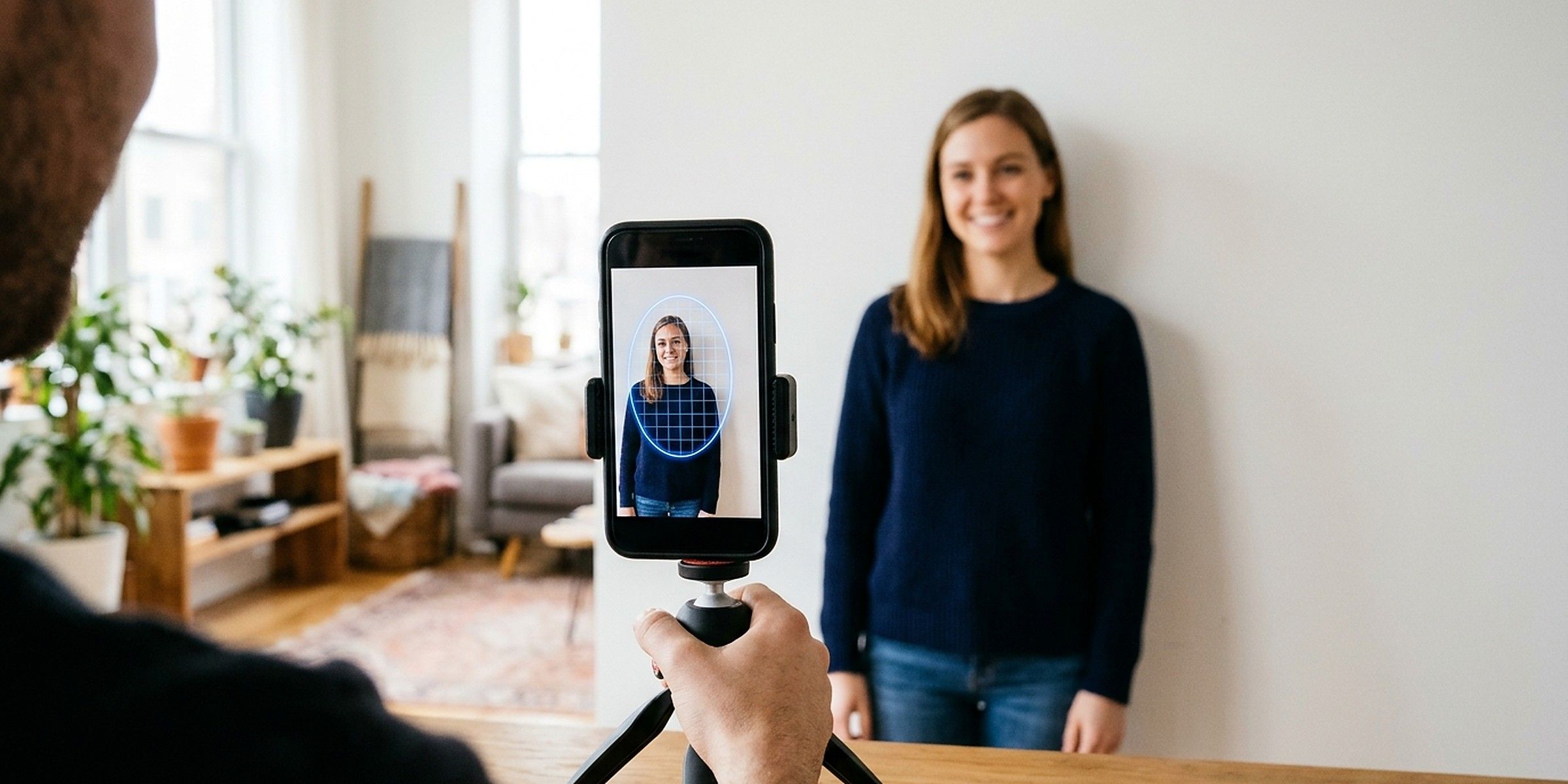
How Snap4ID's 478-Point AI Exports Exact Pixel Profiles for All 6 Documents
Instead of manually resizing pixels in photo-editing software or visiting a local drugstore that only prints American 2 × 2 inch squares, Snap4ID's biometric engine automates every country-specific standard:
- 478 Biometric Points & Country-Specific Head Anchors: Snap4ID maps 478 biometric points across your facial landmarks, automatically switching between standard
32–36 mmcrown-to-chin scaling (for Japan, Taiwan, and Singapore) and South Korea's32–36 mmexcluding-hair cranial calculation. - Pure White (#FFFFFF) Background without Retouching Your Face: Our AI replaces cluttered home backgrounds and wall shadows with a studio-grade pure white (
#FFFFFF) backdrop while keeping your natural skin texture, moles, and facial geometry 100% unaltered for BOCA, MOFA, and ICA compliance. - Exact Portal Pixel Exports + 100% Acceptance Guarantee: Download the exact digital pixel file your portal demands (
413 × 531 px,827 × 1063 px, or400 × 514 px) plus a printable4 × 6 inchsheet—all backed by our 100% acceptance guarantee (and a full money-back guarantee in case of rejection).
5. Printing 35x45 mm Photos on a 4x6 Inch Sheet for TECO, Japanese, or Korean Consulates
When submitting a paper application in person or by mail to a Japanese Consulate, a South Korean Consulate General, or a Taiwan TECO office in the United States, Canada, or Europe, download Snap4ID's calibrated 4 × 6 inch (10 × 15 cm) print sheet to print multiple exact 35 × 45 mm portraits at any local pharmacy for under $0.50.
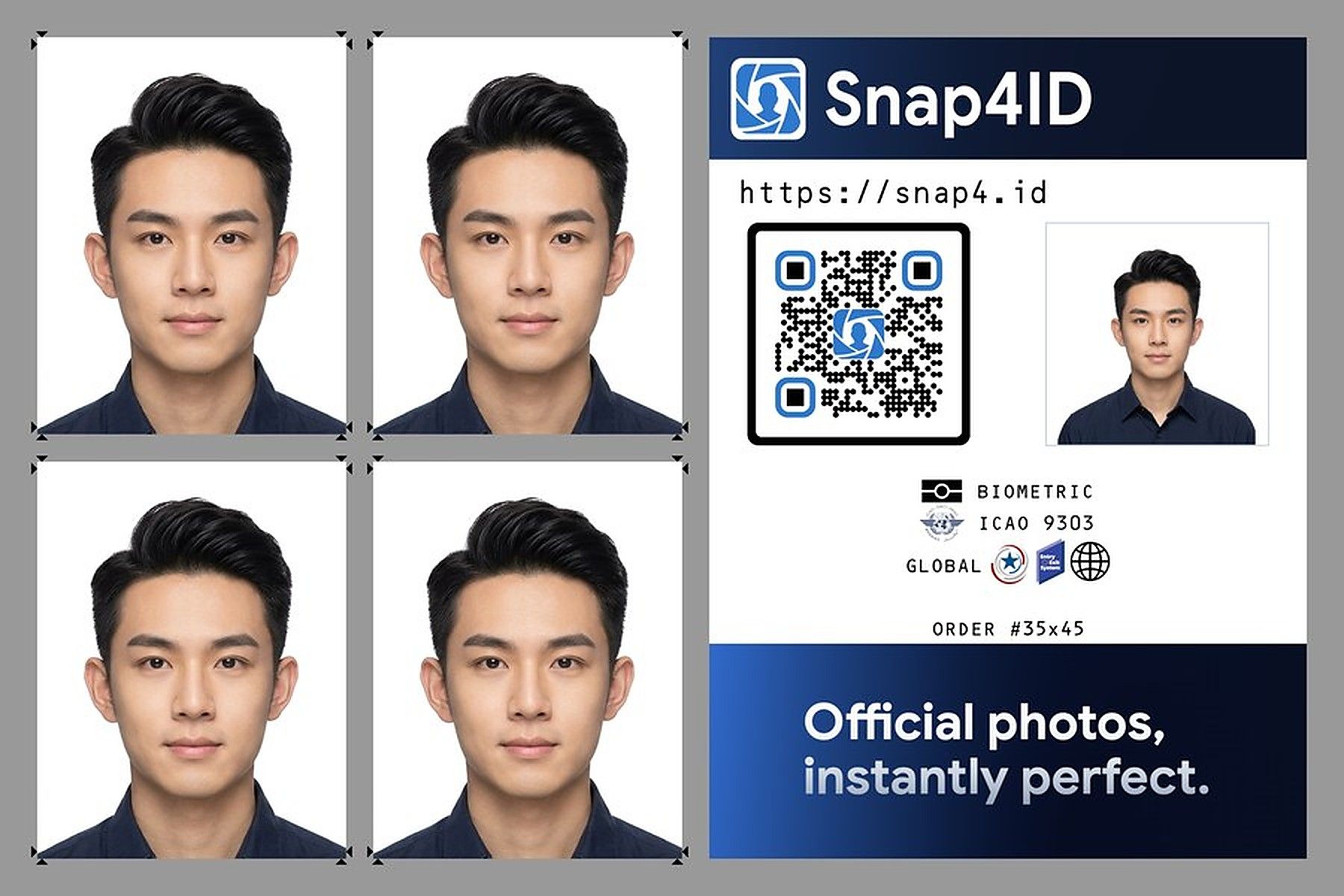
Never upload a single 35 × 45 mm image directly to a Walgreens, CVS, Walmart, or Boots kiosk—the kiosk will automatically stretch the 7:9 vertical image to fill a 4 × 6 inch (3:2) postcard, ruining the mandatory 32–36 mm head height. Printing our pre-formatted 4 × 6 inch (600 DPI) layout at 100% actual scale (no borderless zoom) gives you four precision-calibrated 35 × 45 mm photos with trim guides ready to cut with scissors:
6. Frequently Asked Questions (FAQ)
Do Japan, South Korea, Taiwan, and Singapore all use the same 35x45 mm passport photo size?
Yes, Japan, South Korea, Taiwan, and Singapore all mandate the standard ICAO 35 mm wide by 45 mm high (1⅜ × 1¾ inch) physical frame with a 32 mm to 36 mm vertical head height and a pure white (#FFFFFF) background. However, their digital portal pixel resolutions differ significantly: Japan requires 413 × 531 pixels, South Korea and Taiwan require 827 × 1063 pixels at 600 DPI, and Singapore ICA visas require exactly 400 × 514 pixels under 60 KB.
Can I wear circle contact lenses or bangs in a Japanese or South Korean passport photo?
No, both the Ministry of Foreign Affairs of Japan (MOFA) and the South Korean Ministry of Foreign Affairs strictly prohibit colored contact lenses, pupil-enlarging circle lenses, and heavy bangs covering the eyes or eyebrows. Circle lenses alter your natural iris diameter and cause automated e-Gate facial recognition scanners at Narita, Haneda, and Incheon airports to fail.
What are the exact pixel dimensions for a Singapore ICA visa photo?
An official Singapore Immigration & Checkpoints Authority (ICA) digital visa photo must measure exactly 400 pixels wide by 514 pixels high (290 DPI, matching the 35:45 aspect ratio) in JPEG (.jpg) format, with a file size of 60 KB or less on the SAVE/APPLES system (or up to 150 KB on updated MyICA forms).
Do my ears have to show in a Taiwanese (BOCA) passport photo?
Yes, Taiwan's Bureau of Consular Affairs (BOCA) and overseas TECO offices require both ears, both eyebrows, and the full facial contour to be clearly visible in a 35 × 45 mm Taiwanese chip passport photo. Applicants must also avoid AI beauty filters or digital retouching that removes natural moles or birthmarks.
Can I use a 2x2 inch US photo for a Japanese eVISA or South Korean visa application?
While legacy paper Japanese visa forms at some U.S. consulates historically tolerated 2 × 2 inch prints, the online JAPAN eVISA portal, South Korea's Visa Portal (visa.go.kr), Taiwan BOCA, and Singapore ICA all enforce the 35 × 45 mm (7:9 aspect ratio) biometric standard. Uploading an uncropped 1:1 square U.S. photo will distort or fail portal validation.
Upload any smartphone photo. Snap4ID checks 478 biometric points, replaces your background with pure white (#FFFFFF), and exports the exact pixel size for MOFA Japan, Korea Visa Portal, Taiwan BOCA, or Singapore ICA—backed by our 100% acceptance guarantee. Create Your 35×45 mm Biometric Photo Now →