Chinese Passport and Visa Photo Requirements 33x48 mm: COVA Digital Upload & Jewelry Rules (2026)
Official 2026 MFA China passport & COVA visa photo rules: exact 33x48 mm size, 28–36 mm head height, 15–22 mm width, visible ears, dark collar & zero jewelry.

Table of Contents
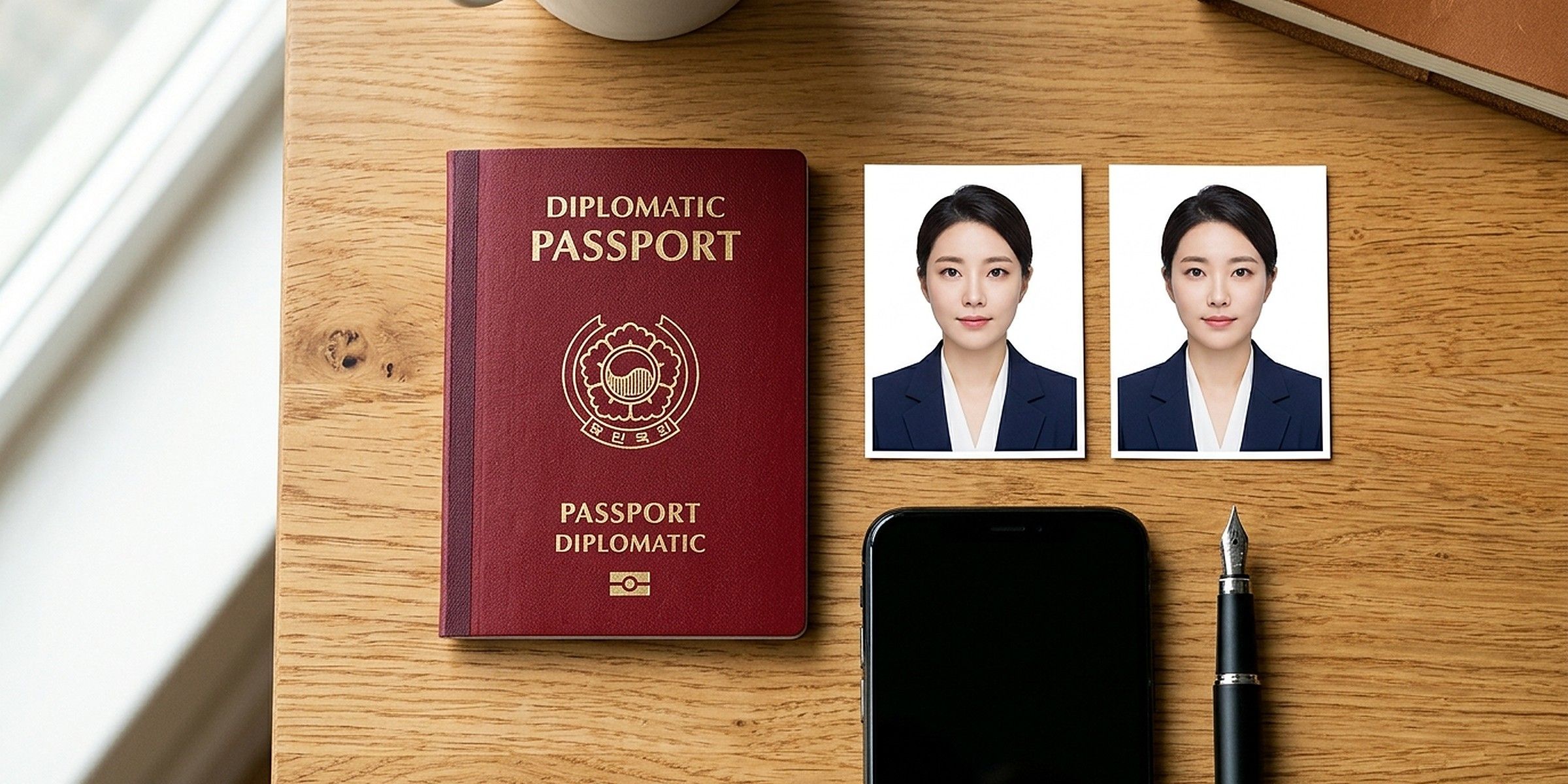
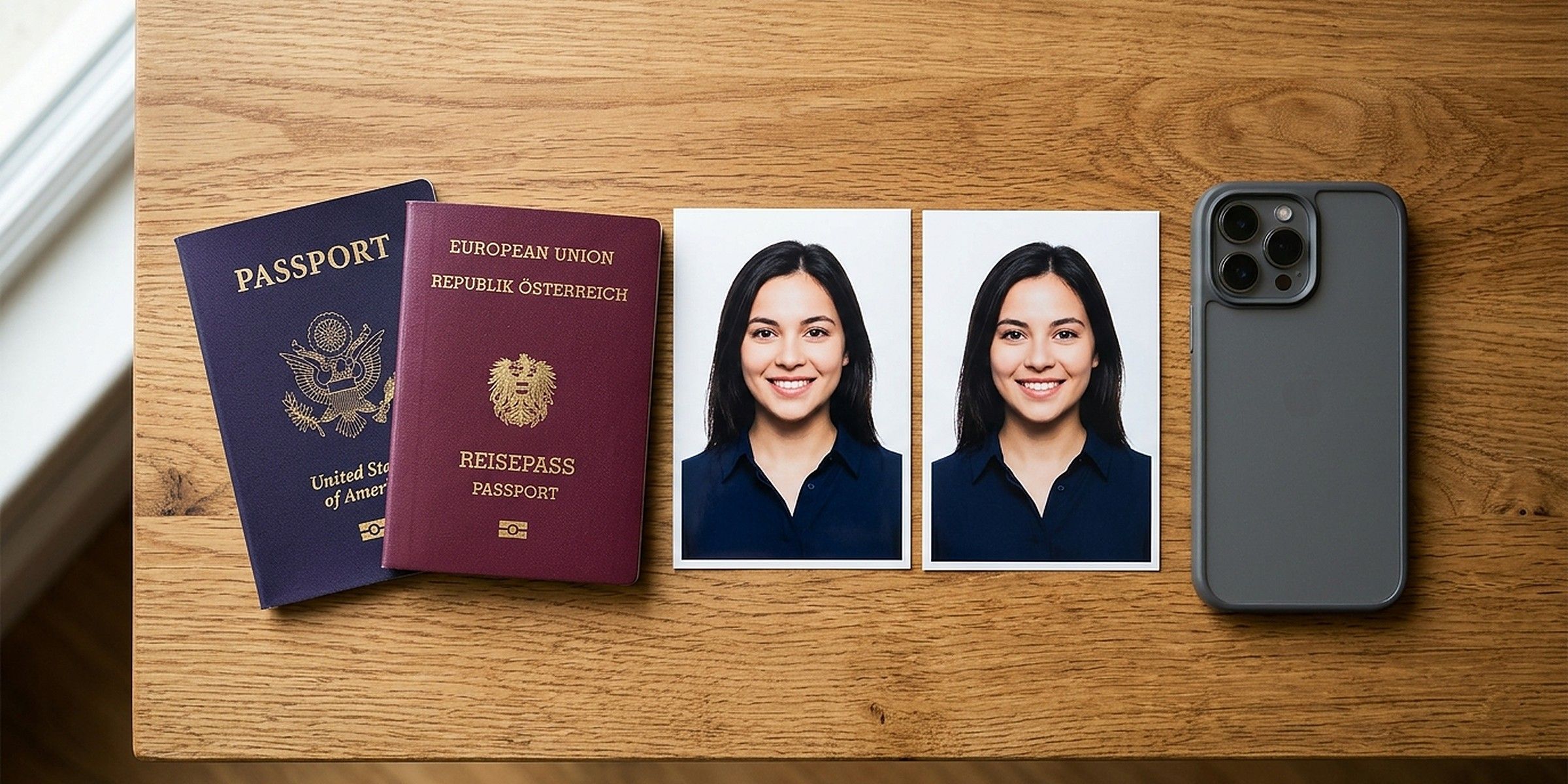
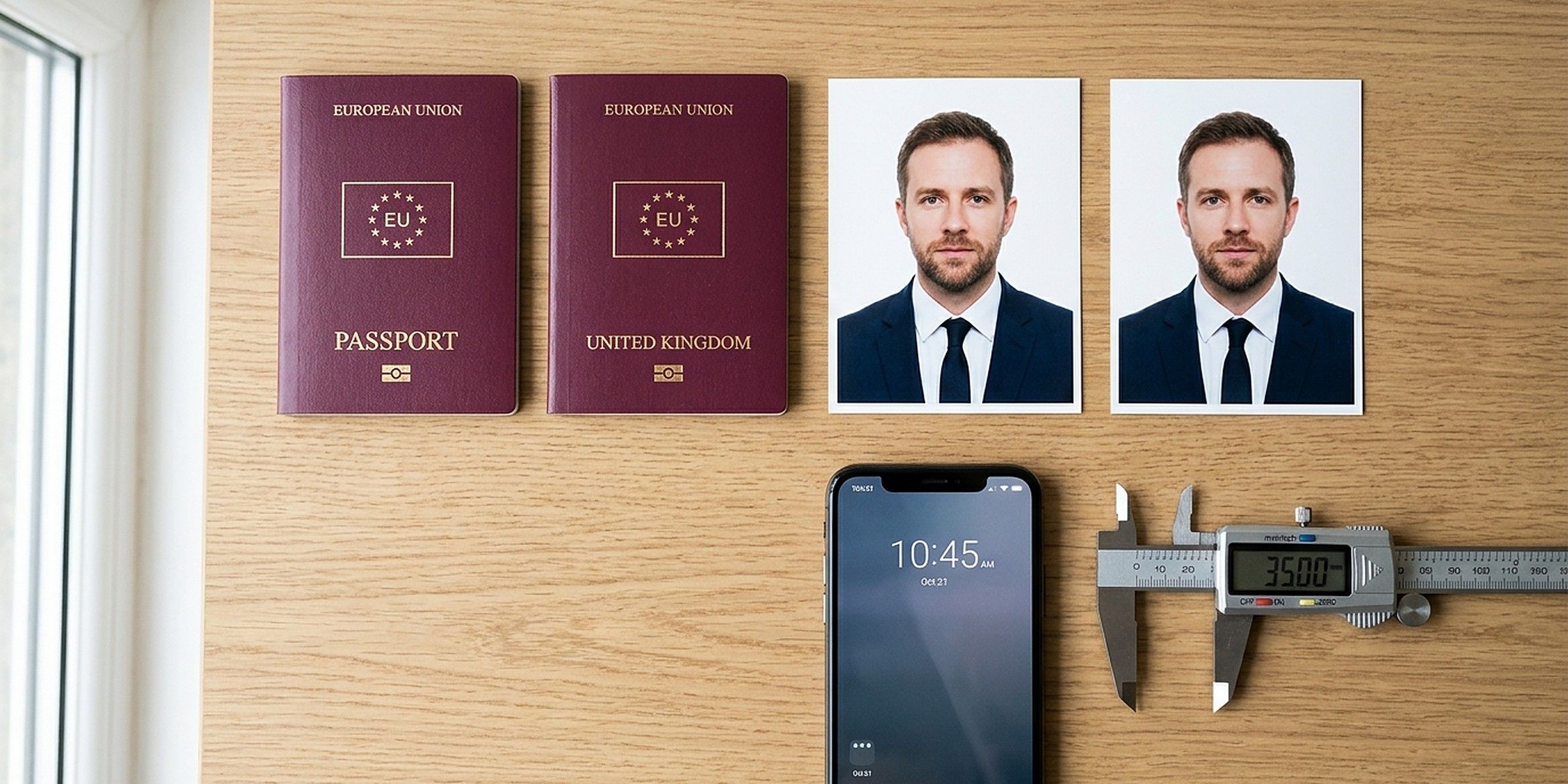
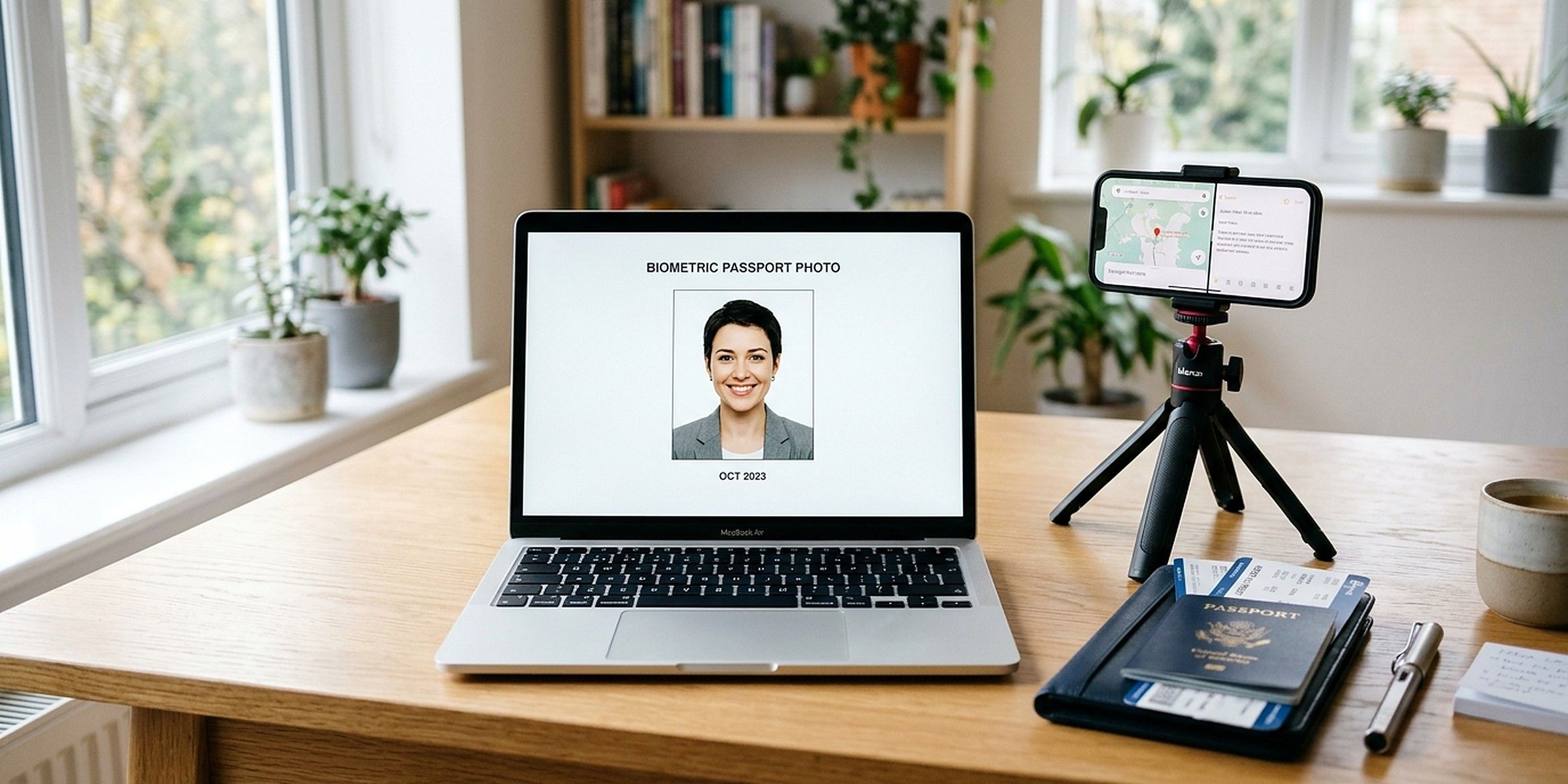
Official 2026 Ministry of Foreign Affairs of the People's Republic of China (MFA) regulations require every Mainland Chinese passport and visa photo to measure exactly 33 mm wide by 48 mm high (3.3 × 4.8 cm or 1.30 × 1.89 inches) in an 11:16 vertical aspect ratio against a shadow-free, pure white (#FFFFFF) background. Depending on whether you are renewing a PRC e-Passport via the China Consular mobile app or submitting a tourist (L), business (M), family visit (Q1/Q2), or student (X1/X2) visa on the China Online Visa Application (COVA) portal, your head height must measure 28–33 mm for physical visa prints or 31–36 mm for passport and digital uploads, with a strict 15–22 mm head width, a 3–5 mm top margin, and at least 7 mm from chin to bottom edge. You can automatically generate a compliant Chinese passport photo, physical Chinese visa photo, or COVA-ready digital Chinese visa photo in under 60 seconds.
- Unique 33 × 48 mm (11:16) Narrow Frame: Mainland China uses a custom
33 × 48 mm(1.30 × 1.89 in) portrait ratio—calibrated to390 × 567 px(300 DPI) for passports and780 × 1134 px(600 DPI) for visa prints and digital files. Standard U.S.2 × 2 inchsquare photos fail 100% of the time. - Strict Head Width (15–22 mm) & Margin Locks: Your head height must sit between 28–33 mm (visa print) or 31–36 mm (passport & digital COVA), your ear-to-ear face width must measure 15 to 22 mm, the crown-to-top margin must be 3 to 5 mm, and the chin-to-bottom margin must be at least 7 mm.
- Zero Jewelry & No Eyeglasses Allowed: Remove all earrings (even tiny studs), necklaces, facial piercings, hairpins, and eyeglasses. Any metallic reflection around the earlobes or neck triggers an automated COVA rejection.
- Both Ears, Both Eyebrows & Dark Collar Mandatory: Tuck all hair completely behind both ears so the full contour of both ears and eyebrows is visible, and wear a dark navy, black, or charcoal top that contrasts sharply against the pure white (
#FFFFFF) backdrop.
1. What Are the Official 33x48 mm Chinese Passport and Visa Photo Dimensions?
The official photo size for a Mainland Chinese biometric passport and Chinese visa is 33 mm wide by 48 mm high (3.3 × 4.8 cm or 1.30 × 1.89 inches), featuring an 11:16 aspect ratio, a 15 to 22 mm face width, and a pure white (#FFFFFF) background taken within the last 6 months.
Unlike standard European 35 × 45 mm portraits or American 2 × 2 inch squares, Mainland China enforces its own Family 3 (33 × 48 mm) national biometric geometry across three distinct document workflows administered by the Embassy of the People's Republic of China Official Visa Photo Requirements and the National Immigration Administration (NIA). Compare the exact parameters for each Chinese travel document below:
| Biometric Specification | Chinese Passport (cn-pass) | Chinese Visa Print (cn-visa) | Digital Chinese Visa — COVA (cn-visa-d) |
|---|---|---|---|
| Physical Print Dimensions | 33 mm × 48 mm (3.3 × 4.8 cm / 1.30 × 1.89 in) | 33 mm × 48 mm (3.3 × 4.8 cm / 1.30 × 1.89 in) | 11:16 aspect ratio (calibrated to 33 × 48 mm geometry) |
| Digital Pixel Size & DPI | 390 × 567 px at 300 DPI | 780 × 1134 px at 600 DPI | 780 × 1134 px at 600 DPI (COVA portal window: 354 × 472 px to 420 × 560 px / 780 × 1134 px, 40–120 KB RGB JPEG) |
| Crown-to-Chin Head Height | 31 mm to 36 mm (64.6%–75.0% of frame height; target 70%) | 28 mm to 33 mm (58.3%–68.8% of frame height; target 63.5%) | 31 mm to 36 mm (64.6%–75.0% of frame height; target 70%) |
| Face Width (Cheek/Ear Span) | 15 mm to 22 mm (1.5 to 2.2 cm centered horizontally) | 15 mm to 22 mm (1.5 to 2.2 cm centered horizontally) | 15 mm to 22 mm (31.25%–45.8% horizontal span) |
| Top & Bottom Margins | Top crown margin: 3–5 mm; Chin to bottom edge: ≥ 7 mm | Top crown margin: 3–5 mm; Chin to bottom edge: ≥ 7 mm | Top crown margin: 3–5 mm; Chin to bottom edge: ≥ 7 mm |
| Background & Color Space | Pure, uniform white (#FFFFFF), 24-bit True Color RGB, zero shadows | Pure, uniform white (#FFFFFF), glossy photographic paper, unbordered | Pure, uniform white (#FFFFFF), 24-bit True Color RGB .jpg file |
How Are Head Height (28–36 mm), Face Width (15–22 mm), and Margins Measured?
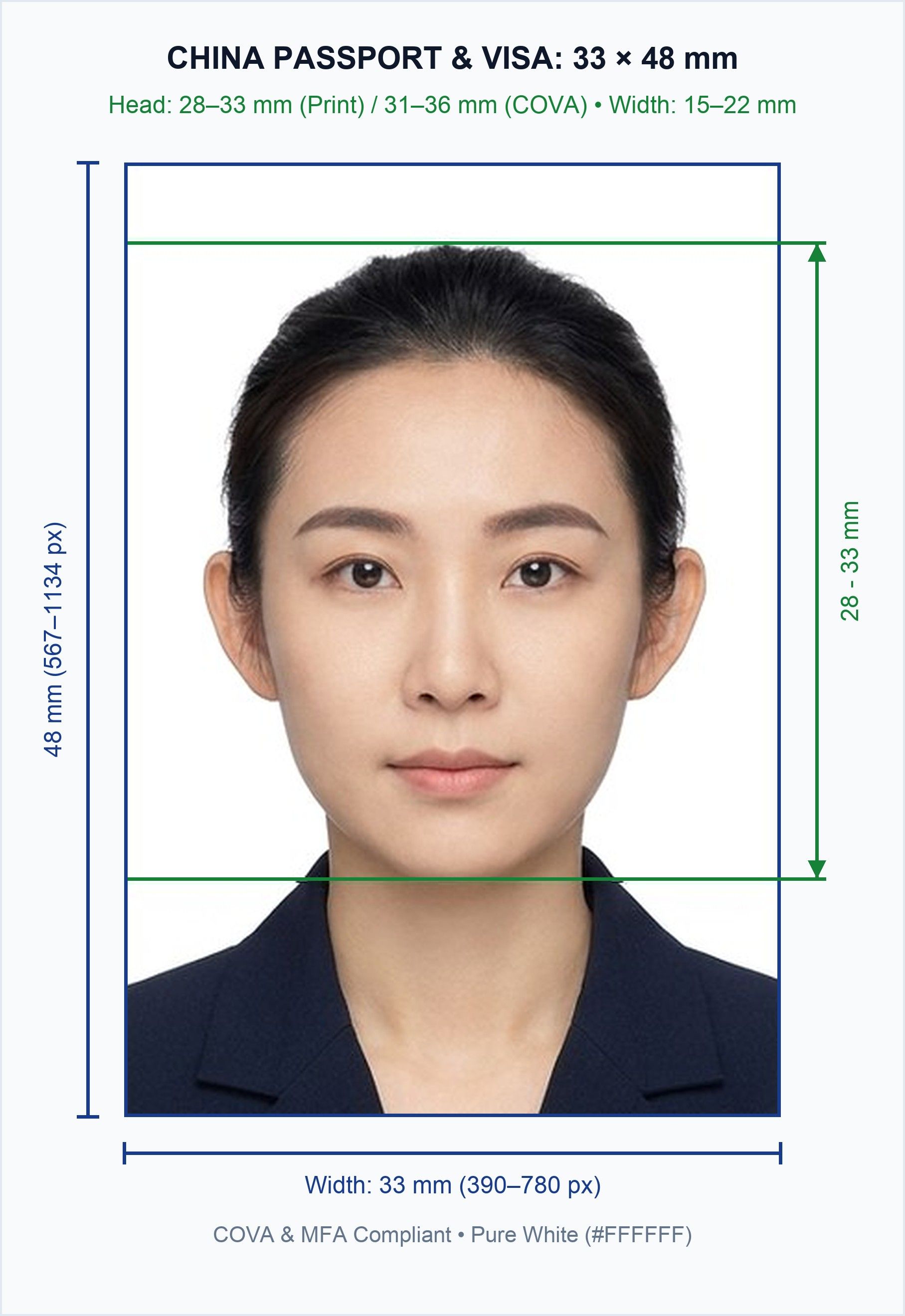
To pass both the automated pre-check on China's visa portal and manual inspection at a Chinese Consulate, your portrait must satisfy four simultaneous geometric locks inside the 33 × 48 mm canvas:
- Crown-to-Chin Vertical Height (28–33 mm Print / 31–36 mm Digital & Passport): Measured from the lowest point of the chin to the top of the crown (including normal hair volume, though high buns or topknots that push the crown near the upper border are discounted or rejected).
- Cheekbone-to-Cheekbone Face Width (15 mm to 22 mm): China is one of the few countries that enforces a strict horizontal head-width rule. If your face is narrower than
15 mm(camera held too far away or wide-angle selfie distortion) or wider than22 mm(cropped too close), the validator flags the image immediately. - Upper Headroom Margin (3 mm to 5 mm): The distance between the top of your hair/crown and the top edge of the photo must fall strictly between
3 mmand5 mm. - Lower Chin-to-Bottom Margin (≥ 7 mm): The distance from the bottom tip of your chin to the lower edge of the photo must be at least 7 mm so your neck and upper collarbones are clearly visible.
Why 2x2 Inch US Photos and 40x50 mm Hong Kong Photos Fail in Mainland China
Travelers applying for a Chinese visa in the United States—or planning a multi-stop itinerary across Mainland China, Hong Kong, and Taiwan—frequently fall into two sizing traps:
Trap #1 — Why a 2×2 Inch US Pharmacy Photo Fails on COVA: American drugstores (Walgreens, CVS, Rite Aid, UPS Store) default to a square 2 × 2 inch (51 × 51 mm) US passport photo. A 51 × 51 mm square is 18 mm too wide for China's narrow 33 × 48 mm frame. If you try to crop a 2 × 2" U.S. photo inside the COVA portal cropping box, the 11:16 frame either slices off the top of your head or leaves your face wider than the maximum 22 mm limit.
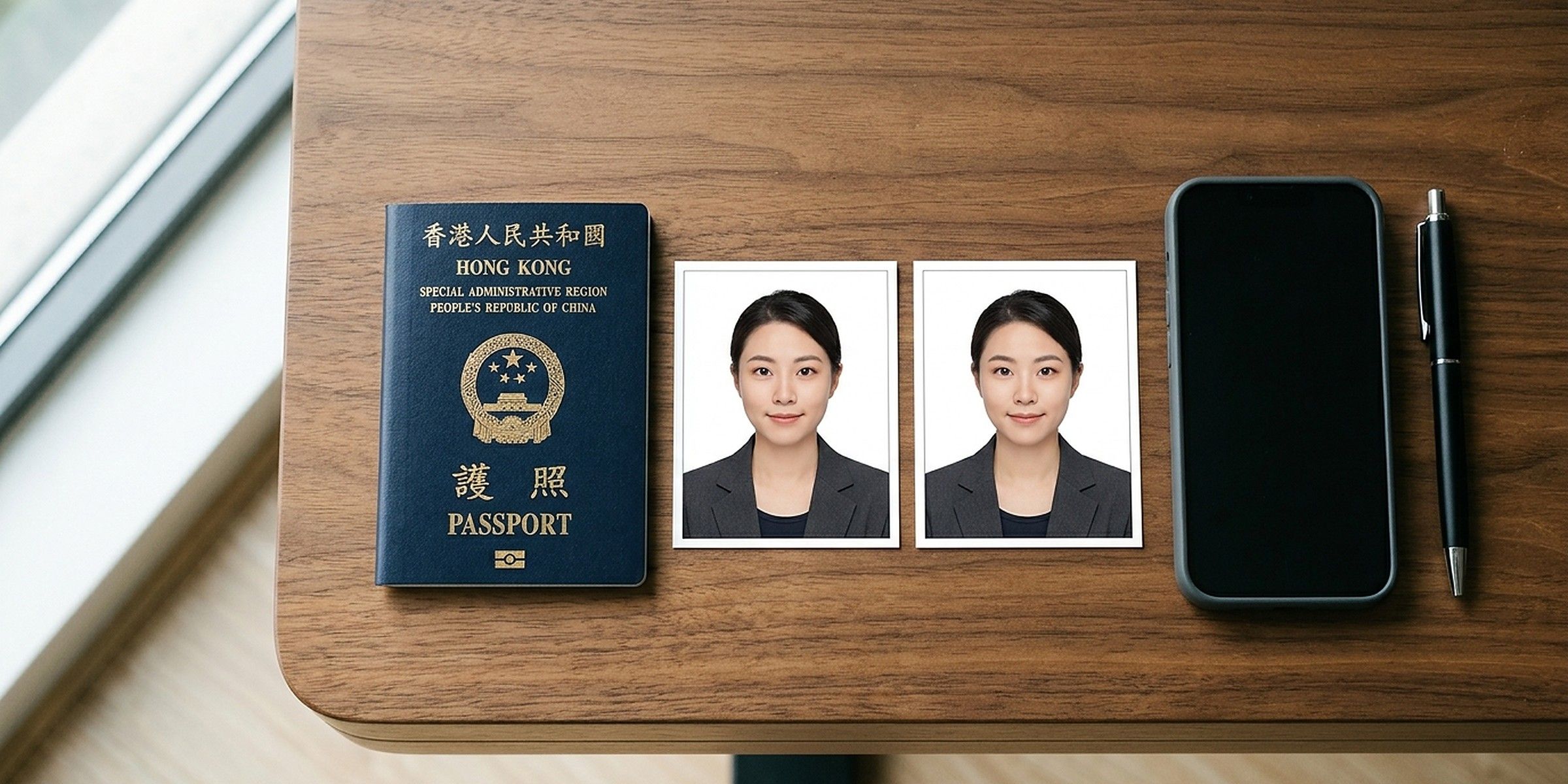
Trap #2 — Mainland China (33×48 mm) vs. Hong Kong SAR (40×50 mm) vs. Taiwan (35×45 mm): Greater China travel documents use three completely different aspect ratios! Mainland Chinese passports and COVA visas require 33 × 48 mm (11:16). By contrast, a Hong Kong SAR passport photo requires a wider 40 × 50 mm (4:5 ratio) frame as detailed in our Hong Kong SAR 40×50 mm passport photo guide, while a Taiwanese passport photo follows the 35 × 45 mm (7:9) BOCA specification. Always select the exact jurisdiction before generating your photo.
2. How to Pass the COVA Online Visa & Chinese Consular App Photo Check
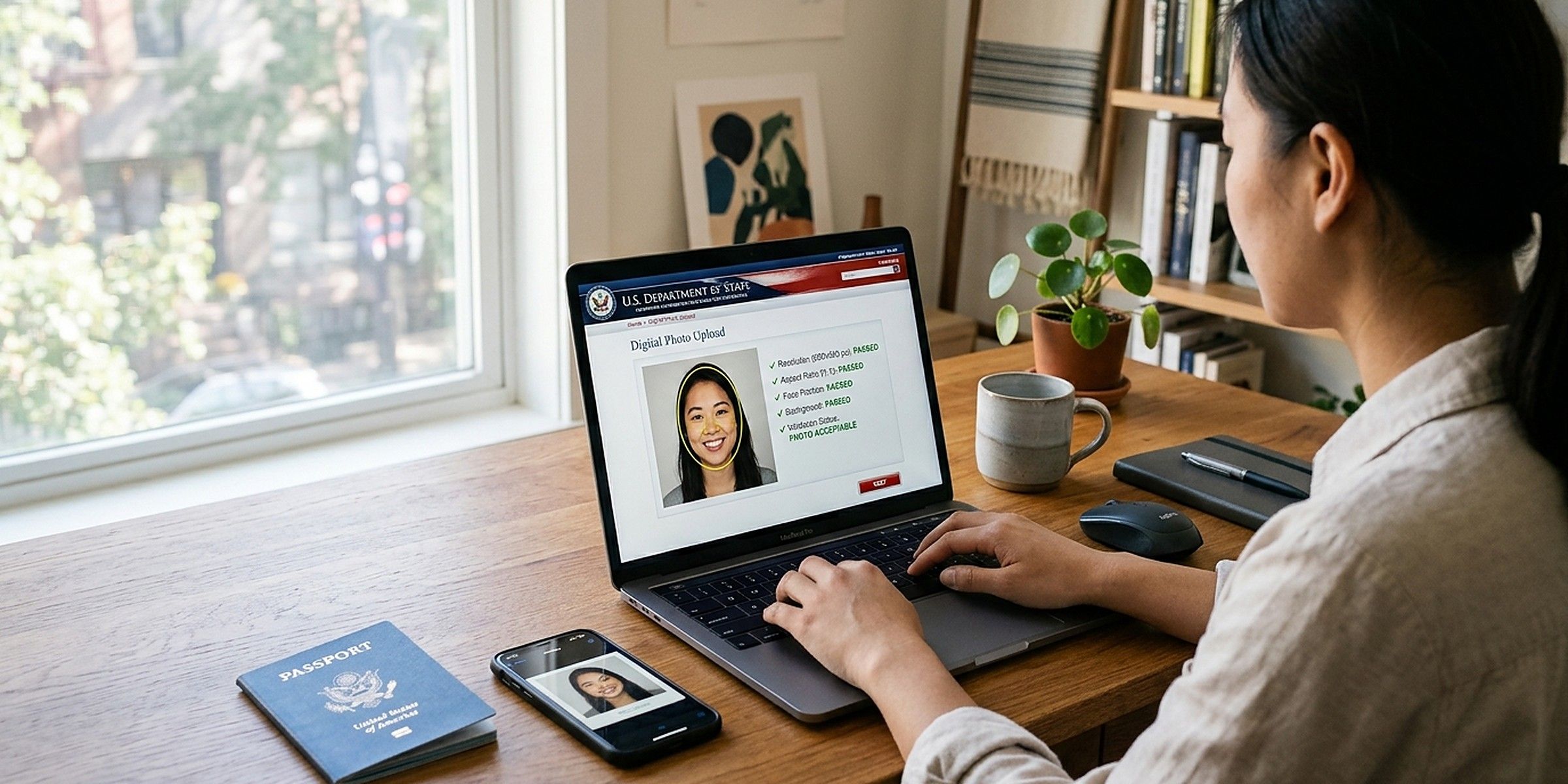
To pass the China Online Visa Application (COVA — consular.mfa.gov.cn) digital upload check and the China Consular (中国领事) passport renewal app, your photo must be an unretouched 24-bit RGB JPEG (.jpg) file between 40 KB and 120 KB (or high-resolution 780 × 1134 px) with a pure #FFFFFF white background and zero facial shadows.
When you start your online visa form on consular.mfa.gov.cn or through a regional Chinese Visa Application Service Center (visaforchina.cn) portal, the very first step after selecting your consulate location (Washington D.C., New York, San Francisco, Los Angeles, Chicago, London, Toronto, or Sydney) is uploading your digital biometric portrait. COVA runs an instant server-side computer-vision audit before allowing you to save Section 1 of the application.
Fixing Common COVA Upload Errors ("Head Too Large", "Background Not White", "Chin Margin")
If the COVA portal rejects your upload and warns that you will have to bring extra physical photos to the visa counter, check which of these five specific algorithmic failures occurred:
- "Background color is not pure white / uneven illumination": Even if you stood in front of a white painted apartment wall, indoor light bulbs cast a warm yellow (
#F7F5EE) or cool grey (#E8ECEF) tint behind your shoulders. COVA's RGB histogram check requires pure#FFFFFF(R:255, G:255, B:255) background pixels around your head and shoulders. - "Head width / height out of range (Too close or too far)": Taking a selfie at arm's length with a 24mm smartphone front camera stretches your nose and cheeks, making your head width exceed
22 mmrelative to the31–36 mmhead height. - "Distance from chin to bottom edge is too small (< 7 mm)": Cropping the bottom of the frame right under the chin leaves less than
7 mmof neck/chest clearance, triggering an instant failure. - "Clothing color too close to background": Wearing a white t-shirt, cream blouse, or light grey hoodie eliminates contrast along your collarbones so COVA cannot detect your shoulder line.
- "Uneven lighting on left and right sides of the face (Yin-Yang face)": Standing next to a side window illuminates one cheek brightly while casting a shadow across the opposite eye socket and nose bridge.
How Snap4ID's 478-Point AI Guarantees Instant COVA & Embassy Acceptance
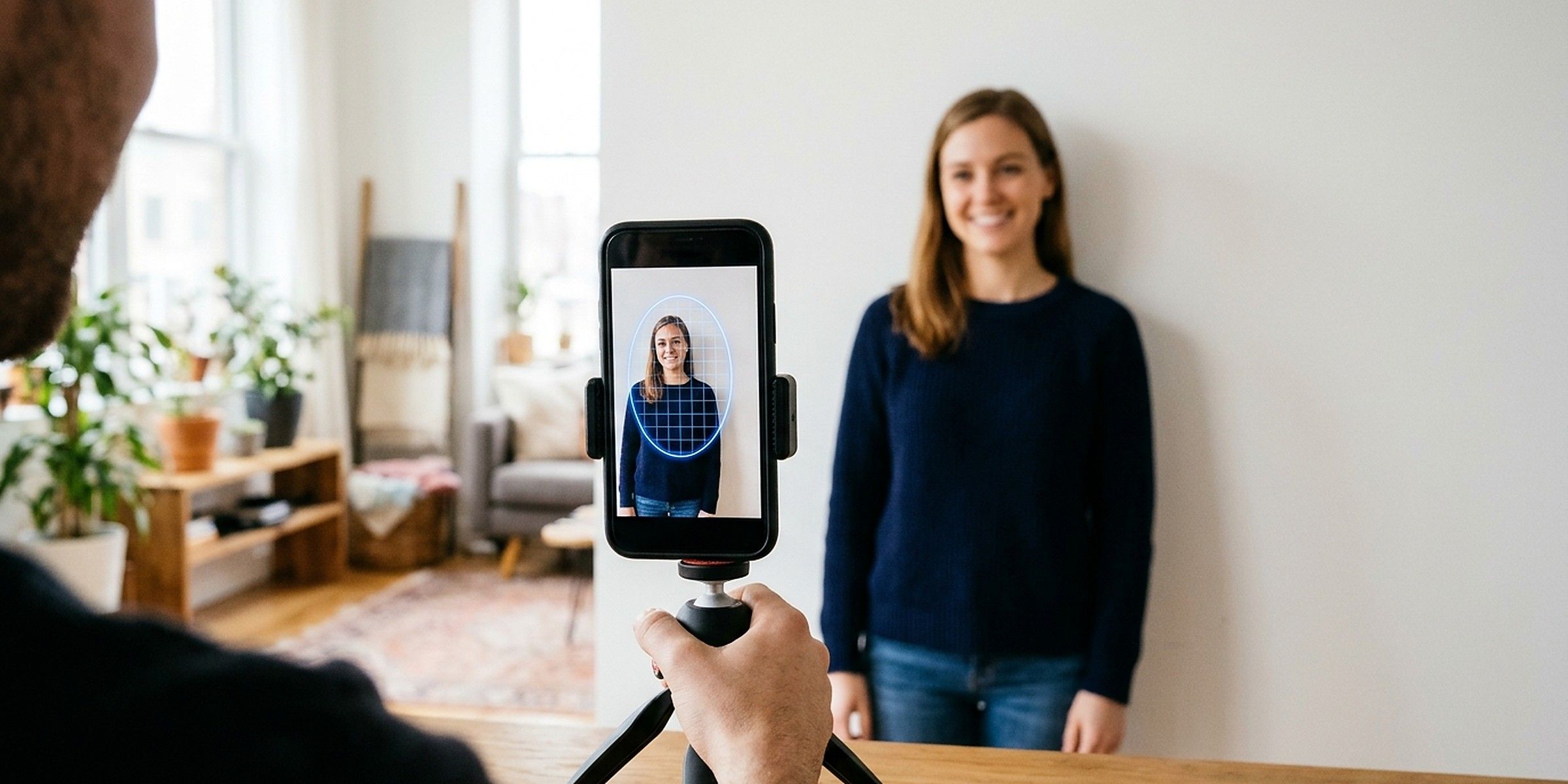
Instead of wrestling with manual cropping sliders on the COVA website, you can upload any well-lit smartphone portrait to our digital Chinese visa photo or Chinese passport photo tool:
- 478 Biometric Points & Exact 11:16 Calibration: Snap4ID's AI face mesh detects and measures 478 biometric points across your chin tip, cheekbones, ear contours, eyebrows, and cranial crown—automatically locking your head height into the exact
28–36 mmwindow, centering your face within the15–22 mmwidth corridor, and enforcing the3–5 mmtop margin and≥ 7 mmbottom chin margin. - Studio-Grade Pure White (#FFFFFF) Background Replacement: Our neural segmentation engine strips away household walls, furniture, and ear drop-shadows, replacing them with a uniform, pure white (
#FFFFFF) backdrop without altering your natural skin texture. - 100% Acceptance Guarantee: Every Snap4ID download includes both the exact digital file for COVA / China Consular app upload and a calibrated
4 × 6 inchprint sheet—backed by our 100% acceptance guarantee (and a full money-back guarantee in case of rejection).
3. Strict Jewelry, Visible Ears, Eyeglasses, and Dark Collar Rules
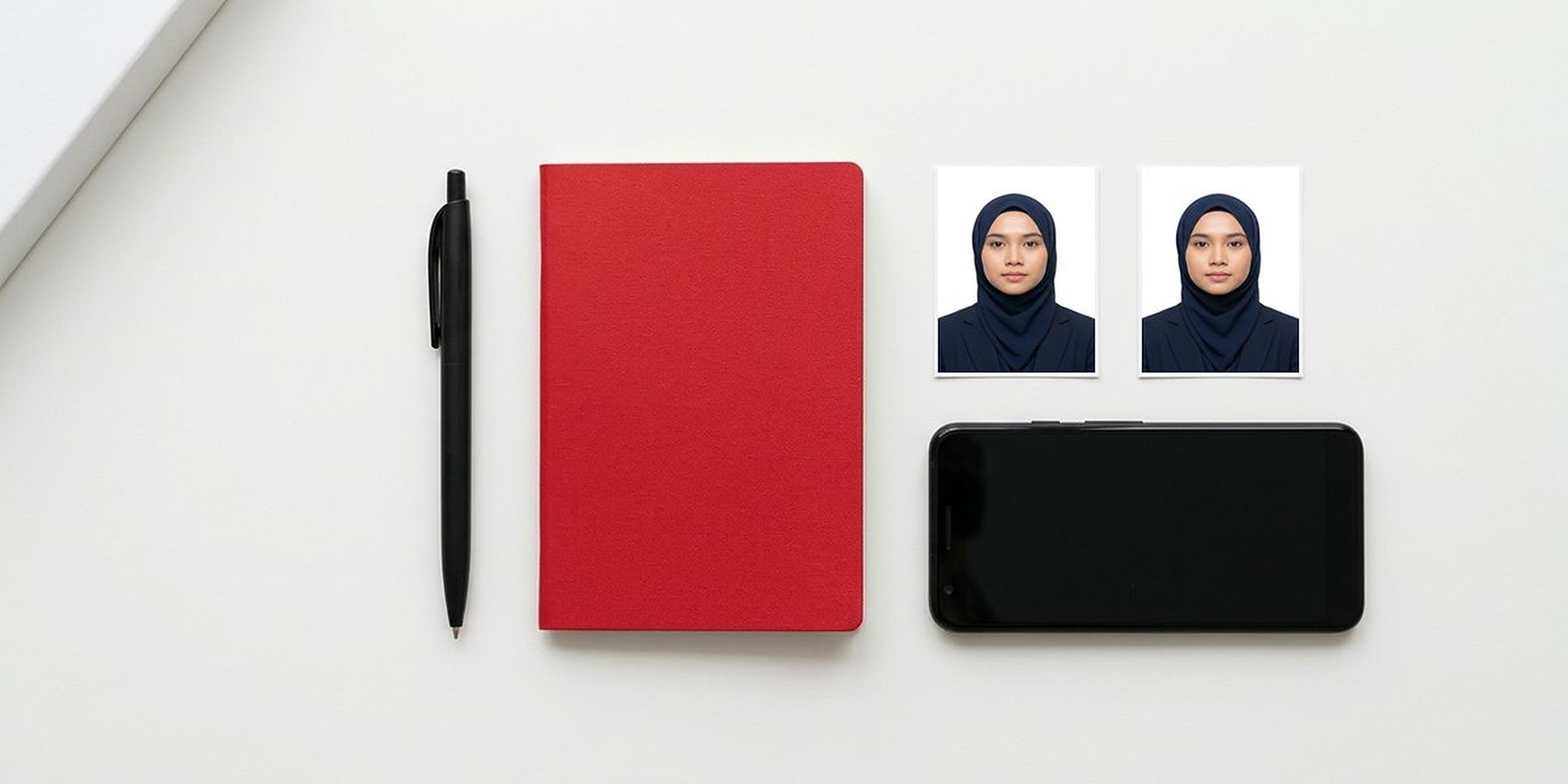
Chinese passport and COVA visa photo rules strictly prohibit all visible jewelry (including small stud earrings, necklaces, and facial piercings) and all eyeglasses, while requiring both ears and both eyebrows to be 100% uncovered and your shoulders dressed in a dark, contrasting top.
While U.S. passport authorities allow modest everyday jewelry as explained in our jewelry and makeup rules in biometric photos guide, Chinese consular examiners and the COVA AI validator treat any metallic or reflective object near the head and neck as a disqualifying biometric obstruction. Review the mandatory DOs and DON'Ts below:
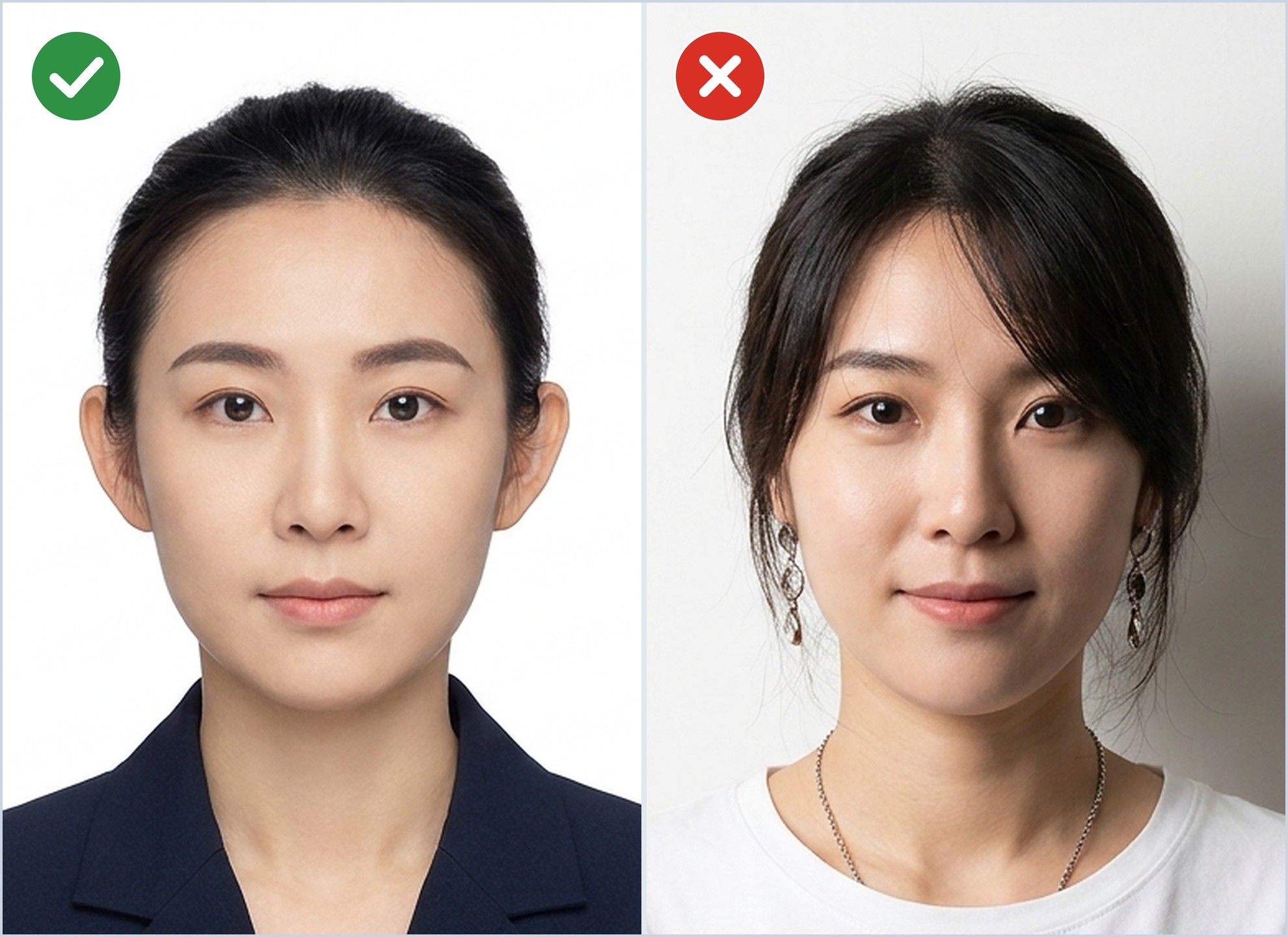
✔ DO: Compliant 33×48 mm MFA & COVA Rules
- Remove 100% of jewelry before shooting: Take off all earrings, ear studs, necklaces, chokers, nose studs, and decorative hair clips so your earlobes and neck are completely bare.
- Tuck hair behind both ears and uncover eyebrows: Both left and right ear contours and the full arch of both eyebrows must be clearly visible from the front.
- Wear a dark navy, black, or charcoal collared top: High contrast between your dark neckline and the pure white (
#FFFFFF) background ensures instant shoulder-boundary detection. - Keep a neutral, closed-mouth expression without glasses: Look straight into the camera lens with eyes open, mouth closed, and zero eyeglasses or tinted contact lenses.
✘ DON'T: Top Causes of COVA & Consulate Rejection
- Don't wear stud earrings or thin chains: Even a 2mm pearl stud or a thin gold chain peeking above your collar triggers COVA's accessory rejection filter.
- Don't let bangs or side hair cover your ears or eyebrows: Curtain bangs sweeping across the brow bone or loose hair hiding one earlobe will fail inspection.
- Don't wear white, ivory, cream, or very pale shirts: Light clothing merges with the white background and causes an automatic COVA boundary error.
- Don't wear eyeglasses, uniforms, or heavy/shiny makeup: Any eyeglass frame, military/police uniform, or heavy contouring that alters facial landmarks is prohibited.
Can You Wear Earrings, Studs, or a Necklace in a Chinese Visa Photo?
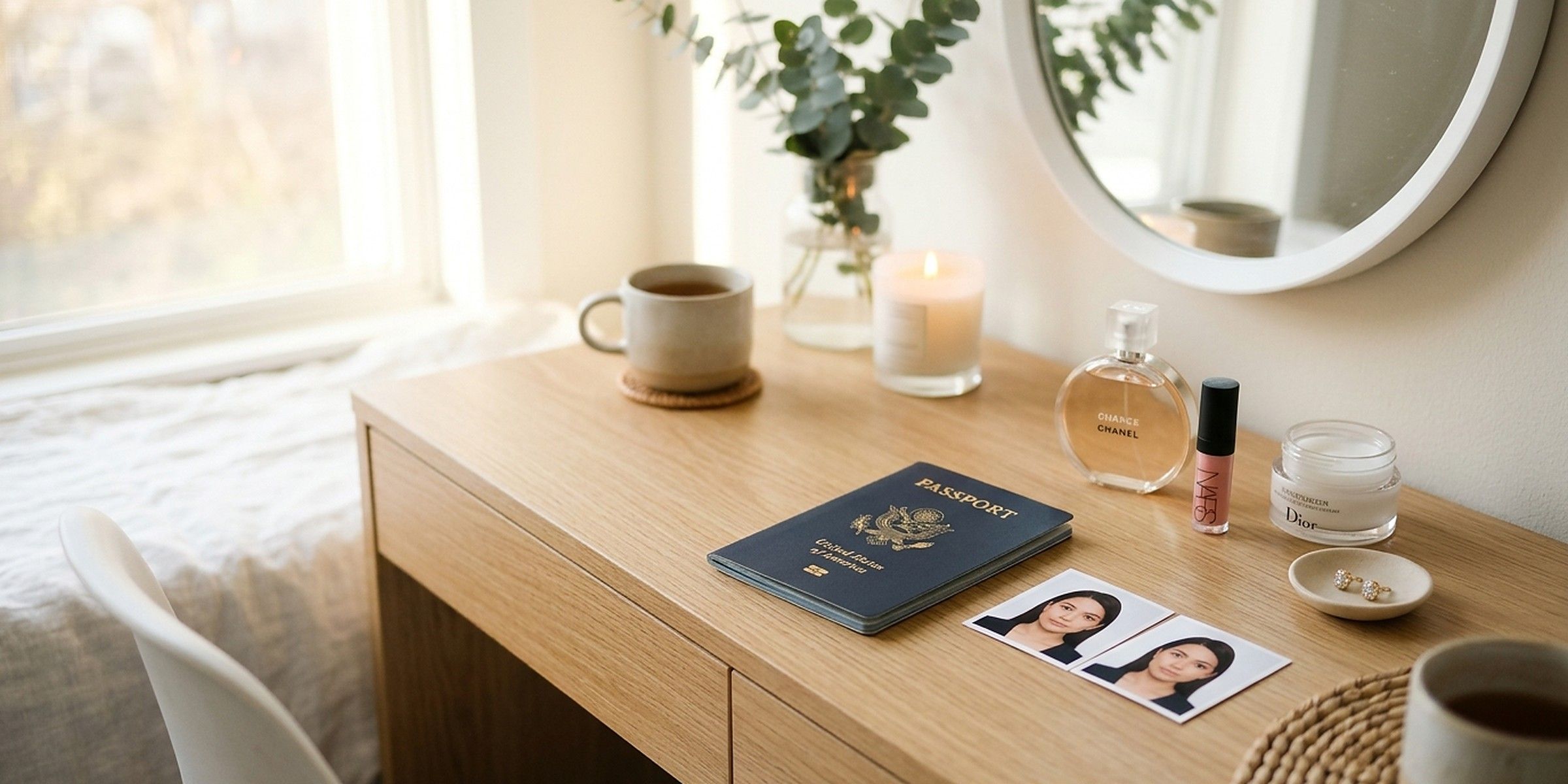
No—you cannot wear any earrings, ear studs, necklaces, or facial piercings in a Chinese passport or visa photo. This is the single most common surprise for first-time China visa applicants in the United States, Canada, the UK, and Australia. Even tiny metal posts, clear plastic retainers that catch flash light, or a necklace chain visible inside an open shirt collar will cause the COVA online system or the CVASC counter clerk to reject your photo. Always check your ears and neckline in the mirror before snapping your picture.
Do Both Ears and Eyebrows Have to Show in a Chinese Passport Photo?
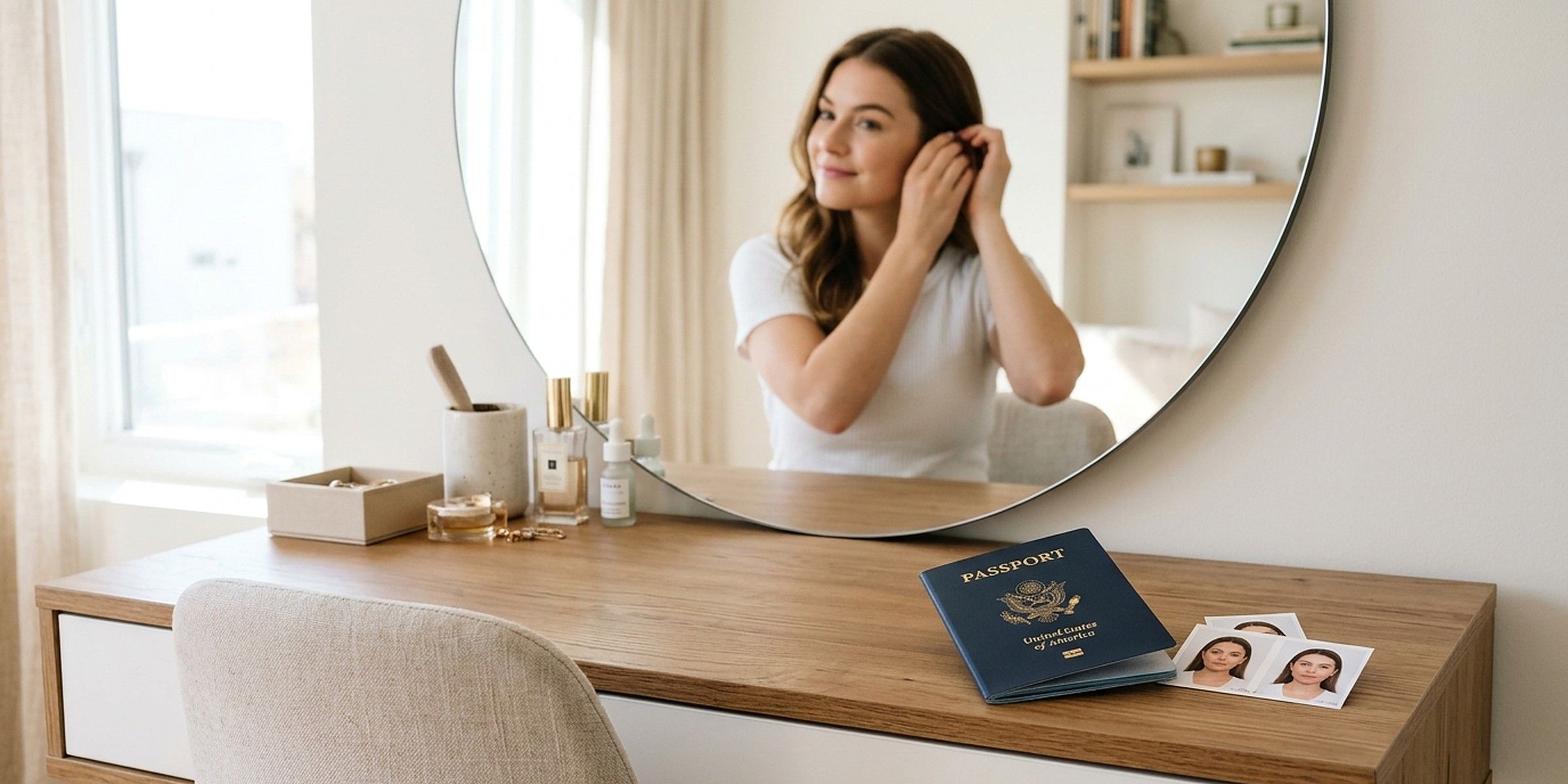
Yes, both of your ears and the entire contour of both eyebrows must be 100% visible in a Chinese passport or visa photo. If you have long hair, pull it neatly behind your shoulders or tie it in a low ponytail at the nape of your neck (never a high bun on top of your head, which distorts the 3–5 mm top margin). If you have bangs or fringe that reach your eyebrows, sweep or pin them to the side using an invisible bobby pin hidden completely behind the hairline so your full forehead and brow ridges are unobstructed.
Why You Must Wear a Dark Collar and Remove All Eyeglasses
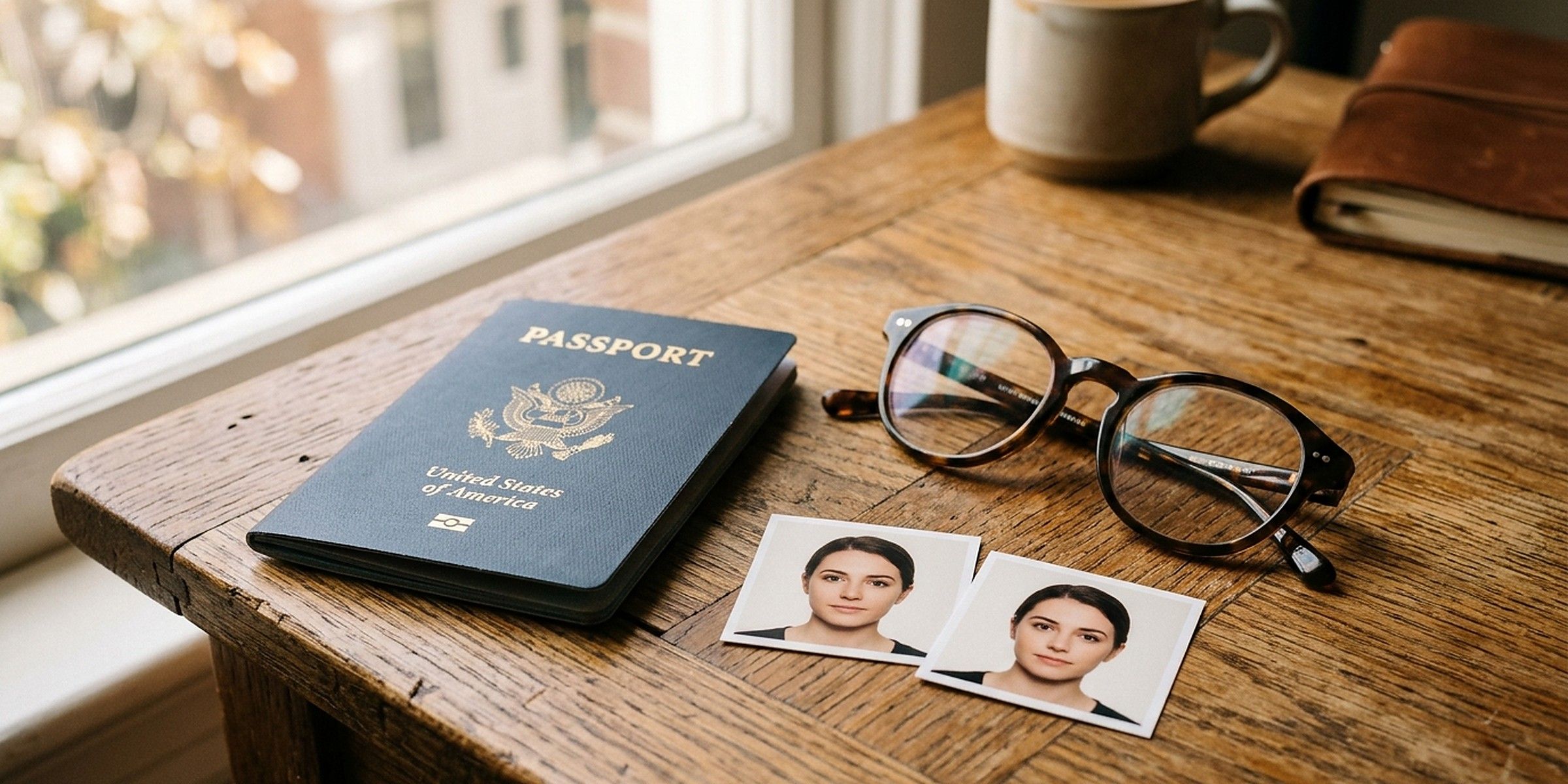
Because the PRC Ministry of Foreign Affairs mandates a pure white (#FFFFFF) background, wearing a dark navy blue, black, charcoal grey, or deep jewel-toned blazer or collared shirt is essential so your torso forms a crisp silhouette. At the same time, all eyeglasses—including clear prescription frames and rimless glasses—must be removed. Colored contact lenses that alter your natural iris color or diameter are also strictly forbidden.
4. When Do You Need Physical 33x48 mm Prints vs. a Digital Photo?
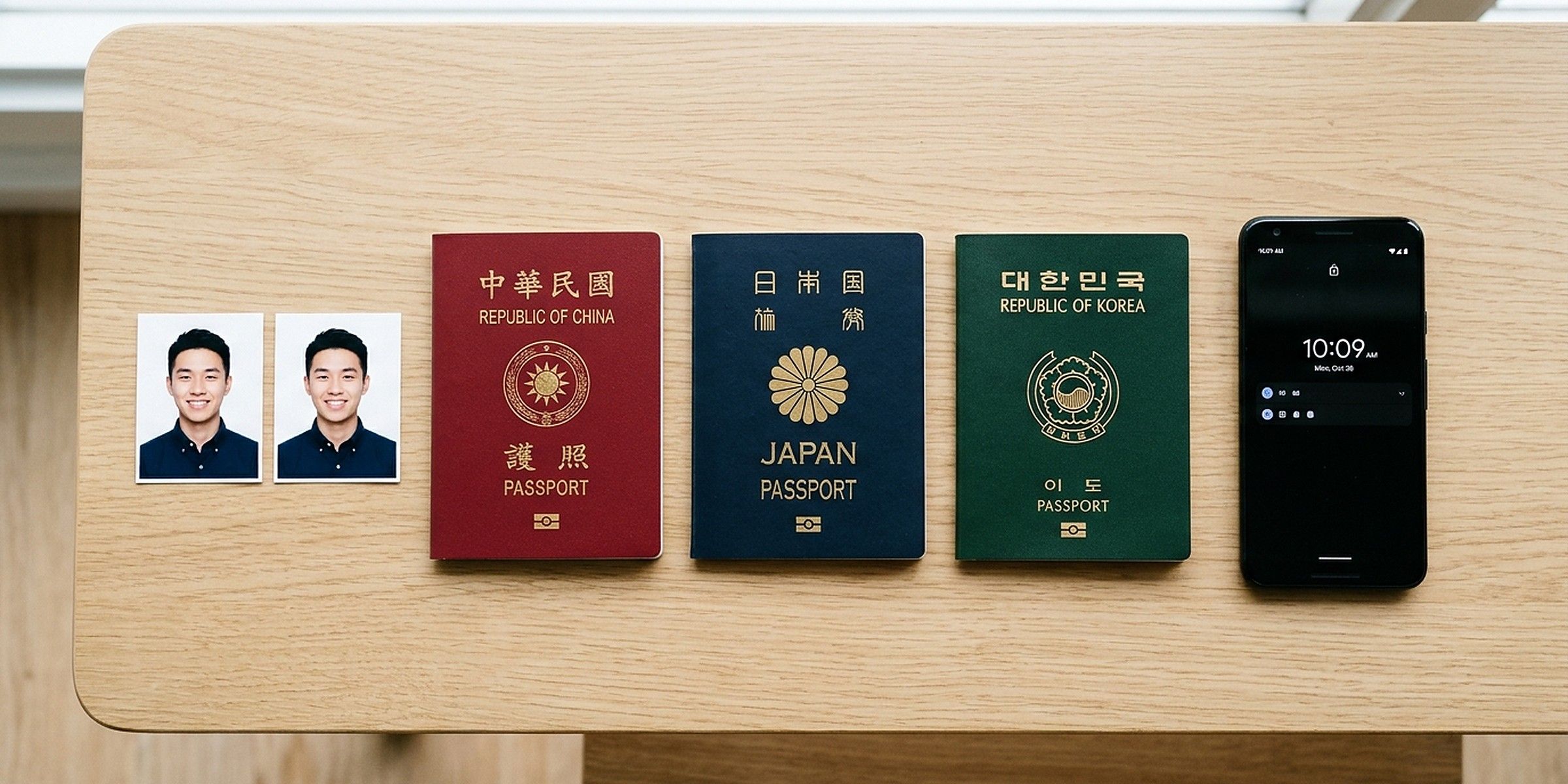
Most Chinese visa applicants in 2026 need both a digital 33 × 48 mm file to complete the online COVA form at consular.mfa.gov.cn and one or two physical 33 × 48 mm glossy prints when submitting their passport in person or via travel agent at a Chinese Embassy, Consulate, or Chinese Visa Application Service Center (CVASC).
Even if your digital photo passes the online COVA upload check with a green checkmark, Chinese Embassies and Consulates in the United States (Washington D.C., New York, San Francisco, Los Angeles, and Chicago) and worldwide CVASC offices require you to bring at least one physical 33 × 48 mm color photo printed on glossy photographic paper that is identical to the digital image uploaded into COVA. And if your digital upload stalled during the COVA pre-check, bringing two compliant physical 33 × 48 mm prints allows the consular window to scan your paper photo directly into the visa system.
How to Print 33x48 mm Chinese Visa Photos on a 4x6 Inch Sheet for $0.39
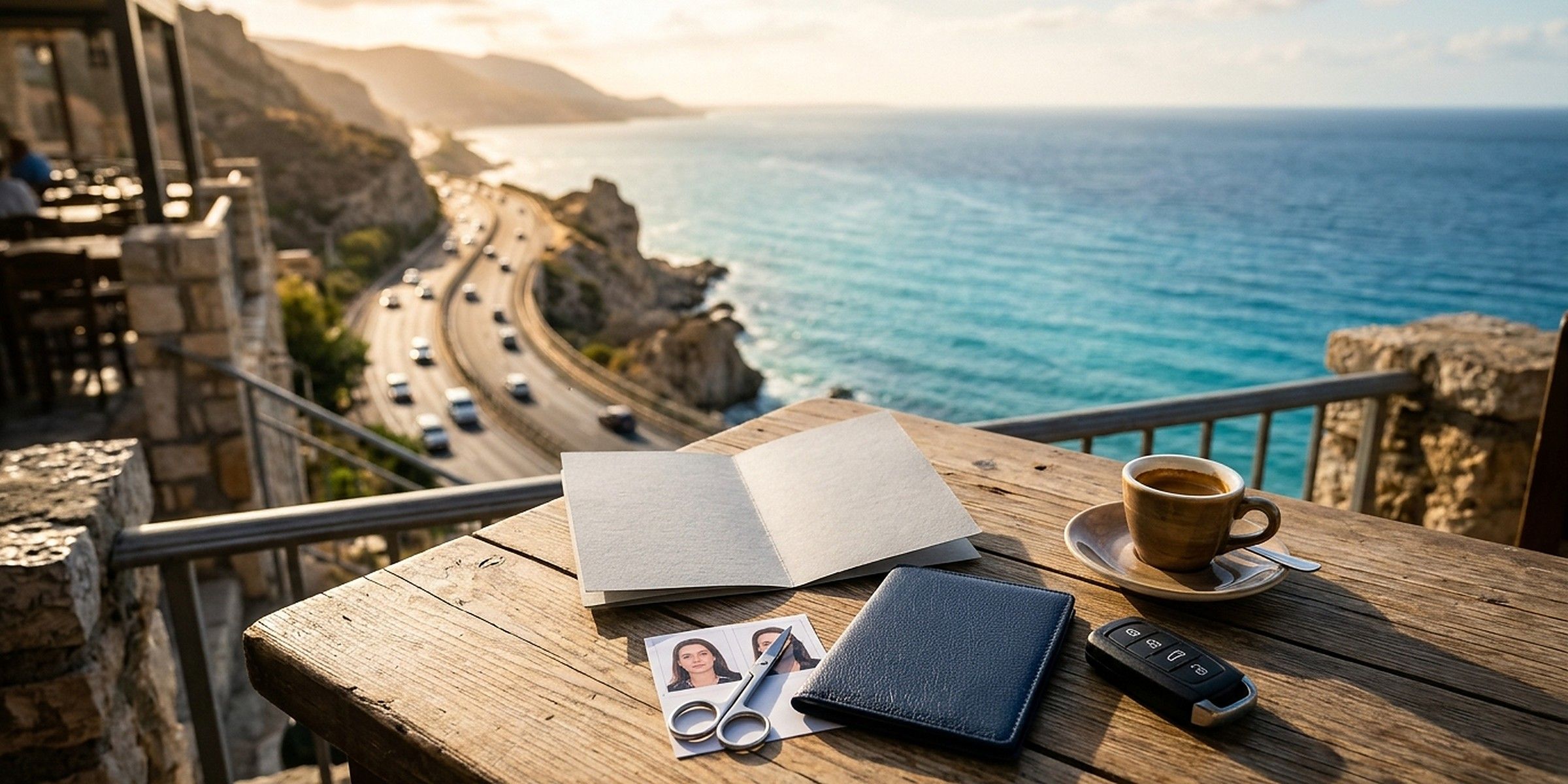
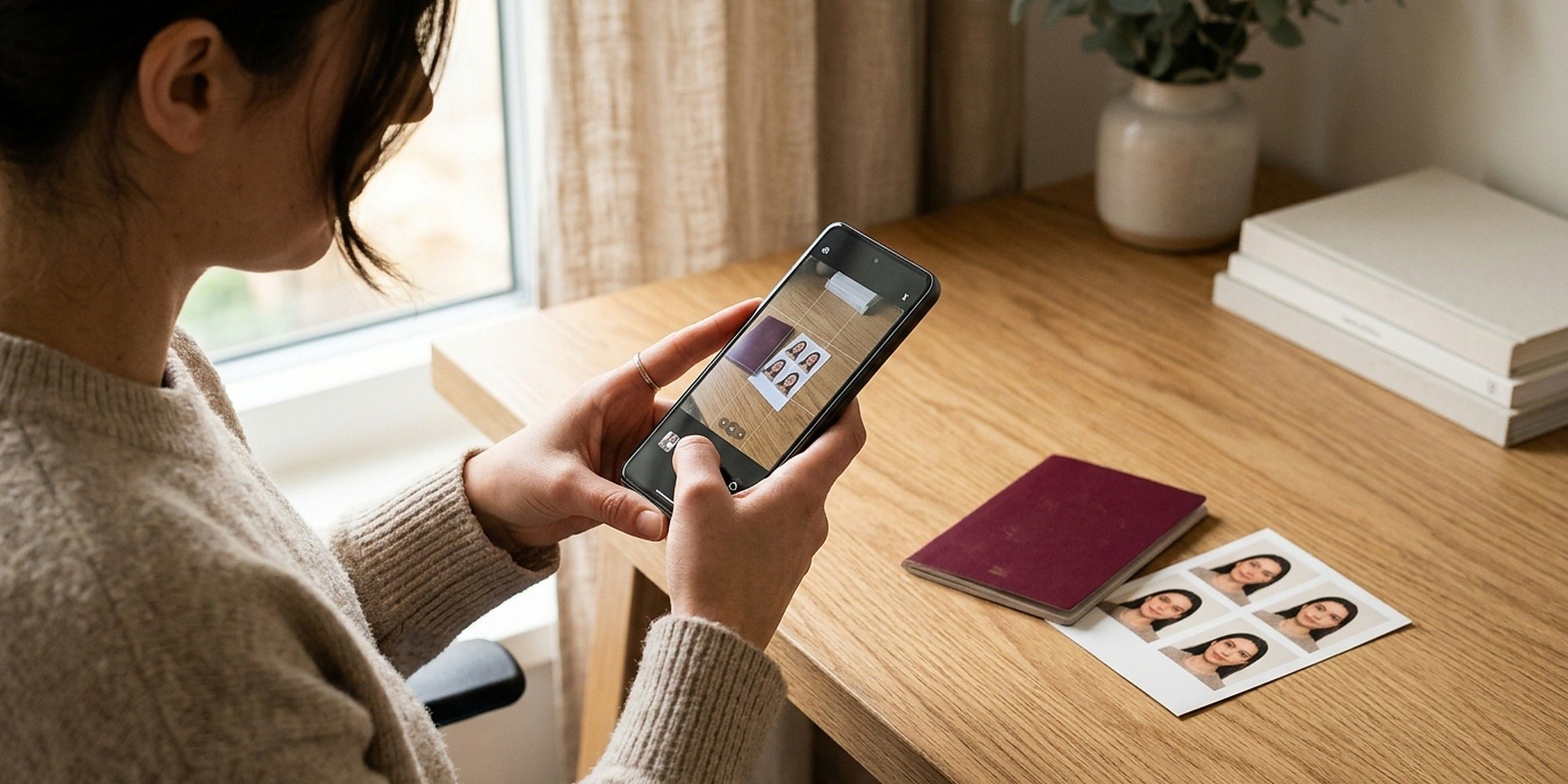
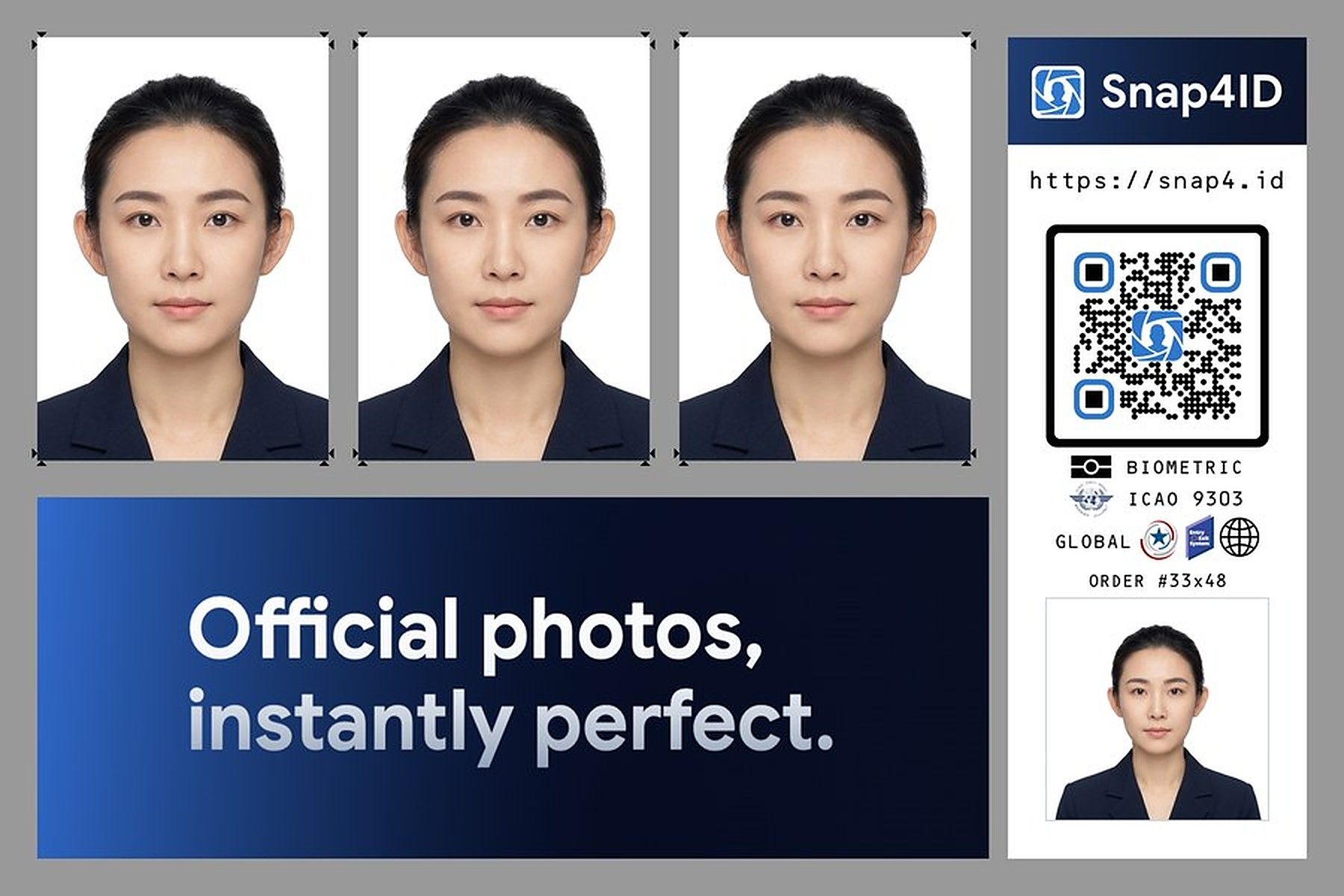
If you walk into a U.S. pharmacy or shipping store and ask the clerk to take a "Chinese visa photo," most locations either do not have the 33 × 48 mm (11:16) template in their camera system or charge $16.99 to $21.99. Instead, use our Chinese visa photo generator to download a calibrated 4 × 6 inch (10 × 15 cm) print sheet containing three exact 33 × 48 mm portraits with precision corner cut guides.
Upload that 4 × 6 inch sheet to Walgreens, CVS, Walmart Photo, Boots, or CEWE as a standard 4×6" glossy postcard print ($0.39 to $0.50), make sure "Fit to Frame / Do Not Crop" is selected so the 100% scale is preserved, and trim cleanly along the corner ticks with scissors.
5. Frequently Asked Questions (Chinese 33×48 mm Passport & Visa Photos)
What is the exact size of a Chinese visa and passport photo in mm, inches, and pixels?
An official Mainland Chinese passport and visa photo must measure exactly 33 mm wide by 48 mm high (3.3 × 4.8 cm or 1.30 × 1.89 inches), which is an 11:16 vertical aspect ratio. For digital uploads, Chinese passport photos require 390 × 567 pixels at 300 DPI (31–36 mm head height), while Chinese visa photos require 780 × 1134 pixels at 600 DPI (compatible with the COVA portal's 354 × 472 px to 780 × 1134 px window) with a 28–33 mm print head height and 15–22 mm head width.
Can I wear small stud earrings or a necklace in my Chinese visa photo?
No, the Ministry of Foreign Affairs of the People's Republic of China (MFA) and the COVA online validator enforce a strict zero-jewelry policy. You must remove all earrings (including tiny metal or pearl studs), necklaces, nose rings, lip piercings, and visible hair accessories before taking your photo, or the COVA AI pre-check will reject the image.
Why does the COVA website keep rejecting my digital Chinese visa photo?
The COVA portal (consular.mfa.gov.cn) rejects over 60% of DIY uploads due to five strict biometric triggers: a background that is not pure #FFFFFF white, wearing a white or light-colored shirt that merges with the backdrop, a chin-to-bottom margin under 7 mm, a crown-to-top margin outside 3–5 mm, or hair obscuring either ear or eyebrow.
Can I use a 2×2 inch US passport photo for a Chinese visa application?
No, a standard 2 × 2 inch (51 × 51 mm) U.S. passport photo is rejected by both the COVA online system and Chinese Embassies or Consulates. A square 2×2 inch photo violates China's narrow 33 × 48 mm (11:16 aspect ratio) frame and causes your head width to exceed the mandatory 15–22 mm horizontal limit.
What color shirt should I wear for a Chinese passport or visa photo?
You must wear a dark, high-contrast collared shirt, blazer, or crew-neck top—such as navy blue, charcoal grey, black, or deep burgundy—against the mandatory pure white (#FFFFFF) background. White, cream, ivory, or pastel tops cause the COVA system to reject your upload for unclear shoulder boundaries.
Upload any smartphone portrait. Snap4ID checks 478 biometric points, calibrates your 28–36 mm head height and 15–22 mm face width on a pure white (#FFFFFF) background, and gives you both a COVA-ready digital JPEG and a 4×6" print sheet—backed by our 100% acceptance guarantee. Create Your 33×48 mm Chinese Visa & Passport Photo Now →